
Catholic vs Protestant: The Pope, Salvation, and the Eucharist
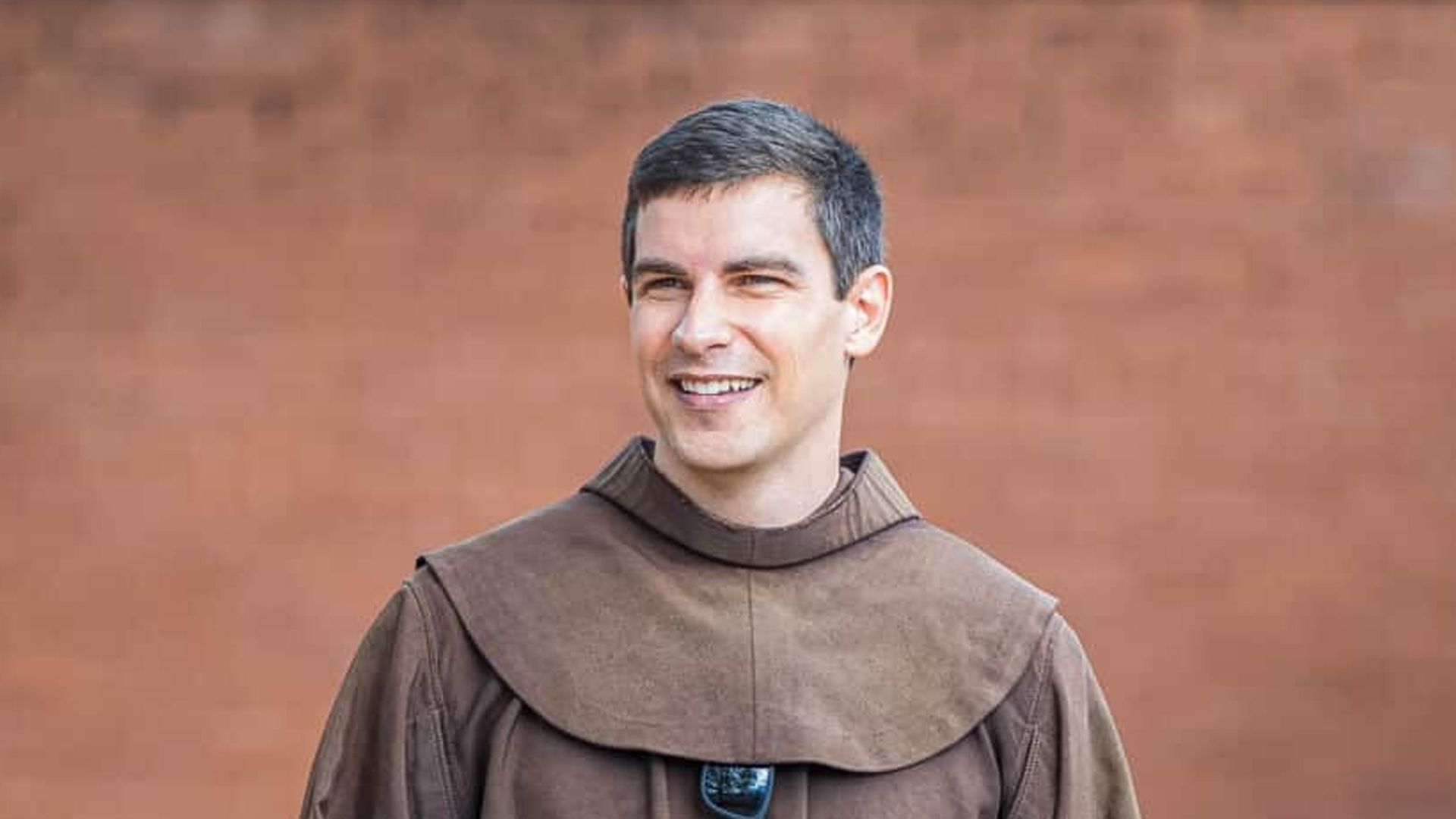
Inside This Episode
In this episode, Pastor Eric Huffman sits down with Franciscan Friar, Catholic priest, and YouTuber Casey Cole for a thoughtful conversation on some of the biggest differences between Protestantism and Catholicism. Together, they explore the role of the Pope, the meaning of salvation, and the mystery of the Eucharist. Along the way, they share what they love about their own traditions, challenge common misconceptions, and reflect honestly on the strengths and struggles within their churches.
Find Father Casey Cole on YouTube ➜ https://www.youtube.com/BreakingInTheHabit
Subscribe to Maybe God’s YouTube channel today!
Transcript
Fr. Casey Cole: Who gets to decide the authentic tradition? I would say, well, we've done this thing since the beginning. Who am I to say that, well, my interpretation of the Bible, I'm going to go fix what they did?
Eric Huffman: 500 years ago, a German monk nailed 95 complaints to a church door. Christianity cracked in half, and both sides are still bleeding. Today, a Catholic priest and a Protestant pastor sit down to do something that most people won't: tell the hard truth about their own church, and try to mend the gap.
Fr. Casey Cole: We used to be a simple, oppressed, poor, among-the-people type religion, and then all of a sudden, we were in charge of armies, and then all of a sudden, we were politicians. I am very worried by all sorts of power. And some have wielded that really, really well for the kingdom, and some, I think, are attracted to it.
Eric Huffman: Because we look at ourselves at odds with Catholic tradition, worship services that look and sound more like rock concerts, pastors that are basically demigods or celebrities. And that is, I confess, a problem. Someone leaves my church and goes to the Catholic church. It's not a big deal when someone leaves the Catholic church and goes to the Protestant church. And it gives me the sense that there's still kind of a looking down upon. Am I just plain victim? Or how much of that is real?
Fr. Casey Cole: It grieves me not so much for the Protestant, but it grieves me for our church to say, what did we do that was so insufficient that you had to go somewhere else to find Jesus?
Eric Huffman: Do you have any hope of an eventual reunification of Christ's church on earth?
Father Casey Cole, welcome to May Be God.
Fr. Casey Cole: Thank you so much. Good to be here.
Eric Huffman: It's an honor to have you. I'm fascinated by your story. You're a Catholic priest and a Franciscan friar. And you have an awesome YouTube channel called Breaking in the Habit. Great name for a YouTube channel.
Fr. Casey Cole: Thank you.
Eric Huffman: And I just think your story and your work are fascinating. So before we dig into any of the similarities and distinctions between Protestantism and Catholicism, I'd just like to hear a little bit of your story. So tell us how a man at such a young age as you are still, which you certainly were when you joined the priesthood, how you make such a decision to give your life to the Lord's service.
Fr. Casey Cole: Sure. I grew up in a Catholic family, pretty ordinary, in that we were faithful and going, but not necessarily truly faithful. I think there was always faith in the family, but it wasn't something we talked about a lot. It wasn't something that we put in the forefront of our lives.
But we went to church. We did the things we were supposed to. But when I was about 16, I went on a retreat and had a really profound moment of encountering Jesus in a way that I had never thought about or experienced before. And it led me to change my life quite a bit. And I decided that I wanted to serve and I wanted to work in the church.
I didn't think that would be the priesthood yet. As a Catholic, we take vows of celibacy. And so the idea of not getting married was not high on my list at 16. But I thought maybe a youth minister, maybe a professor, something like that, a teacher. So I went to college for that. And it was there that I met some really great guys who had committed their lives to this type of service as priests. And something about it really shook me again.
And so that ongoing discernment, and I realized that maybe I wasn't a guy for just one person in a family, but maybe I was a guy for everyone, that I would love kind of recklessly and widely like God does. To know one person, but to the poor and to the unchurched and whoever might come my way. And so I decided to join the Franciscan Friars. That's a religious order in the Catholic church. We take vows of poverty, chastity, and obedience, and we live for the poor and to evangelize.
Eric Huffman: I love it. And what is your specific role now? What's your calling or assignment, let's say?
Fr. Casey Cole: It's hard to categorize because it's kind of unique, but basically we're evangelists. I live in a community of three guys, and we do not have any pastorships. We don't work in schools, any sort of official jobs. Our role is to go out to the unchurched and underserved. So we serve the homeless in the morning, we go to colleges in the afternoon, and often we'll go to the unchurched areas of the world and minister in the evenings.
Eric Huffman: Like, where in the evenings, just out of curiosity?
Fr. Casey Cole: Yeah, some breweries, some pubs. We go to concerts and sporting events. We go to where the public is. This sounds kind of strange to some, but this is what Christians, and particularly Franciscans have always done, which is to go where people are.
Eric Huffman: Certainly, what Jesus did.
Fr. Casey Cole: Yeah.
Eric Huffman: That's awesome. And yeah, there's so much more I could ask you about that, just in terms of how you're received in those public spaces. But for the sake of time, let's get into the topic of our conversation, which has to do with what we hold in common and the differences we might have.
I'm a Protestant pastor. I have been for 27 years almost and been a Protestant my whole life. First I want to say for our Maybe God audience, we've had some conversations recently with Mormons, LDS folks, as well as conversations with and about Islam and with Muslims about Islam. And this, for me, is a very different kind of conversation, Father Casey, because I just want to say from the outset, we clearly share as Protestant and Catholic Christians far more in common than we don't. I think that's a good place to begin. And I'll let you start and I'll chime in as well. But where do you see areas of agreement and common ground between Protestant and Catholic Christians?
Fr. Casey Cole: Yeah, we've had our fights in the past and we still have some things to work on for sure. But over the last century or so, we've really come to realize those things that are bedrocks for us. To echo what you just said, we as Catholics recognize yours as a true baptism. So we see ourselves as brothers and sisters in Christ for all those who are baptized in the name of the Father and the Son and the Holy Spirit.
I think our understanding of Jesus is more or less the exact same, that He is the second person of the Trinity, so there's God the Father, God the Son, and Holy Spirit, and that this second person, the Trinity, was incarnate. That He came from eternity and came from before all time and then took on flesh, which is just mind-boggling that the God of all unknowing could become known and not just known, but become part of humanity. And that this God died and was risen up and so that our humanity now has a place in heaven. If you have that, you're all right in my book.
Eric Huffman: I agree. I agree with everything you just shared. I think we would both affirm that Protestant and Catholic Christians are brothers and sisters in Christ. And that's the most important place to begin. I would add to your list of things we share in common, the authority of scripture. Despite some criticisms, I'm sure you hear from some Protestant folks, I do believe and affirm that the Catholic Church holds to the authority of scripture. I think a lot of our creeds we share in common. I'm a creedal Protestant. I know not all Protestants are, but I don't know if it's most. I think most probably are. It's close.
I think a lot of our moral stances on social issues are very similar, if not the exact same. We lift up spiritual disciplines in prayer, fasting, in some cases, Lectio Divina even. The spiritual disciplines we share in common, belief in the return of Christ. We're all looking forward to the return of Christ. There's so much that we affirm together.
Fr. Casey Cole: It seems like the object of our faith is the same. I think I can say that almost emphatically. I think that the object is sometimes what differentiates between us is how we look at it and how we respond to it. But the positive faith, whatever is in scripture and our understanding of who God is, I'm not a perfect theologian, but my understanding is that we're on the same page, which is fantastic.
Eric Huffman: And as you mentioned earlier, service to the poor and defense of the defenseless, looking out for the vulnerable, the widows and orphans, that's something also Catholics and Protestants have historically held in common. So we celebrate all of that. And I just affirm that as we get started today. And thank you for sharing that as well.
Now, there are some important distinctions and differences between our traditions. There are reasons why you're a Catholic and not a Protestant, and there are some reasons why I'm a Protestant and not a Catholic. So let's just talk about that from a positive point of view. Like, why have you chosen to live your life as a Catholic Christian as opposed to a Protestant one? Why are you Catholic?
Fr. Casey Cole: Sure. I'll give you two reasons and we can unpack them however much we want. But the apostolic succession and sacramentality. Apostolic succession is the idea that Jesus founded the church. It's not a human institution, but Jesus found it. He gave it to the disciples. And as the church progressed, the disciples handed that authority down from person to person. So from the upper room to the replacing Judas after Judas' betrayal, and then Acts of the Apostle, continuing through history. And so this unbroken line goes through our church.
The Orthodox Church can also lay claim to this, and to a lesser extent, some Anglicans and Lutherans try to claim this as well. That this church didn't come out of nowhere. It didn't exist for the first time in the 19th century. It came from Jesus. That would be the first one.
Eric Huffman: Hey, Maybe God family. I hope this conversation is inspiring you to wrestle with your deepest questions about God and Christianity with honesty and courage. Whether you're a lifelong Christian or a former Christian who's deconstructing, or maybe you're still figuring out what you believe, Maybe God is a space where you can ask your biggest questions without fear of judgment, and where you'll hear from people who are sharing their incredible stories of faith with sincerity and conviction. So before you keep watching, please take a moment to subscribe to Maybe God. That really helps more people discover these conversations. And it makes sure that you don't miss an episode that could spark a breakthrough or speak into doubt or struggle you've been having. So thank you again for being part of this community. Now let's get back to our conversation with Father Casey Cole.
Fr. Casey Cole: More important to me and my own spirituality is this idea of sacramentality, that God works in and through the world. And I think that this is probably the major theological issue that separates us. When we talk about priesthood, when we talk about praying to the saints, when we talk about Mary, when we talk about the sacraments themselves, the reason we disagree is because we disagree on this idea, which is that God acts in and through the world and transforms the world. That matter actually plays a part and plays a permanent part, not just a transactional or temporary part in the work of salvation. And that's a hard one to swallow, I think, for a lot of people.
Eric Huffman: Let's unpack that a little bit in a moment. Because I want you to respond to my things I say about why I'm a Protestant too. I don't want to offer a retort to what you've said before I share my own. I'm a Protestant in the Wesleyan tradition. So the Methodist movement is what I've always been a part of.
The real honest answer about why I'm a Wesleyan Protestant is probably just familiarity. That's the easiest way to explain it. It's what I was raised with and I don't shy away from that or hide behind it. I think that if I was raised Catholic, I might feel very differently about Catholicism and Protestantism today.
But I really love the way that Protestant Christianity, everything that is good about it, stems from the historic Catholic Church. I don't think we give enough credit to our Catholic predecessors for everything that I see is good and true about the Protestant Church and its various expressions. I just think we need to acknowledge that because it's true.
I don't look at the Reformation as a rebellion against the One True Church as much as I do as a moment of refining and renewal by the Holy Spirit, sort of burning away the chaff. Some of the, what I would call, pardon me if this is offensive, but some of the malpractice and false doctrines that were being emphasized at the time.
I believe the Reformation not only allowed for the rise of the Protestant Church, but I think it also made the Catholic Church more faithful over time. I think it led to some important reforms and rethinking among Catholics. I like the fact that as a Protestant, I have the freedom to appreciate and affirm different expressions of Christianity that don't line up with my own. I like that I don't have to say, well, my way is the best way or the only way and others are out of step with the true thing. You know, I appreciate that. I'll say more about that when we share about some problems with our own traditions in a minute. But I do appreciate that in principle.
I love the emphasis we have in my tradition on grace, in particular, the universal grace afforded to us by the sacrifice of Jesus on the cross and what that sacrifice means and that it is an all-sufficient once-for-all sacrifice. And we can be saved by putting our faith in Him.
This is more about me probably than anything, but I am inherently a suspicious person when it comes to human institutions. I'm suspicious of government. I'm suspicious of hierarchies and all kinds of power grabs. I think I appreciate that the Protestant movement has decentralized Christian authority structures away from one human institution and, in my view, placed it squarely on Jesus. Now, there's still sinners and sinners are going to sin and we get things wrong on every side of every aisle. But I do appreciate that in principle.
I think you share this based on some of what I've seen of yours online. I love the Protestant commitment to evangelism and discipleship. Not that those things don't exist in Catholicism, but there's certainly a fervor for that in Protestantism that I appreciate. And finally, I would just say I really appreciate and value the Protestant reliance on the Bible as the primary and final authority of our faith and practice. All right.
Fr. Casey Cole: There's some good things.
Eric Huffman: You as well.
Fr. Casey Cole: That evangelism part, I think is so important. I was just thinking about this a few minutes ago. In the modern world, I think the medieval world might be a little different, but in the modern world, the Catholic church is not making the show The Chosen. And that makes me sad. It's going to be a Protestant taking a risk and doing something pretty extraordinary. I don't know your feelings on the show The Chosen, but I love it. And I love that it is something that is... it works with our Catholic faith. There's nothing that's necessarily antagonistic to it, but there's something that is very popular and very touching to a lot of people and it takes risks. And we just wouldn't do that in our modern world.
I think probably the best, and we could get to the other side being the worst of Protestantism, is the same thing, which is that focus on the individual and that freedom to kind of run with interpretation and that decentralization. I've talked to Protestants about this, that I think your churches tend to be quicker at responding to the signs of the times, whereas we have a little bit more history, which safeguards us sometimes, but holds us back in other times. And so I love to see the art and the creativity and the movements that come out of the Protestant tradition that really do respond quickly. Now, sometimes they respond too quickly and too far, that's a different thing, but that freedom allows for innovation in a wonderful way.
Eric Huffman: Sure. Thank you for that. Any other responses to anything I shared about what I love about being Protestant? Anything that came to mind?
Fr. Casey Cole: It's certainly a thorn in our side as Catholics. And I think in the same way that you recognize that there are some things about the Catholic Church you all don't give enough credit to, there's some wonderful things about Protestantism that did purify us a little bit. I think we disagree on maybe what those things are because I think some of the Protestant Reformation helped clarify what we did believe before and continue to believe. But I think it also purified some of our human tendencies and some of the abuses that were rampant, and you had every right to bring up in the 16th century. And so to be reminded that we were wrong at times is never good, but also we would have loved to have seen things shake out differently.
Eric Huffman: It's interesting to go back and study the Reformation and the reformers that Protestants look up to, and how little they disagreed with the historic doctrines of the church.
Fr. Casey Cole: First couple of treatises of Luther, I am all on board. As it continues to go a little farther, it's like, oh, I think we went too far, but his earliest criticisms were spot on.
Eric Huffman: Yeah, sure. Now let's go back to what you shared about why you're Catholic. I just got a couple of questions. When you talk about the apostolic succession, that means Jesus instituted the church. And I think we would agree on that. It's His church. He started it and we're blessed to be a part of it. But exactly what is apostolic succession referred to? Is it the lineage of bishops? Is it the lineage of the papacy or is it more than that?
Fr. Casey Cole: It's the lineage of the bishops. The apostles are the bishops. They end up being the episkopos, the overseers of the New Testament. That unbroken line, that there are no bishops that come out of nowhere, that claim authority on their own. They receive that. In the Catholic tradition, and I believe the Orthodox as well, in order to become a bishop, you have the laying on of hands of three other bishops onto you. So it's not even just one person, but it is the college of bishops that come and give you that authority. And so to have that go through, I think it protects us from maybe the prophetic out-of-nowhere preacher that asserts authority of the church. I think that's really helpful to trace it all the way back to Jesus.
Eric Huffman: I haven't really done a ton of research into this, just a little bit, but is it historically verifiable that that lineage existed as early as Peter throughout or are there gaps in the timeline?
Fr. Casey Cole: It is a fascinating question. I made a whole 15-minute video about it on YouTube. We cannot prove every single person, but we can go back quite a few centuries. The problem is note taking didn't exactly exist from the fall of Rome until middle of the Middle Ages. So there's a lot lost there. But we do know, even if we don't have the exact names, we know that the process was followed and we have rules and we have canons for how this was to be done. And we know that it was acted upon that way.
Eric Huffman: It would seem to me, and there's a lot of beauty in that, it would also seem to me to lend itself to some pretty difficult situations historically. Because when you have an out-of-nowhere evangelist, as you said earlier, it's easier to dispense of someone who's out of nowhere. You can just send them back to nowhere if they're preaching heresy. But if someone has those hands laid on them and they are part of the apostolic succession and they rise to power in the church and they're bad actors, as there have been, and you've been frank about that on your channel, and I appreciated that, especially around just before the Reformation, some of those popes who, you know, sold indulgences or had mistresses or were anti-Semitic or what have you. It seems like it's a more difficult problem to do away with someone who's in that apostolic heritage or tradition once they're in that place of power. Is that an issue in your mind? What do you do with that?
Fr. Casey Cole: It's an interesting tie in actually to sacramentality. Because I think the fact that you're raising that as an issue is more of a Protestant thing. Obviously, it's a historical issue. Like we have a problem with bad leaders sometimes. But theologically, it's not an issue for us. The fact that God chooses to work with sinners and that people abuse God's power is part of human history. We can look through Scripture and how God chose even maybe Saul, you know, his first king, and he let God down.
The idea that God has worked with broken people and that broken people have gone astray doesn't bother us in any sort of theological sense. And so, yeah, they have that authority of God, but that doesn't necessarily mean that they're infallible. And I think that's a common misconception is that no one is infallible. And even our doctrine of infallibility doesn't say that everything the Pope says is correct all the time. It says under certain circumstances, speaking from a place of tradition and within the tradition of the church, he has abilities to clarify certain issues. But if the Pope came out tomorrow and said that Jesus was actually a woman, we'd say, "I'm sorry, sir, you're a heretic. You're no longer our Pope."
Eric Huffman: Even if he said that from within that specific sphere of magisterium or whatever, he could still be seen as fallible.
Fr. Casey Cole: Yes, because one of the criteria is you can't contradict the accepted to positive faith. And so you couldn't contradict what we already know to be true.
Eric Huffman: Okay. I don't want to be a jerk about this. It sounds a little bit like, you know, he's infallible only insofar as he's in line with or in step with the infallible teachings of the historic church.
Fr. Casey Cole: Okay. Which is why it's not that controversial of a take, actually.
Eric Huffman: Yeah. It doesn't seem like it would be. It just seems like a circular argument of sorts in a way.
Fr. Casey Cole: Well, yeah, it's circular in the only that it's reaffirming, not that it's supporting something new. Of course, it's infallible because it already kind of is. But I guess to be more specific, it would be talking about things that are up for debate, but not contradicting scripture. One example, the Immaculate Conception. Was Mary conceived without sin? There's nothing in scripture to contradict it. There's some to maybe allude to it, but certainly not prove it. So for 800 years or probably 600 years, Christians questioned this. They went back and forth. There was devotion to it. And finally, the pope says, with my authority, with my understanding and turning to God, I declare this to be true.
Eric Huffman: And if a pope came along now, I'm genuinely asking because I do not know, but if a pope came along now and said, by the way, that was not ever true, which pope is right?
Fr. Casey Cole: Only the first one because it would be an irreformable teaching.
Eric Huffman: Got it. Okay.
Fr. Casey Cole: It's only been used one time. So I think that's also part of it.
Eric Huffman: Really?
Fr. Casey Cole: Yes.
Eric Huffman: That time?
Fr. Casey Cole: Which one was it? It was either the Assumption or the... I think it was that one, the Immaculate Conception.
Eric Huffman: Okay. And just for ignorant Protestants like me, the Immaculate Conception refers to what exactly?
Fr. Casey Cole: It's that Mary was conceived without original sin.
Eric Huffman: So how far back does that go? It was Mary's mother and father without sin? How does that?
Fr. Casey Cole: No, just that conception did not bear original sin, which in itself is a controversial take because a lot of Protestants don't necessarily accept the theology of original sin. So that requires some unpacking of that too.
Eric Huffman: Well, I'm not sure that's why it's controversial.
Fr. Casey Cole: Well, I said that's just the start of it.
Eric Huffman: I mean, as a Protestant who accepts original sin, I think it's more controversial, the reading into additional facts about Mary that aren't explicit in the Bible. My understanding on the Mary thing is that the earliest reference to this was the so-called Gospel of James. Is that right?
Fr. Casey Cole: It's possible it's in the Proto-Evangelium of James. I'm not entirely sure. I do know the first theological defense of it was John Duns Scotus in the 14th century.
Eric Huffman: 14th century. It's pretty late. The same Proto-Evangelium of James, I guess, second century. It was declared as not heretical, but what's the right terminology by a Bishop of Rome, I think.
Fr. Casey Cole: Yeah, it was certainly not included in the canon. And there were a number of criteria for how something could be accepted in the canon.
Eric Huffman: Sure. Yeah. And it would have been the latest book written had it been accepted by a good margin. Let's talk about sacraments. I find this fascinating and I'm convicted when you talk about sacraments because I do believe that Protestants undervalue the sacraments, broadly speaking.
Fr. Casey Cole: And even when we talk about Protestants, we're talking about such a wide array of theologies, right?
Eric Huffman: Sure. I think there's a spectrum for sure. And my particular tradition still upholds sacraments, but only two of them, you guys have a few more, but we still look at sacraments differently. Describe that difference, if you would. You alluded to it earlier, but what are the fundamental differences in how we look at the sacramental nature of these acts?
Fr. Casey Cole: For us, the matter is actually transformed. So rather than being a symbol, rather than being an image, rather than being simply practical means of depositing God's grace, it actually becomes the bearer of God's grace. So rather than just being a television that allows you to view it, the actual material itself becomes the actual holder of the grace of God. So when we look at that bread, it's not bread that points us to God. It's actually no longer bread. It is God Himself.
Eric Huffman: I mean, the argument, though, isn't that it materially changes like into a different substance, right?
Fr. Casey Cole: Correct. Well, it depends what we mean by substance, because medievally, yes, and metaphysically, yes, the substance, but in our modern use of that word, no.
Eric Huffman: You wouldn't say if you took a piece of communion bread to a lab, it would read differently somehow in the lab.
Fr. Casey Cole: Yeah, we would not say that. In the modern sense of substance, its physical nature has not changed. I don't know how deep we want to go into that. It's not a great read to get into transubstantiation. But generally, the idea is what is real? And for ancient people, they would have said your eyes and your senses betray you because there's something that you intuit about something, kind of a soul, like everything has a soul and an essence to it. And what we would say using their language is that that soul or essence of the bread has changed. It remains having those accidents, those things that you can touch and see and change, but the essence. And maybe analogy would be if I lost my right arm here, I would still be me. If I dyed my hair red, I would still be me. And so those things aren't actually who I am, in one sense.
Eric Huffman: That's interesting. I think I can go there with you in terms of God's supernatural power to change a being. We talk about when someone puts their faith in Christ, a new creation has come.
Fr. Casey Cole: Sure.
Eric Huffman: Now, they're still the same DNA in a lab, you know, but we believe by faith that a new creation has taken shape within them by the grace of God through faith in Jesus Christ. And it's not that it will come later at the resurrection, but that it has come now. And we take that by faith and we try to aspire toward that belief. So I can go with you there. With the sacraments, though, I just I wonder why it's so vital. You talk a lot about this in your videos, and I appreciate that. Why is it such a critical component of your faith? What do you think Protestants like me are missing when we don't look at the sacraments this way?
Fr. Casey Cole: I think it is actually the foundational piece of what it means to be Catholic. This is why I talk about a lot. And I think where we do separate from Protestants, Catholics is I do think we believe in the same grace of God, that same access to God, that God can come to us. But I think it's this idea of mediation. And this is where we get hung up. I think Protestants will emphasize that you can go directly to God, and I think that's true, but Catholics will also add that throughout scripture, God rarely goes directly to His people. He often uses mediators, whether that be the priests that offer sacrifice, the prophets that speak on their behalf, the miracle workers that transform the world around them.
That there's something about the physical world, including humanity, that presents God in a dramatic way, more than just a spiritual or intellectual way. I think that's something I would find lacking is I would go into a Protestant church, and I think the word would be profound, I think that the preaching, I think the understanding of scripture, often very, very good. But for me, it would make no difference if we were in a gymnasium or church. It would make no difference if it was a really smart professor or someone who is dedicated to preaching.
For us, there's something that is fundamentally different about the space because we've sanctified it for that purpose. There's something different about the minister who has had the laying on of hands and now whose soul is changed. Something about our experiences have changed about the physical nature. And we participate that.
Eric Huffman: I like that. I mean, I find I'm drawn to the wonder and mystery of what you're describing. And at my church here, we celebrate the Last Supper, Holy Communion, Eucharist, whatever you call it, every Sunday at every service. So we would have a higher view of that sacrament than I think most Protestant churches, not all, but most. But it's still symbolic for us. And I think that is intentional. And I don't think we look at symbolism in any kind of watered-down way. I've heard you talk about the Protestant symbolic view of communion as being kind of a wishy-washy kind of approach to communion compared to the Catholic tradition. And I get where you're coming from there. But it is a powerful-
Fr. Casey Cole: It's not without merit. I want to say that. Symbolism is very, very powerful. I just think there's a fuller expression. Because the problem with symbol is it relies a bit on interpretation and it relies a bit on the individual experience rather than an objective experience that something about the thing I'm doing is what it is regardless if I understand it or see it. And I think that would be just the difference as it goes one step further.
Eric Huffman: Sure. One of the most common critiques of what you're describing in Catholicism might be that when Catholics commemorate the Last Supper, it's a re-sacrifice of some sort or another. Have you heard that line of criticism before?
Fr. Casey Cole: All the time. Common critique.
Eric Huffman: What do you do with that? Is it by definition a re-sacrificing of Christ somehow? And if so, how do you square that with the Bible's claim that Jesus' sacrifice was once and for all?
Fr. Casey Cole: I could be wrong on this, but I believe it goes all the way back to the Council of Trent in the 1540s to 1570s or 60s, a rebuttal of that. And I think it's one of the anathemas if someone says that there's a re-sacrifice, let them be thrown out, let them be cut off. We absolutely reject that idea. What we do is we participate in the one sacrifice for all. Once for all, we are not re-sacrificing Christ, but He did it and we have this opportunity to partake in that one sacrifice. So, every time that we celebrate the mass, we're not putting Him back on the cross, we're sort of transporting ourselves to that one time.
Eric Huffman: One interesting difference I've noticed just with our symbolism generally is that our crosses are empty and you still have Him up there.
Fr. Casey Cole: For sure.
Eric Huffman: Is that intentional? Is there some meaning behind that?
Fr. Casey Cole: Yeah, for sure. We don't want to skip over Good Friday. That sacrifice is so important. Now, granted, some of our spiritualities, certainly Spanish spirituality, Italian spirituality, can be a little bit morbid sometimes for my own liking, but there is something about that Good Friday to recognize that you can't have the resurrection without the cross, without the crucifixion. And so, we do emphasize, not to the expense of the resurrection, but certainly emphasize that He had to die, and it was a physical death.
Eric Huffman: I guess one of the selling points for Catholicism generally is that it is centralized. It's the same across the world. But as you just alluded to, there are distinctions, cultural distinctions here and there. There's some cultures where there's more fantastical sort of phenomena that happen or that are lifted up regularly, like the appearances of Mary all over the countryside and things. How do you square that with the Catholic way of, you know, this is the one true church and this is how we do things? How much allowance is there for these disparities? And what do you think of those things when there are differences within the unity of Catholicism?
Fr. Casey Cole: It's helpful to remember what the word Catholic means from the Greek. It means universal. It doesn't mean uniform. Universal means that it's the same true church and faith, but it can be expressed in many different ways. And I think us at our best is not a Latin church that is obsessed with rubrics and is only doing the exact same thing in all places, but rather is that one deposit of faith that then is enculturated into different places where people are allowed to let that seed grow and have their own expressions in their own time and place.
And so it's beautiful that while there is the same theology and the same deposit of faith, you can go all around the world and see wildly different-looking liturgies. I should say wildly, but they're going to have the same structure to them, but they're going to have different styles of music and they're going to have different processions and they're going to have different spiritualities. And so it would probably be more uniform for sure than most Protestant churches. But that's not to say that you could go to anywhere in the world and say, oh, I've already been to this place. It will look like the place that you're in.
And maybe an added to that is there's actually, I'm going to get the number wrong, 21 or 23 different rites within the Catholic church. So, what most people know, 99.5% of Catholics are Latin rite Catholics, but there are also Byzantine Catholics, there are Maronite Catholics, there are people that have never spoken Latin, had their own culture, their own tradition, their own canon laws. And so if one of them were to come to our churches, we would have to treat them slightly differently. And the Pope does not have absolute authority to tell them everything that they're to do. They're in union with us, but that doesn't necessarily mean that they are uniformly doing everything that we do.
Eric Huffman: How differently would you treat them? Is it communion rites and things like that?
Fr. Casey Cole: They would be welcome to our communion for sure. But if we went to their liturgy, we would probably have no idea what's going on. It is that fundamentally different.
Eric Huffman: Interesting. Okay. Well, as in love as we are with our respective traditions, neither one of us would say that we have perfected the art and science of Christendom. There are flaws on both sides for sure. I'd like us to sort of walk through some of those that we see from our own vantage point. Again, I'll talk about what I see in Protestantism and you can respond to that, but I'll invite you to also talk about some of the things you've seen in Catholicism that you wish were not so.
What's interesting, funny enough, some of the things I shared about what I love about my Protestant tradition also can, I've recognized, give rise to things I don't love so much. I think because Protestantism is relatively new to the scene, there's a lot of recency bias in Protestantism that I think because we look at ourselves at odds with the Catholic tradition, we miss out on so much of the rich, mysterious tradition of the church fathers, the stories and things they passed down and the struggles they overcame, and we're just disconnected from all of that. And I wish that were not so, but I think it's just because of the friction we've felt historically with Rome.
I think that recency bias, what it does is it lends itself to Protestant churches conforming to culture around us instead of transforming the culture around us. I think that's how you end up with a lot of worship services that look and sound more like rock concerts than sacred events, pastors that are basically demigods or celebrities, and sermons that sometimes are indistinguishable from, I don't know, self-help, psychobabble, and other problems with sermons sometimes.
Fr. Casey Cole: With that individuality and that creativity, I think being the best part about Protestantism, if there's not guardrails, then all forms. So I would say that one thing, like The Chosen or some of the artistic expressions, fantastic, but then there's five others where you're like, oh gosh, we should have put parameters on this.
Eric Huffman: That's the next thing that I would say is with the decentralization of church authority, which I, again, appreciate more than I don't appreciate it, I think it lends vulnerability to bad actors and with bad theology. I think you can easily take a good teaching like universal grace and end up a universalist, which is heresy in my view, and all too common. And just in the same way, you can take good biblical teaching on the Holy Spirit and without any checks and balances, you can end up with a hyper charismatic faith healing roadshow where there's no guardrails, as you said, and millions of people are manipulated and it happens quickly and we don't have the controls in place in the Protestant movement. And that is, I confess, a problem. There are other things I could say. I keep talking, but what are your responses to some of those?
Fr. Casey Cole: Well, humanity is fallen. I think we are graced people, but we have the ability to make grave mistakes for sure. And so, no matter who you are, Catholic or Protestant, these things are going to happen. Do you have the mechanisms to respond to that? That would be the question. In some traditions, maybe more of the liturgical ones, more of the historical ones, Anglican, Lutheran, things like that, they have more of those bureaucratic structures maybe for quality control, but they also have the limitations of creativity. And so, it's kind of a two-edged sword there, like which side you're going to pick.
What I find really interesting is that some of the criticisms about Protestants that were correct about Catholics have actually become criticisms of Protestants now: become too bureaucratic, have become too rigid. I think when you're new on the scene, it's really easy to criticize. And then when you have to take care of everything, then you start to slip into the same patterns. And it's just kind of funny to watch.
Eric Huffman: Yeah, as the denominations in the West are crumbling under the weight of, you know, what led to the Reformation, really-
Fr. Casey Cole: Having to maintain this.
Eric Huffman: ...the reality... You've got to build those institutions to keep things going. And then suddenly you're back where you started. That's interesting. I hadn't thought about it that way before, Casey. Now it's your turn. Let's move on to some of the problems or shortcomings you see within your own tradition.
Fr. Casey Cole: It'd probably be a church that becomes too focused on power. And I think we could go all the way back to the Edict of Milan, we could go back to Emperor Constantine, making the Christian church the official religion of Rome in I believe 381. You have this sense that we used to be a simple, oppressed, poor, among-the-people type religion. And then all of a sudden, we were in charge of armies. And then all of a sudden, we were politicians.
I think that you can use the grace of God, you can use God's authority to make the world a wonderful place. As you were mentioning, we're supposed to transform the culture around us. But as a Franciscan in particular, someone who has taken this vow of poverty, someone who follows after St. Francis, who is just a humble man, I am very worried by all sorts of power. And the church has a lot of political power, it has lots of money. And some have wielded that really, really well for the kingdom, and some, I think, are attracted to it a bit too much. And that has led us astray quite a bit.
Eric Huffman: Hard to argue with that. I think that could be said for Protestants and Catholics alike. Sure. Are there any other things you see happening within Catholicism now or historically that grieve you?
Fr. Casey Cole: Oh, for sure. I mean, historically, we could go through some of the mistakes we've made. I think some of them are overblown, some of them misunderstood, but there are lots of times where power and evil has taken the upper hand. And so we've not always been the best. I do think we're often the leaders in human rights and developing those sorts of things for society, but you can't deny some of the atrocities that we've done and what can be possible.
I think there's a lot of inward thinking sometimes of self-preservation, and we are the only possible source of truth in the world. And that, I think, leaves us blinded sometimes to God's grace, actually continuing to speak and forgetting even what Jesus said, "Don't think that you're My only sheep. I have other sheep you don't know about." And so being open to God's grace in creation, in other people, we got a little bit of that at the Second Vatican Council, where we recognized a wider sense of the people of God. But I do think that there's, might even border on arrogance sometimes of us being the... sometimes we use that word, the one true church, wherever that can be pushed too far sometimes.
Eric Huffman: That's interesting. And it's a good segue, because I wanted to talk about, before we close, the idea of Catholic-Protestant relations, because I think that's probably the most important conversation you and I can have for people to hear right now is how we should be talking about and to each other. It seems to me there is a difference, and I'm sure you would say you have some grievances too.
I feel grieved by the one true church language and how it plays out in different ways. When someone leaves my church and goes to the Catholic church, it's not a big deal. I celebrate that. As long as they're going to church, I'm thrilled. My sense is that from the other side, there is no small measure of grief when someone leaves the Catholic church and goes to the Protestant church. And it gives me the sense that there's still a looking down upon kind of vibe. How much of that am I just playing victim or how much of that is real?
Fr. Casey Cole: I'm a pretty ecumenical guy. I think as I've hopefully exhibited here, that there's lots of great things about Protestantism. And I look to you all as my brothers in Christ, but I can't deny that I'm grieved by that. I do think there is a difference. I'm happy that people are going to church. And I think that following Jesus is the most important, but I think that there's more than just listening to His word, I think following His command.
And I think there are some things in Protestantism that ignores parts of his commands, or maybe it represents a rupture. I would love for us to find a way to recover some of that. Particularly when a Catholic, and I hear this a lot, leaves the Catholic church and goes to a Protestant church, because that's where they found Jesus, it grieves me not so much for the Protestant, but it grieves me for our church to say, what did we do that was so insufficient that you had to go somewhere else to find Jesus?
And so I guess maybe that's more of... that's probably 70% of my disappointment is with our own church, rather than the fact that we lost one to a quote, you know, inferior church. That's less of that.
Eric Huffman: As you were talking, I was thinking that was kind of silly of me to say as a Protestant, because there are Protestants, I just happen to not be one of them, but there are Protestants who do grieve when their people leave their churches and go to Catholic church. And they do think that that's a lesser, you know, form of church. And so I feel like I might've oversold the Protestant position there.
Fr. Casey Cole: Well, and I would be disappointed if no one felt that way, because you're obviously your tradition for a reason. And I would hope that you cared about that. Otherwise, are we just relativists to say that everything is the same? I actually want you to say that you think your church is the best expression of Christianity over and against Catholicism, not that we have to be enemies, but if you just think they're all the same, well, that actually makes me sad for your church. I kind of want some conviction.
Eric Huffman: Yeah. I don't think they're all the same. I do think there are good, better, best kind of ways of looking at Christendom. But in terms of how we live out our Christianity in community, when I have a committed Roman Catholic in my fold, I don't deny them sacraments. I don't feel like that is my place to do that. And I know that's not the case with some more extreme Protestant churches and Roman Catholic churches as well, where things like that are denied and marriages aren't recognized in some cases and stuff like that.
Fr. Casey Cole: Sure. Yeah. It's two separate issues. So marriages are actually always recognized. The issue is when a Catholic marries a Protestant, then we have an issue, but we recognized all Protestant marriages, even to the extent that we recognize them as our own. And so if you all get divorced and try to then convert to Catholicism, we consider that a problem. We give you all the rights and responsibilities.
Eucharist is a little different in that it's not so much a commodity to be received. It's not a personal right. But it does represent and constitute communion. And if there is not communion among us, if there's continued to be division, we would find that to be a fractured, not to use that word, but a broken symbol. That how could we possibly say we're sharing this bread together when in fact we are not in communion. So, for me, it's a call to a higher standard for us.
Eric Huffman: I respect it. I don't like it, but I respect... I respect your understanding.
Fr. Casey Cole: It's not meant to be exclusive is what I'm saying.
Eric Huffman: For sure. Explain the thing you said about marriage, because if my eyebrows rose, I'm sure we have listeners that did too. Why would you honor a marriage or recognize a marriage between two Protestants, but not between a Protestant and a Catholic?
Fr. Casey Cole: It's the same sort of thing. Let's say you had a daughter that decided to go get married and not tell you, you'd probably be hurt by that. It's the same thing. If we have a child, if we have a person in our church that goes and gets married outside of the church without inviting the church, something has gone amiss.
Now, we would absolutely, and maybe this is where the eyebrows rose, we allow Protestants and Catholics to married as long as it's done with the recognition of both churches. So, we can even allow a Catholic to get married in a Protestant church by a Protestant minister, that is an option, as long as you do the preparation work, you turn in some paperwork, you kind of invite us to the ceremony basically.
Eric Huffman: Okay. That's helpful. So it's not a hard static rule. There's some wiggle room or some room for understanding and negotiation at the local level, I guess.
Fr. Casey Cole: Yeah. It's not so much negotiation. It's just that we want to be a part of the person's life. And so if you just go and join another church, that's problematic. But if you say, "Hey, this person's dad is a minister, I'd love him to marry us," great. Let's just make sure that it's all in the up and up.
Eric Huffman: But it's up to the local priest, I guess, is what I'm saying.
Fr. Casey Cole: There are pretty clear standards and you just have to get approval from the Bishop.
Eric Huffman: Got it.
Fr. Casey Cole: It's just a form.
Eric Huffman: Okay. Great. One thing we haven't talked about yet, which surprises me, I don't know why, but my biggest sticking point probably with the conversation I have with Catholics is about works, obviously. I can get around the Mary stuff. I can deal with some of the differences on purgatory and things like that. I like those conversations. It's the conversation around works. The older I get, the clearer I'm starting to get that I think we actually agree, but we're not talking about this in the right way. What is, in your view, the difference between how a Protestant looks at the importance or necessity of works and how a Catholic might?
Fr. Casey Cole: Actually, I could not give a Protestant perspective. I can tell you what a Protestant misconception of Catholicism is, but I don't think that's helpful. I think Protestants often think that we believe that works plus faith equals salvation. That you have to do works and there's a sense of earning your salvation. And that's been a condemned heresy since the fourth century. I mean, Augustine spoke about that quite a bit. Even in our worst, no one was ever professing that. It may have looked like that for sure, but it was never our theology.
Where we get maybe a nuance is that what we would say is a true faith issues forth inactions. It bears the fruit of that and it has an effect on our faith. I think that second part is where we probably don't see eye to eye, or maybe don't see with understanding is we both recognize that it is faith that lives in us and it is Jesus who transforms us. And that a true faith must live a good life. Maybe we see this from scripture, of course. You can't say, I believe in Jesus and then go murder someone. But I think it's in doing the works that it's like a feedback loop that actually it bolsters our faith and it makes our faith stronger and more solidified.
So by doing the works of mercy, as Jesus calls in Matthew 25, feeding the poor, it's not that that's earning our salvation. I would say it's sanctifying us and leading us more to want to do that more. But that faith is already there. It's already saved us. It's already installed in us.
Eric Huffman: So, the Protestant view is that good works are evidence of or fruit of one's salvation. Is it true in any way... My view of how Catholics view works is that it's more than just that. It's a seal in a way of one's salvation or proof somehow. Because I think the only other time I've talked with you, Father Casey, I shared a story of a congregant. He's actually the fiancé of a member here at my church who he's Catholic, went to his local parish for confession, confessed his sins. It had been a while admittedly, but he confessed his sins and sought absolution. And his priest told him or asked him if he would commit to weekly mass attendance. And it was open-ended. He didn't say for a month or for however long. He just said, "Will you commit to this?"
This guy's an engineer so he's not fuzzy on things. It's black or white. And so, he said, "I just faced in that moment a choice to either lie to God and say yes, or be honest and say, no, I can't commit to weekly mass attendance forever." And he said, no. And so, he said, the priest told him his sins were not absolved, which for him sounded like "I'm at risk of eternal damnation now. My sins are not absolved. What does that mean? What happens to sinners whose sins aren't absolved?"
And when I shared that with you before, you said that priest was following by the book, but how do you reconcile that with the idea that works aren't necessary?
Fr. Casey Cole: I think it's the same thing that you say, if Jesus says, come and follow me and feed the poor and you say, Yeah, I'll follow you, but I have no interest in feeding the poor. Well then, is our faith real? I think it is in some ways just an extended version of what you just said. It is the fruit of it, but I think it's the fulfillment of it. It's the proof that we actually do have faith. And so, to say, yes, I believe in you, Jesus, but I actually don't want to worship you, that's a hard pill to swallow.
So, while it could be interpreted as I must do X, Y, and Z to get into heaven, what it's really saying is we need to prove that this faith is real by continuing on and letting it live out in your life. And it's not something we made up. Keeping holy the Sabbath is one of the commandments. And so, if someone says, I believe in God, but I actually don't want to follow what He tells me to do, my hands are kind of tied. I can't absolve you or I can't take away that burden from you because it's not my words, t's not the church's rules. It's actually God's rules.
Eric Huffman: Can you see the other side of it? I mean, from his vantage point, sitting there, again, with a very analytical mind, being asked if he can commit to weekly mass attendance in perpetuity, not wanting to lie, because who would, in good conscience, commit to that? In his mind, what he heard was a lifetime of mass attendance. No one's able to do that. Life happens and people get sick and people die or travel or whatever. How do you then hang over his head withholding of absolution?
Fr. Casey Cole: I think it's a poorly worded statement for one. So, what I would say is, are you resolved to do this? Not can you commit to it without any fault? Are you intending to do it? And I ask this all the time in the confessional, are you resolved to turn from your sins? That's not to say you're never going to sin again. And if you do sin, it doesn't undo what I've just done, but you have to have the conviction that I'm actually going to try. If you don't have that even attempt to try, then we've got a problem.
As far as the requirement to go to mass, it's already baked into our own understanding of that, which is you make every effort to go, but if you're sick, you're absolved from going to that. You're dispensed. If you're traveling, sometimes you're dispensed from doing that. It's not some slave and rule that God is an accountant and checks and says, Oh, well, you didn't check all the boxes perfectly. It's still a relational thing.
But I think it is that willingness to, are you going to live the precepts of the church and God's law? And maybe we could change it a little bit. And someone says, "Father, I've done horrible things. I accidentally murdered someone and I didn't mean... but maybe I did mean to, but I want to change my life." And the priest says, "Are you committed to not hurting people again?" "Well, father, I'm not sure."
When we put it in such an extreme case, it sounds absurd, but that's essentially what we're doing. Like, are you resolved to try your best to make sure that you follow God's law? If you fall again, come back. But if you say outright, no, I'm not even going to try, I can't commit to that, I find that challenging.
Eric Huffman: Well, look, again, I can get there to the extent that I respect the conviction. And I do think that sometimes Christians, Protestants in particular, can get so wishy-washy as to cheapen grace. Grace is free, but it's far from cheap. So I think that we should be careful about just falling prey to what Paul identified in Romans where he said, should we keep on sinning so grace may abound? There is sensitivity, I feel there.
But I wasn't there in the confessional with my friend. I just know how much it shook him to deeply feel that his soul was in danger now because his sins had not been absolved because he couldn't commit to weekly mass attendance. Is weekly mass attendance the only way or an essential way to honor the Sabbath in the Catholic tradition? That's not how I look at it.
Fr. Casey Cole: It is an essential way, yes. It's not an optional way.
Eric Huffman: And that goes back-
Fr. Casey Cole: But it would go in the same category, I think, of other things that are overlooked, which is caring for the poor. I mean, this is not an optional thing as well. And yet, I think many of our people do treat it as optional or an exceptional thing. I give to the poor out of my surplus or when I have time or I go above and beyond when, in fact, I think that's just our responsibility.
Eric Huffman: But obviously, you would say you can give to the poor through any means.
Fr. Casey Cole: In various ways, yes.
Eric Huffman: Not just the local church, but in terms of mass attendance, it must be at the local parish or some parish.
Fr. Casey Cole: And it comes down to what we believe about the Eucharist and what we believe about that communion that you're not just an individual, but we rely on you and you rely on us and we're in this together. And if you're not here, then we're not entirely here.
Eric Huffman: I do think it goes back to sacramental theology because I agree with you on the need to uphold and honor the Sabbath. We teach that. We just teach that it can look different ways. And we have families that hold household worship services when they're traveling on vacation or something. And that to me is just as honoring of the Sabbath as being present in the local church. But again, that's about the sacramental nature of the Eucharist and how we look at that.
Fr. Casey Cole: And I think that's so important to recognize that when we get to the heart of it. Because we can get into fights about the Pope or the Sacrament of Confession or Mary or things like that. These are external expressions of what that deeper theology is. So we can recognize, oh, we have a different conception of what that is. That's why I can look at you are staying true and faithful and consistent in your theology. It's not a departure because in fact, you just have a different starting point. And I think that that makes for much better conversations and understanding each other.
Eric Huffman: For sure. What do you wish every Protestant understood about Catholicism?
Fr. Casey Cole: We didn't make things up. I hear this all the time. It's like, where is that in scripture? I don't think everything is explicitly expounded in what we do in scripture. But there is a source in scripture and there's at least a seed there. Our church didn't try to remain the first century church with only that as our source. We use that as the start and it continues and it grows.
People have always forgiven sins in various ways, but we've always taken that command. We've always broken bread and celebrated the sacraments. We've always baptized. Now, is that going to look different in the 5th century and the 12th century in the 30th, first century, whatever it might be? Yes. And it's going to grow and it's an adapt. But that doesn't necessarily mean because we express it in a certain way now that we made it up. I think that that's a challenge for me often.
Eric Huffman: What do you think is the most misunderstood specific teaching? Is it Mary or is it purgatory? What do you think? What do you hear most from Protestants like me?
Fr. Casey Cole: Mary is a big one. I think confession to a priest, probably the biggest one.
Eric Huffman: Really?
Fr. Casey Cole: Yeah.
Eric Huffman: How is that misunderstood?
Fr. Casey Cole: Well, like, where's that in scripture? You know, why do you have to confess your sins to a priest? I get those questions a lot.
Eric Huffman: That's a question I had, and I thought it was too rude to ask, so I wasn't going to do it. But since you brought it up, no... when I read the New Testament, I see the end of our need for a priesthood. That's how I read it. I read Jesus as our high priest. He has made direct access to the throne possible for all believers, and so the go-betweens, the spiritual middlemen, aren't necessary like they were before. How does your tradition look at that differently?
Fr. Casey Cole: I think we would say that God doesn't change and God acts the same way and He has throughout history. So He loves mediators. And why would He not have a mediator? And again, maybe we're getting too much in the weeds because that word is a charged word, but why would we not allow God to work through the physical world and through humanity as He always has? And why would we then ignore John 21, who sins you forgive are forgiven and who sins you remit are remitted? He gives this, He breathes it into the apostles. And so what a blessing it is that they help us get to Christ. It's not the priest who forgives sins, but they are that conduit that leads to Jesus.
Eric Huffman: That's interesting. My answer to that would be, we still have a priest. It's just Jesus who is our high priest. In the same way, you know, you say God doesn't change, but we don't need to offer animal sacrifices like the people did in the Old Testament times, because-
Fr. Casey Cole: Sure. But we still offer sacrifices, at least Catholics do.
Eric Huffman: Well, we have one sacrifice for the remittance of sins. And that's Jesus again. So we don't offer sacrifices to be forgiven of our sins anymore. You wouldn't say that, would you?
Fr. Casey Cole: We do. Yeah.
Eric Huffman: Really? Okay. Sorry.
Fr. Casey Cole: Yeah. Yeah. Paul would say that. And Jesus says at the Last Supper that this is the sacrifice for forgiveness of sins-
Eric Huffman: That He is the sacrifice, His broken body and blood.
Fr. Casey Cole: Exactly.
Eric Huffman: That's what I would say.
Fr. Casey Cole: And that's what we participate in in the one sacrifice on the altar.
Eric Huffman: That's interesting. So you would say we still do offer sacrifices for the remittance of sins. Are you referring to the Eucharist?
Fr. Casey Cole: Yes, it is that one sacrifice. So it is not again re-sacrificing Christ, but participating in the one sacrifice on the cross.
Eric Huffman: How are we offering that as opposed to... because this is just a difference in our theology, but I've always envisioned us receiving from the sacrifice rather than sacrificing ourselves Jesus's body and blood?
Fr. Casey Cole: Well, we offer ourselves as a spiritual sacrifice as St. Paul says in Romans, I believe, but we also offer that sacrifice of our first fruits to God on the altar and offer that up. And that's where the Holy Spirit transforms the bread and wine into the body and blood. And it's not that we're killing Him again, but we're taking part in that one sacrifice.
Eric Huffman: Okay. Again, I'm still trying to catch up here, but I have a pretty small brain, Casey. How do you say that one sacrifice of Christ on the cross was sufficient for the forgiveness of sins, but also we have to keep sacrificing to receive forgiveness?
Fr. Casey Cole: I think it's again, that keep sacrificing. We're still participating in that one sacrifice and it is us who have to continue on. It's not that we add anything to Jesus or by doing this we get more forgiveness of sins. It's that we return when we have sinned and we receive that grace from Him, which is always accessible to us.
Eric Huffman: That's interesting. And that is a difference in how we look at it as Protestants. I don't think I've ever really given that much consideration the idea of... for us, Jesus' one sacrifice on the cross, His shedding of His blood, His breaking of His body, that was the one sacrifice sufficient to cover all sins. And we receive that as a reminder of sorts in the act of Eucharist. We're not offering a sacrifice again to assure us of salvation or of remittance of sins. Is that an accurate depiction of the difference?
Fr. Casey Cole: We might be moving beyond my sacramental theology when we get into the nitty-gritty here, but I would say it comes down again to that sacramentality where I'd be wondering what you receive. And I think that receiving is a little different. And so this idea of someone offering the sacrifice to transform it I think is so important because it's more than just... and I don't want to belittle the idea of symbolic, because symbolic can be very powerful and it can be a conduit for grace, but not quite in the same way that we understand as the real presence of Jesus in that transformed body and bread.
Eric Huffman: I think you're spot on. And it's not just a symbolism, it's remembrance. I mean, that's from Jesus's own words. You know, that's what it is primarily for us as Protestants is a remembrance of His sacrifice, not a continuing sacrifice, as I'm hearing from you. Important difference, but not a deal breaker of what I understand to be our shared salvation in Christ, thank God.
Fr. Casey Cole: I guess maybe my question for you, a little bit, would be, how do you square a question you've asked me, the history of the church, the fact that Eucharistic theology is not something that came up in the 16th century? Would you just say that this is a mistake in the early church and continued on and was just kind of the additions of men? Because my understanding going all the way back to the beginning is we didn't have quite the explanations that we do, but we had the same theology and understanding of sacrifice and sacramentality going back to the very beginning.
Eric Huffman: I think that, again, Protestants generally sell church tradition short, and I don't want to do that here. I think the further back a tradition goes, the more appealing it is to me. I think in terms of the differences and how we look at what happens at the altar, it is immaterial to me. I do not look down on Catholics for believing in transubstantiation, let's say. It is rather the idea that Christ is somehow sacrificed again or offered again, or we have a hand in sacrificing ourselves as part of that or continuing in that sacrifice.
That's where things get a little muddy for me. And if that is something that is firmly in the Christian tradition, then it could be something... a case of... like there are other instances where I think a good biblical understanding of an issue like this calls us to go harken back before those traditions into what the Scriptures say and what Jesus said at the table, which I've heard Father Mike, I can't remember his last name, handsome Father Mike.
Fr. Casey Cole: Father Mike Schmitz?
Eric Huffman: Yeah. I've heard him say, well, Jesus said, "This is My body and blood." Again, that is not the issue for me. I'm comfortable going there. It's what the sacrifice means. Was it a once-for-all sacrifice? Is it an ongoing sacrifice? Are all sins covered eternally by the blood of Christ and that forgiveness received by faith or do we have to actively participate in the ongoing sacrifice in order to receive forgiveness? That, for me, is the issue.
Fr. Casey Cole: I guess the question and where we will have different answers to this is who gets to decide the authentic tradition? I would say, well, we've done this thing since the beginning, and I'm going to trust what Cyril of Alexandria said, and I'm going to trust what Basil of Caesarea, and I'm going to trust what Gregory of Nyssa. They were all doing this. And so who am I to say that, well, my interpretation of the Bible, I'm going to go fix what they did? I think we could debate those sorts of things.
Eric Huffman: Yeah, for sure.
Fr. Casey Cole: But that would be kind of my question for Protestants is, how do you reconcile some of these church fathers who hold beliefs that Catholics still believe today?
Eric Huffman: I would say Protestant tradition still holds to and benefits from most of those traditions. But I would also say that it's pretty clear on the merits that not every church tradition has stood the test of time. Just because it came from church tradition doesn't make it necessarily authoritative. I mean, even the Catholic history would suggest that sometimes, I don't want to overstep, sometimes it seems like Catholics want to say, well, the best thing about Catholicism is the consistency of it. When I look at the history, I don't see that, frankly.
Fr. Casey Cole: Not necessarily.
Eric Huffman: I see a lot of consistency, but some inconsistencies. So I think there's room for us to be discerning and adjudicate with the Bible as our guide what we should or shouldn't.
Fr. Casey Cole: And I don't mean to present it as if it is so clear-cut that Catholics are right and Protestants are wrong. I think it's just kind of a balancing out of Protestants should have a little more tradition and maybe making the distinction between tradition as a theological concept and traditions as cultural practices.
Eric Huffman: Totally. We probably should have done that at the top of the conversation.
Fr. Casey Cole: There are many traditions that are just wrong or are fine, but they're just not authoritative. And then there's that spirit of tradition that says, well, we offer the sacrifice and we're going to do it many different ways throughout our history, but that core is always there.
Eric Huffman: You have a great video on the distinction between capital T Tradition and traditions where you talk about, for instance, in America, our tradition, the fabric of America is things like freedom, life, liberty, pursuit of happiness and representative government and all those things. But we have our traditions, too, fireworks on the-
Fr. Casey Cole: Fireworks on 4th of July.
Eric Huffman: It's a great analogy, brother. If those went away, we'd still be America. But if representative government went away, we might have another conversation.
Fr. Casey Cole: We'd be something different.
Eric Huffman: Yeah, for sure. This is all fascinating, Mike. I'm sorry, I'm calling you Mike now. Handsome Father Mike. You're handsome, too.
Fr. Casey Cole: It's okay, John.
Eric Huffman: Casey, I'm really grateful for this conversation today. I know we're up against the time. I've asked you a ton of questions. If you have any others that you want to ask me as the spokesman of all Protestantism, I'm here for you. Is there anything else you'd like to talk about today before my final question?
Fr. Casey Cole: No, I think we've talked about a lot. Just an exhortation to keep searching. I think that's wonderful. I think it's something that Protestants do so well, is that you have that drive to learn more. Don't start with the Bible and skip to the 16th century. I think there's a lot there that you already know and you've represented. But just keep looking.
Eric Huffman: Yeah. Amen. Amen. Last question. Do you have any hope of an eventual reunification of Christ's church on earth? I think we all believe that there will be one church in heaven, and we will be unified, and we'll see who was right then. I don't think there will be any spiking of the football, because we'll all be in heaven. But in terms of this earth, this life, do you have any hope of a Protestant, Catholic, Orthodox reunion?
Fr. Casey Cole: Yeah, I have to have hope. It's not the end-all be-all of my faith, but I do think that this is what God desires, and ultimately, God's going to do what God wants to do. And so, are we ready for that? Are we willing to take those steps? Over the last 150 years, a lot has been done in really wonderful things. Protestants have led the charge on that, Catholics late to the story. But I think Catholics have come around a lot. Certainly Catholic-Orthodox dialogue is very fruitful, and I hope it goes the other way as well.
Eric Huffman: Awesome. That's my hope too. I don't know how it happened, but God's done crazier things than that before, and He's capable of doing it again, and I'm here for it.
Fr. Casey Cole: Lots of humility from everyone. That's the only way.
Eric Huffman: That's right. Fr. Casey Cole, thank you so much for joining us today. I encourage everybody to follow your work. We'll put links to all of your work, your YouTube channel online. You've also written some books that folks can find online as well. And just pray you'll keep going, spreading the gospel in whatever bars and speakeasies the Lord takes you to at night, and serving the poor in the daytime and universities in the afternoon. I just think it's great what you're doing. So, just keep at it, brother, and hope to have you back sometime.
Fr. Casey Cole: Appreciate it. Great to talk to you.
Eric Huffman: All right. God bless you.