
What Happens When We Die? (Based on 1,500 Cases)
Inside This Episode
What happens when we die?
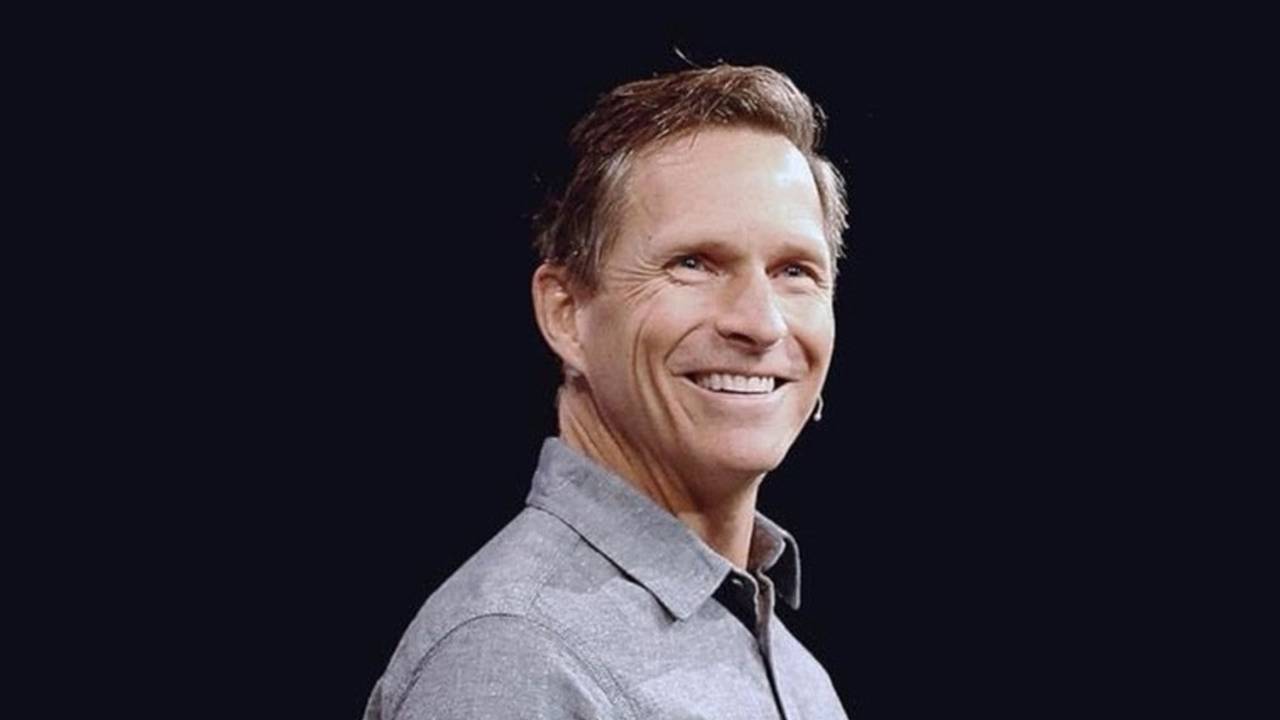
Bestselling author and pastor John Burke (Imagine Heaven and Imagine the God of Heaven) has analyzed more than 1,500 near-death experiences from around the world. In this episode, he explores the patterns people report after coming close to death.
Some describe encounters with Jesus, even across different faith traditions like Hinduism, Islam, and Judaism. Others recall experiences of heaven, hell, or life reviews that profoundly affected their beliefs and how they approach life.
From out-of-body experiences to encounters with a brilliant light, these extraordinary stories challenge what we think we know about consciousness, the afterlife, and the divine.
Purchase Kathy and John’s latest book, Imagine the God of Heaven Devotional
Transcript
Eric Huffman: What happens after we die, according to people who've had near-death experiences?
John Burke: People don't realize that millions have had these experiences. I've interviewed people of all different faiths and backgrounds, including agnostics and atheists, who end up encountering this same God. And you just can't explain that away.
Eric Huffman: What can NDEs teach us about God, Heaven, and even Hell?
John Burke: A Muslim Imam would not be expecting Jesus to rescue him from Hell, and yet He did. I interviewed this Hindu manufacturing engineer, Santosh, who thought when he died, he would come back as another life form. He said, "That's not what happened. This divine light comes and takes me, and I fall in love with this light." And he describes looking out over this city that he knew was the kingdom of God, and he had never read the Bible.
Heidi, who was this Jewish girl, Jesus is there with her. She'd always believed in God, not Jesus, but here's Jesus, and she knew He was God, the God she'd always prayed to.
Eric Huffman: Today, pastor and near-death experience researcher, John Burke, reveals what thousands of hours of research have taught him about the afterlife.
John Burke: The more I studied these, the more I started to realize that things I thought were metaphorical in the Bible, maybe more of them were literal on the other side.
Eric Huffman: Really? Wow.
John Burke: God is real. Heaven is real. Hell is real. And you don't want to miss out on what God has for you.
Eric Huffman: What is it that He's trying to tell us?
John Burke: Well, that's a huge question. Let me say this. I think near-death experiences-
[00:01:36] <music>
Eric Huffman: All right, John Burke, welcome back to Maybe God.
John Burke: Hey, Eric. Thanks for having me back.
Eric Huffman: Man, I'm honored. We've had you on the show before talking about all your work, the books, obviously, but just your research around near-death experiences that spans, man, over three decades now.
John Burke: 70 years.
Eric Huffman: You're not that old. It's such a huge topic.
John Burke: About half that, though.
Eric Huffman: Yeah, man. I feel like we never have enough time to really go as deep as we can into this topic. We're talking about something that impacts every culture, every country, every faith, every generation. People have these experiences, and you've dedicated so much of your life getting into them and researching them. We're going to get into it today.
But first, let's just cut to the chase. For everybody watching that maybe hasn't heard your story before or heard what you have to say about this topic, after researching near-death experiences for over three decades, 70 years, or whatever it is, what have you learned about what's actually going to happen when we die? What's waiting for us on the other side?
John Burke: Well, that's a huge question.
Eric Huffman: Take your time.
John Burke: Let me say this. I think near-death experiences, I think what God is doing in our age of modern medical resuscitation and global connectivity is, I now believe, Eric, that He is raising up these testimonies all over the world that make it, I mean, if people really understand how it all connects up with the scriptures and with what God's been doing all along, it just makes it so hard to deny Him.
I think that's what He's doing. I think He's raising up a global apologetic saying, God is real, Heaven is real, Hell is real, and you don't want to miss out on what God has for you. Because like you said, I think people don't realize it, but I've interviewed or studied close to 1,500 cases, but people don't realize that millions have had these experiences.
2019, the European Academy of Neurology reported on a study done across 35 countries, and they found that one out of 10 people claimed to have had a near-death experience.
Eric Huffman: One out of 10.
John Burke: Now, that's millions. Now, honestly, Eric, I think that was too broad when I dove into the research. The ones I focus on are those that clinically die. They're in a death event. So, they have a heart attack, their heart stops beating, within seconds they have no brainwaves, and yet they consistently say, "I was more alive than I've ever felt in a body that was just like my own. I felt like myself more than ever. I was in a place more real than this has ever felt."
And like I said, many encounter the presence of this God, some describe Him as this God of light, who is love, unconditional, but they struggle with words. They say, just modifiers on our word love doesn't quite do it. It's like, imagine your best friend, spouse, the love you have for your children or grandchildren or whatever, all of it put into one multiplied by... and they go over the top by thousands, by millions, by billions. They say stuff like that.
So what you realize is God is giving testimony to Himself. That's always been my fascination with this ever since my dad was dying of cancer and I was an agnostic and someone gave him the very first research on this and I read it. And Eric, it's what sent me reading the Bible. Because I'm reading these accounts and here are people encountering this God of light, who is love, which I knew enough from... I too had a Presbyterian church upbringing and though it didn't quite stick with me, I kind of went my own rebellious way. But I remembered enough of God appeared as this God of light to Moses on Mount Sinai.
Eric Huffman: The transfiguration.
John Burke: Jesus at the transfiguration, Jesus, "I am the light of the world. Whoever follows me will never walk in darkness, but have the light of life." So, I knew enough. And here are people talking about meeting this God of light and love, who they never want to leave His presence. Some of them seeing Jesus or knowing this is Jesus or Jesus revealing that it's Him. So I was just kind of like, "Oh my gosh, maybe, you know, maybe this is the evidence I've been demanding." And it got me studying the Bible, which ended up leading me to faith.
Near-death experiences didn't, but I was always just so curious, like, okay, well then what are these near-death experiences and how do they fit with what I'm learning as I'm studying the Bible? Because some things didn't quite fit, especially in the 80s and early 90s when I was starting to really study them and, you know, kind of chart it out. I'm an engineer. I was an engineer. I literally had charts of the characteristics and where it is in the Bible and how it overlaps and... you know, so.
Eric Huffman: It is fascinating. And the sheer number, the volume of accounts from many different sources and places, the fact that it's not just isolated to, you know, Western Christianity, but it is a worldwide phenomenon across times and cultures, it's just not so easily dismissed by scientific rationale. I know they've tried, but one thing I appreciate about both of the books I've read of yours so far, Imagine Heaven and Imagine the God of Heaven, both awesome books. I know that's not why you're here to sell books, but they are awesome books. I hope everybody gets it because you do approach it like scientist or an engineer, let's say, where you're very analytical. And you take on some of the counterclaims that, you know, people that are more, I don't know, skeptical, scientific-minded people that try to explain them away. And a lot of those counter explanations just don't hold up to the volume of evidence that we have as you've... I mean, you're on the forefront of this, you know better than most.
But in terms of the Bible, I guess my question is, what biblical evidence or references are there to support the claims made by those having NDEs and the stuff you've written about? What do you find in the Bible that holds this up?
John Burke: Well, there are tons. I mean, in Imagine Heaven alone, I chronicle about 40 commonalities. When you think about a near-death experience, no two are exactly the same. Each one is unique to some way, in some way, but at the same time, they have these overlapping commonalities that keep coming up. And when you study enough of them, you can start to see percentages, you know? 48% encounter this same God.
As you know, in Imagine the God of Heaven, I'm trying to show that, look, this is not the God they would expect from a Hindu culture, from a Buddhist culture, and a Muslim Imam would not be expecting Jesus to rescue him from Hell. And yet He did. So, I'm trying to show that, you know, I've interviewed about 70 people of all different faiths and backgrounds, including agnostics and atheists who end up encountering the same God. And you just can't explain that away, right?
Eric Huffman: Yeah, you really can't, I don't think in good faith, you know. I think you can if you want to. If you really want to, you can try.
John Burke: But I've never heard a good explanation, you know? And so, they have these percentages. 48% see this God, the same God. 30% have a life review in His presence. 57% meet their deceased relatives or friends on the other side. And on you go with about 40 commonalities of this whole experience, this journey into a whole new life that they commonly consistently talk about. And all 40 of those are found in the Bible.
Now, I've looked at other religious writings, sacred writings, you know, like the Vedas, the Hindu Vedas, or the Tibetan Book of the Dead, Buddhist Tibetan Book of the Dead, and others. And you might be able to make a case for four or five, maybe six of these commonalities that are anticipated in the sacred writings of other religions. I mean, nowhere close to 40. And yet they're 40. And that's what I was trying to show in Imagine Heaven, that this is incredibly biblical.
Now, we might not realize that if you haven't done a systematic study of the afterlife, Heaven and Hell, and all that from a biblical perspective, you might not realize it. But that's exactly what I was trying to show.
Eric Huffman: Hey, Maybe God family, if this conversation has inspired you to reflect on or to rethink what you believe about things like life and death, and Heaven and Hell, you're not alone. Stories like these raise questions that most of us carry quietly, questions about the meaning of life and what happens when we die. If you value honest conversations like this one, I hope you'll take a moment to subscribe to Maybe God. That helps more people access our content, and it will also keep you connected to future conversations where we wrestle with the biggest mysteries of life together. So thank you so much for tuning in and for subscribing to the Maybe God channel.
Now, let's get back to John Burke. I guess a skeptic might ask, why should we trust any of these stories? They all seem a little bit woo-woo. Maybe these people are all religious people that, you know, wanted something to wait for them on the other side of death, and so, their brain tricked them into seeing it, or they made it up just to comfort themselves and others. Why should we trust these testimonies other than the sheer volume and the similarities of what they've shared? What is it about these stories that makes them reliable?
John Burke: Well, in Imagine the God of Heaven, I go through the 10 points of evidence that convinced me when I was an engineer and I was studying these and I was still skeptical. And I wasn't doing it to write a book one day. I was just like... I guess because it opened me up to then diving into the Bible-
Eric Huffman: Yeah, it's fascinating.
John Burke: ...and I found faith through it. I was always trying to figure out like, okay, then what are these? Some of the things that convinced me. One, verifiable observations. When people clinically die, they say that they leave their body, but they still are themselves in a spiritual body: arms, legs, hands, feet. And they have not five senses, but more like 50 senses, blended senses. It's a whole new level, a whole new dimension to life, to reality, which is why I think they say that was more real than this.
Eric Huffman: Yeah. They lack the language to even talk about it sometimes.
John Burke: Yeah. Yeah. But the key is they are often still in the room where their resuscitation is taking place. So, many times they're up above, they say up by the ceiling watching the medical doctors do CPR or watching what happens at the scene of the accident or whatever the situation was. And when they come back to life here on earth, they are able to detail what happened. And that's been checked out, verified.
I'm not the only one who has studied these. There are many cardiologists, medical doctors, professors who've realized, like, wow, there's something to this and have studied it as well. There've been 900 peer review articles written about this. In the Journal of the American Medical Association, in the Lancet, Europe's most prestigious medical journal, I mean, lots of places like that.
So, Dr. Jan Holden did a study of about a hundred patients of cardiac arrest who claimed to have a near-death experience and each one might make, you know, five or 10 observations, right? She checked them out to see if they could be verified and found that 92% of their observations were completely accurate.
Eric Huffman: Jeez.
John Burke: Another 6%, she said there were some details that varied and only 2% were inaccurate and that turned out to be one patient in the study.
Eric Huffman: Yeah, yeah. And some of these are just... I know some people might, you know, find a way to explain it, but some of these people are like blind or their eyes are taped shut or they have no brain activity or heavy sedation. There's no way they should be perceiving these things. They're perceiving things from up above the room that, you know, the sticker on the ceiling fan in the old hospital back in the day.
John Burke: Eric, you can go listen... on my podcast, I think it's episode one, there's a clip of it too. And you can hear me interview a man blind from birth, never had a visual dream, a visual image. He said, "I dream in colors and touch. I mean, I dream in smells and touch." And yet in his near-death experience, he describes vision, seeing and perspective as he rises up above the lights of the city down below and the traffic and he can describe everything. I've interviewed about seven people who are blind who in their near-death experience could see.
Now, again, you can't explain that as something brain-based, whether a hallucination or a DMT or neurotransmitters flooding the brain, none of it explains verifiable observations outside of the body or the blind being able to see or why people of other religions would describe the same God when that wasn't their expectation in their brain.
Eric Huffman: Yeah, right. Could you walk us through... just give me the 30-second version of the typical, I know that they're not all the same, but the standard elements of a positive near-death experience.
John Burke: Yeah. Like I said, they leave their body. They are adjusting, kind of realizing they're dead, but they're not troubled by it. There's incredible peace. And they kind of see their body there and they feel often like, wow, well, that was a good vessel while it was, but that's not me. This is me. And generally they're excited.
They often then, after observing what's going on in the room, they travel sometimes a portal, a tunnel of light, or sometimes it's a dark tunnel, or I think it's more like a portal, but it opens up and they begin to move. It's like they're floating and they're going through it. And they say they're going through it like at the speed of light, but it's peaceful. And they see light at the end, if it's the dark version.
Now, it's not always the same. I mean, that's what's interesting. You know, you kind of get stereotypes, but sometimes it's a tunnel of light. I've had people say it's a tunnel of angels. And interestingly, the guy who told me that, when he told me that, I went and found this Gustave Doré, painter from like Dante's era. And he had painted that. I showed it to him and he said, "Oh my gosh, someone else has been there."
Eric Huffman: Oh my gosh.
John Burke: So, it's not always the same sometimes, you know, like in the case of Heidi, who was this Jewish girl, I think I showed her story when I was at your church, you know, Jesus is there with her. She'd always believed in God, not Jesus, but here's Jesus. And she knew He was God, the God she'd always prayed to. And He takes her hand and they take off like flying. And she watches the atmosphere of the earth go by and then the earth becomes smaller, and they're just going through... And again, it's not outer space like in you take a rocket ship, it's more like imagine... you know, I use the analogy of if we were living this life on a flat two-dimensional black and white painting and then suddenly your two-dimensional self is peeled off into a three-dimensional realm that was always around you, but you couldn't even conceive of it because you only... you're limited. You're finite to two dimensions. And I think that's what they're experiencing.
So they come into this multi-dimensional realm beyond three dimensions of space and one of time, and then they're off. So they travel. And they come to this place of exquisite beauty. Some see like what, you know, paradise, what Jesus said to the thief on the cross, "Today, you'll be with me in paradise." Some call that... that's the outside countryside realm around the holy city. Some see the holy city.
I mean, Eric, that's one of the most wild things to me is... you know, I interviewed this Hindu manufacturing engineer, Santosh, who thought when he died he would come back as another life form. He said, "That's not what happened. This divine light comes and takes me and I fall in love with this light." And he describes looking out over this city that he knew was the kingdom of God. He describes Revelation 21, what John saw: this city high-walled, gorgeous walls inside beautiful grounds, these other worldly buildings, he said in there ,and 12 gates all around guarded by angels. And he had never read the Bible.
Eric Huffman: How in the world?
John Burke: Sometimes they experienced this beautiful countryside mountains and rivers and valleys and trees and forests, but with a vividness that is far beyond what we've ever known and colors that we've never seen before. And one of them described it like this. He said, "You see blue." Now, imagine seeing thousands of shades of blue, but you see every single shade vividly, clearly. And so everything is alive, they say, with a different kind of life.
Now, interestingly, commonly, they also say that the light doesn't come from the sun. There's no sun. They say the light is coming out of everything and it's palpable. It's not just light like light on earth. Here's another thing that just blows me away is I've had multiple people blind from birth describing the light they experienced in Heaven. And they say the same thing. It was coming out of everything, and it was love and light and life together. It's infusing everything.
Eric Huffman: How would they even have conceived of something like the idea that light comes out of someone? Being blind from birth, the idea that... because light shines on things, not out of things.
John Burke: That's all they would have heard.
Eric Huffman: Yeah.
John Burke: And so this is consistent though with near-death experiencers, even of other faiths or no faith who've never read the Bible. And yet it's exactly what the Hebrew prophet Isaiah says in Isaiah 60. It's what John says when he saw Heaven in Revelation 21. He says, the city has no need of sun or moon for the glory of God is its light. And the Lamb, referring to Jesus, is its lamp, and the nations will walk in that light.
I can keep going. I mean, there's this great reunion with your friends and family and then they're seeing God. And sometimes there are experiences of other things that are in Heaven. I mean, here's what I try to tell people. It's life, but more. It's not less life. So, every good thing you love about this life, you know? So many people think Heaven's going to somehow be wispy, ethereal, less than. No. They say, this is more like the shadow. That's more like the real thing.
Eric Huffman: It must be a real disappointment, a real bummer to come back to this life.
John Burke: It is. And they're often very depressed.
Eric Huffman: Well, it reminds me-
John Burke: They all sort of struggle.
Eric Huffman: It's the opposite of what Jesus experienced where He only knew, you know, the multidimensionality of Heaven and the eternal, and then He had to put on skin. Maybe that's why He was always saying things like, how much longer do I have to be? I don't know. I think I found that painting you mentioned from Gustave Doré, the tunnel of angels. If anybody's looking for that online, it's really a fascinating piece. And it really, it makes you think. But what's interesting about it is that the guy you interviewed had already seen it. And then he said, "Somebody else has been there too." Fascinating.
John Burke: And he was an agnostic who had just come to faith in Jesus the week before his heart attack.
Eric Huffman: Wow. Good timing.
John Burke: Yeah. And he really knew nothing about any of that. And nothing about the Bible. And yet he said, he comes into the presence of Jesus. It is so cool. He said, he's coming into this light. It's like he's floating in, flying in, right? And he sees in the middle of this impossibly brilliant light, brighter than the sun, you know, hundreds of times brighter, yet not hard to look at. In fact, mesmerizing. And he sees this silhouette of a man reaching out like to hug him, like arms extended, like, come on.
And as he's coming, he said, I started to be filled up with this love that was, he said, like ecstasy, like beyond anything you can imagine. Acceptance, home, love, bliss. He said, "There's just nothing on earth like it." And I was like, "Really?" I went there. And he's like, "No, there's no intimacy. There's no excitement. There's nothing that compares."
Eric Huffman: Dang.
John Burke: And he said, "I felt a literal pressure, like, oh my gosh, I'm going to explode from this joy and this love." And when he thought that it starts to subside a little bit. And he realized, "Oh my gosh, He heard my thoughts, which is another commonality. They communicate like thought to thought or heart to heart. And he said, "No, don't stop. Give me all You got." And then he hears Jesus chuckle. He thought it was funny.
Eric Huffman: Wow.
John Burke: And that's part of what you start to realize is that God is a person, you know? We so often think of God as less personal than we are, yet we were created in His image, not the other way around.
Eric Huffman: Yeah. What's your take on why God... because whatever these are, God is allowing people to have them. If you have a theological framework, you must sort of at least concede that God is allowing people to experience these things in His sovereignty. So what is it that He's trying to tell us generally through these messages, through these experiences? What's He trying to convey?
John Burke: Well, I'm trying to show that it aligns with what He's been conveying all along. God is real, and what He did through Jesus really did happen. And you have agnostics who come back testifying about that. I believe that these are simply testimonies of His reality of Heaven's reality. And there are hellish near-death experiences as well of Hell's reality too.
Eric Huffman: We're going to talk about those.
John Burke: I think God is doing it quite honestly, Eric, because I think as evil increases, God always increases His testimony. And I could go through examples of that throughout history, but that seems to be the case. So I think that's what He's doing as our globally connected world can quickly shift and be culturally led down all kinds of deceptive paths. Now we're interconnected. So it can happen to the whole world pretty quickly. And we've seen examples of it. Right.
I think at the same time, God balances that out with an increase in His testimony. I think that's what these are. They're simply testimonies. Eric, I encourage people not to go get hooked on near-death experiences and binge-watch near-death experiences because you still have to have discernment. Because these are testimonies of still sinful fallen people. They've had an experience. Yes. But they've told me, and I've seen it, they come back and they're still people. And they can come back and they can misinterpret their experience or they can have a shallow experience and you can interpret that in any worldview.
So if you don't actually see... and I've seen this. I've seen how one person will have an experience, they leave their body, they feel wonderful. They meet these nice people, and then they come back with these new insights. And they can spend that any way they want with any kind of worldview they want.
Eric Huffman: I think that's why it's important what you always say, which you just alluded to: don't base your faith on these stories. You can be inspired, encouraged, challenged by these stories of near-death experiences, but base your faith on scripture and the finished work of Jesus. Let that be your foundation. But these stories are fascinating nonetheless and can be so encouraging. Do you think that in a case like you just described, the experience itself is a deception of the enemy or their interpretation of it is deceived? Does that make sense?
John Burke: Yeah. I don't always know. I really don't. In some cases it's not necessarily deception. Like in Imagine the God of Heaven, I give examples of multiple Hindus who experienced the same God. And one is like Santosh, divine, brilliant God of light, sees and describes the holy city. Then he sees God Almighty in the form of a man on a throne, but he knows this Almighty God.
Interestingly, I'm not going to go into it, but it's like God gives... He says, "I'm going to send you back." And He gives him a parable, the parable of the narrow gate. And he comes back and he ends up reading the Bible and he's like, "Oh my gosh, everything I experienced is in this book." And so he came to faith in Jesus. I just got sidetracked. Where was I going?
Eric Huffman: No, it's good. And we're going to talk more in a moment-
John Burke: What was your question, though?
Eric Huffman: The question was whether the experiences can be sort of the demons masquerading as angels of light, or if it's just sinful humans misinterpreting the experience.
John Burke: I give two examples of other Hindus who are vendors. One, I won't even tell his, but this other one, this girl who is a teenager, she's from India, but she's in Africa and on a safari and goes into the cage with a lion that the lion tamer said it would be fine. And the lion attacks her and she ends up having a near-death experience. She says, "I was traveling toward this light, this glow, like the sunrise, but love, and I see all these people in white robes singing songs to this light, this divine light." She said, "God definitely exists."
And then she comes back and she says, "I saw the goddess Durga Ma." Now, Durga Ma is depicted as a woman with eight to 12 arms with weapons in her arms, riding a tiger. That's not who she saw. She saw the same God of light that appeared to Moses, that all these other people see, but she interpreted it in her own religious framework. But interestingly, she also said, "I also came back with a knowledge of Jesus Christ and an understanding of Christianity, which I had never had before."
Eric Huffman: Jeez.
John Burke: Why? Right? That's one example of interpretation. Now, another is I've interviewed people who they have had a hellish experience and a heavenly. Sometimes it's like God gives them a tour of it all.
Eric Huffman: Wow.
John Burke: This one person I'm thinking of had a hellish and then a heavenly and was in the presence of this God of light and love and described them all the same ways, and then comes back and ends up getting more interested and enamored with the experience, I think, than the God of the experience and, as a result, has really completely reinterpreted what he originally wrote down as his experience. In that case, I do think there's deception.
Eric Huffman: Sure. At least after the fact, even if the experience itself was authentic, yeah, the enemy can work on us in terms of how we interpret it over time and reinterpret it.
John Burke: Okay. And there is one more example of deception. This is what also was kind of an interpretive key for me to realize, you know, you've got to look at the commonalities, not the individual stories and interpretations necessarily.
In Imagine Heaven report on Howard Storm, who was an atheist college professor, he dies of a rupture to his upper intestine. Initially, he's standing there beside his bed in the hospital and he feels wonderful, and he doesn't know he's dead and he's confused because there's someone still lying in the bed and he can't really quite figure that out, but he's feeling like all these heightened senses. And he's an artist. So he's enamored with these heightened senses and hearing expanded.
And then these nice people come into the hallway of the hospital and are saying, "Howard, we're here for you. Come with us." And he said, "I need surgery. I've been waiting all day." And he had to wait because they couldn't find a surgeon. It was in France on the weekend. And they say, "We know all about you. We're here to help you. Don't you want to get better? Come with us." And they're dressed kind of like the hospital staff, though they're a little bit indistinguishable individually. And so he follows them.
Now, what I like to point out is if Howard had been resuscitated at that moment, his interpretation would have been "Nice people. Atheists go to heaven. It's great. You feel better. It's peaceful." But they deceived him and they led him into this outer darkness, just like Jesus described. And they turned on him and it was worse than any prison scene you could imagine. And so, yes, there can be deception. So you have to be discerning these individual experiences.
Eric Huffman: Yeah. You keep using that word discerning. I think that's the key with supernatural stories like these, especially... I just want to make clear, you're not making the case, nor have you ever in your books or anywhere that near-death experiences point to some kind of pseudo-universalism where, you know, it doesn't matter what faith you had in this life, everybody kind of gets the light. That's not the stories you're telling. And that's not certainly how you're interpreting them, but-
John Burke: No. And I like to point out is that it's just like Paul on the Damascus road in Acts 9. He didn't believe in Jesus and who appears to him? This brilliant God of light. And he asks, "Who are You, Lord?" And then He tells him, "I'm Jesus." But He does not explain the gospel. He doesn't tell him anything else. Just "you'll be told." And then He sends Ananias later. And Paul still has a free will and he could still hold onto his Pharisaism and the power, or he could choose to be baptized for the remission of his sins and follow Jesus.
It's the same with near-death experiences. They might have an experience, but that doesn't mean that was indicative of their eternal destiny. And that's a really important key. What I found is that 30% of near-death experiencers in this journey talk about coming to a border or a boundary. And it's described different ways. Sometimes it's a river they knew they couldn't cross. Sometimes it's a fence, some might be a gate, but they consistently say, "I knew that if I crossed over that, I could not go back to earth."
And so I believe that these experiences are real and they're real experiences of what they're talking about, but they are somehow still tied to their life and their bodies on earth. It was very interesting because I even had one describe it that her grandmother said, "It's a silver cord that attaches you still to your body. And if you choose to go on, it will be severed. But if not, you'll be able to go back." Well, that's in Ecclesiastes. It is.
Eric Huffman: Yeah. I hadn't thought about that.
John Burke: When the silver cord is cut and the body goes to the earth and the soul goes to the Creator who made it.
Eric Huffman: What?
John Burke: I know. It's all over.
Eric Huffman: It's just layer after layer, man. We could get into it. So good. I just love what we learn from these stories and about God's compassion and His patience with us. I know that's basically the story you really want to tell. Recently, your wife, who you married up like the rest of us, like I did, Kathy, is a real gift. And I've been waiting for this moment where she chimes in and adds her voice to the mix, but she's written a devotional book that's based on your past books, I guess, based on Imagine the God of Heaven. Is that right?
John Burke: Well, she's written an Imagine Heaven Devotional.
Eric Huffman: This one is Imagine the God of Heaven?
John Burke: This is Imagine the God of Heaven. Yeah.
Eric Huffman: I just love her contributions because she adds... I mean, you've got heart, too, but she adds so much heart to the conversation.
John Burke: Well, unfortunately, she can't make it today.
Eric Huffman: Yeah. I know. I've wanted her to be with us.
John Burke: I will stand in as the less beautiful.
Eric Huffman: We'll settle for you, John. But she does a wonderful job in really fleshing out some of the stories. I mean, 60 different chapters. I'm a big devotional reader because I suffer with sometimes attention deficit, I guess, but refuse to take medicine for it, but it's a problem. So those shorter chapters do me a lot of favors. It is beautifully, beautifully written. But she tells a lot of the stories that you cover in Imagine the God of Heaven. The story of Dr. Mark McDonough in chapter five, just share a little bit about that story with us before we talk more about it in depth.
John Burke: What we were trying to do in the devotional is give a truth from Scripture about the character and heart of God to meditate on. And what I believe God does through these near-death experience stories is just take the black-and-white picture that Scripture already gives us and colors it in. It just gives more vivid detail.
And I think it's important though because God doesn't want us to approach Him just with our left brain, you know, headiness with thoughts about God. He wants our heart. He wants our right brain, too. He wants our creativity and our emotion. And I think, like that one you're talking about with Mark McDonough, is called Sovereign Over All. And it's all about how God is omnipotent. He's all-powerful. Isaiah 46 says, "I am God. I make known the end from the beginning, from ancient time, what is still to come. I say, 'My purpose will stand. What I have planned that I will do.'"
Now, that can sound like, okay, well, He's big and He's powerful. But when you hear Mark McDonough's testimony, you know, he's now a medical doctor, but he was 16 years old when there was a house fire and he rescued two of his brothers. He was the oldest. His dad was out of town. His mom and youngest brother were trapped in her bedroom, and he was trying to rescue them and ended up getting smoke inhalation and getting like 60-degree burns over his entire body.
In the ambulance he came to, and then he was in so much pain. Well, actually, it was later in the hospital when they were doing surgery on him that his heart stopped. And he said, "I was immediately in the presence of my mom and my brother, and Jesus was there. And it was like we were sitting on a couch together, watching TV all snuggled up." And then he said this, "The euphoria, the happiness, the laughter; as quickly as I could think of a question, the answer was there. And the answers were so simple, so joyful, so clear. I thought, 'Oh yes, of course, it makes complete sense. It all fits together and makes perfect sense. And I'm right where I should be and things are just the way they should be. It's all going to work. It's all going to be okay.'"
Now, he came back to a teenage burned body without a mom or a younger brother, with a dad who then, in depression, goes into alcoholism. He later in college ends up an alcoholic himself, then goes through recovery and kind of comes back to faith and comes back to God. But he'd gone through 38 surgeries, you know, and just the most incredible pain. But what he said is, "God's plan really does make sense and we don't see it from this side, but it is all going to work out. And we can trust Him because it really does work for the good of all, including our good, even though we can't now really see or understand it." So when you hear enough people like that say those kinds of things, you can trust more.
Eric Huffman: I'll be real honest and say to my cynical brain, I just... my cynical side is just, that feels so trite to me, I guess. On the one hand, it's just because I don't want to accept that for some reason. I think that means... again, this is just my flesh talking, but I just think that means seeing the world like a child does. And I don't want to be a stupid kid. I want to be a grown-up and sophisticated and you just can't make sense of life that simply. And so much of life seems mundane and monotonous. How can you say that every part of it fits together and really matters? But-
John Burke: Well, it doesn't. That doesn't mean every part of it's good.
Eric Huffman: Yeah, that's right.
John Burke: And that's the key, you know? It's not saying good is bad and bad is good. It's not. And that's what we're clearly showing. No. It's saying that even the most horrific things in the light of eternity will be good. They'll make sense. They'll work for good.
Eric Huffman: It's also important to say it's not the same as saying that every single horrific thing that happens to you is God's perfect will for you.
John Burke: Oh, no. No, no, no.
Eric Huffman: But that even in the midst of those things, God is so faithful and good. He can turn it around with purpose.
John Burke: Eric, I always point out to people, you know, if everything... because sometimes people do... Christians act like, well, God's in complete control and so everything happens the way He wants. Well, then why did Jesus teach us to pray, "Your will be done", which has to be through me, right? If it's not going to be done through me, why should we pray that: Your will be done through me on earth as in heaven? Because it's not on earth unless we're willing. And I think that's a real important distinction.
Eric Huffman: Yeah. To me, Mark's story just really kind of reframes the question of suffering. And it's real easy when we go through the darkest times, hardest times in our lives, maybe we have people watching right now or listening that are going through something extraordinary and difficult. It's really easy in those times to just feel forgotten and victimized and unseen. Mark's story, among many others, is another reminder that even in those times, and sometimes especially when we go through those things, God is faithful and good. And He is seeing us and ready to pick us up and make sense of, even in the dark stuff makes sense of it all.
John Burke: Well, that's a great point. Another one of the devotionals we wrote on, I think it's Isaiah 63, you know, to realize that when we're going through the hard times, God's not sitting on His hands going, "Suck it up. Come on. It's all going to be all right." That's not His heart. And that passage says, you know, in all their grief, He was grieved and His Holy Spirit carried them and He redeemed them. So He is a feeling God. I don't understand how He can feel infinite joy and simultaneously go in it with us through the griefs of this life, except He's not bound by linear time like we are. But He promises He is with us through it all.
Eric Huffman: Yeah. And He proves it in Jesus. I mean, the most shocking verse in the whole Bible is probably the shortest one, right? "Jesus wept." Like, how could that be that the Son of God, Almighty God, could be moved to tears, you know-
John Burke: Knowing that He was going to make it all right in just a few minutes.
Eric Huffman: Yeah. It's just who He is.
John Burke: But He felt for their grief, and He felt with them. He has empathy for us. I think that's an important thing to remember, balancing out His sovereignty. He's got a plan, it is all going to work, but it doesn't mean He doesn't care.
Eric Huffman: My favorite quote from that chapter we're talking about from Mark's story is, "God is always with us even when we don't acknowledge His presence in our lives, and He will oversee our lives in line with His plan." There's such solace in that. And it takes humility to get to a place. I think, especially for men, sometimes it takes a lot of humility to say, "Okay, I'm not in control here and God's got this and it's going to all make sense one day and I can trust Him." So kudos to Kathy for that line in that chapter. That was so, so good.
Another part of the book is the next chapter, which tells the story of Dr. Ron Smothermon. Am I saying that right? Smotherman?
John Burke: Yeah.
Eric Huffman: This is maybe my favorite of the chapters I got to read, just because it's about the light of God, the glory of God. What's really compelling, I think, to a skeptical person like myself is that a lot of people that you've interviewed have a lot to lose by sharing their stories, a lot of reputational capital.
John Burke: Yeah. I mean, the guy Mark, the one we just talked about is now a plastic surgeon who heals other burn victims. Dr. Ron is a neurologist and a psychiatrist. So these people have a lot to lose making up stories about going to heaven and seeing Jesus.
Eric Huffman: Yeah. A lot of potential, you know, even just career losses.
John Burke: And they do. They have career hits because of it.
Eric Huffman: Kind of flies in the face of the narrative that these people do this for fame and money or something. I mean, it's the opposite. So tell us a little bit about Ron's story if you would.
John Burke: Yeah. Well, it touches on what we talked about before. I would always read in the Bible about the glory of God. Right?
Eric Huffman: Yeah.
John Burke: And I didn't know what that was. I mean, sometimes for God's glory and, in my cynical self, you think like, "Oh, is He an egomaniac and His glory, like what's up?" Right.
Eric Huffman: Yeah.
John Burke: And I think what hearing more and more of these people helped me understand, I think, more of the dimensionality of what that term is about. So, Ron, for instance, said this. He actually had a psychotic patient turn on him and stab him 13 times with a knife. He showed me the wound that went right through his neck and came out the other side. Should not have lived.
Eric Huffman: No.
John Burke: Absolutely. He had all the medical terms for what it missed barely. But in that moment, he said this explosion of light, divine light. He knew this is God. He said this, he said, "His glory is a light, but made of infinite love. God's light appears like a sudden, silent atomic bomb blast of white light full of His power, infinite love, knowledge, power, authority, humor, kindness, joy, purity, and humility." And Ron says, "Wrap these qualities in His light, and you have the glory of God."
Now, when you think about the glory of God that way, it brings some other passages of Scripture to life in a whole new way. Like we said before, that is what it says in Revelation 21, that the glory of God lights the city of heaven. But also in Romans 8, it says that we will share in God's glory if we share in His sufferings. Well, think about that.
That's why Paul said, "I'm convinced that the sufferings of this life are nothing to be compared to the glory we will experience in His presence." So, now you have some texture to this word "glory" and what that means. Imagine, and I think this is exactly what near-death experiencers are describing. They say there is this light that conveys love and life that we can share with each other. And some people shine brighter than others. And I know it sounds really weird. At first, when I heard this, I was like, okay, that's very not biblical. But then, actually in Daniel chapter 12, the angel says to Daniel, "Then the righteous will shine like the stars forever." Jesus in Matthew 13 says, "Then the righteous will shine like the sun in their Father's kingdom forever." So I think that's what He's talking about.
Eric Huffman: Is that what it means to share in the glory?
John Burke: Wow. So there is this light that fills everything, but it's rather than thinking about like light like the sun, it's the energy source of life and love, but it fills everything in heaven. It unites everything in heaven. And so it also gives us... imagine your soul being filled up with the life of the One who created every good thing, with the love of the One who created all loves. And that's why they say things like it was ecstasy exponential.
Eric Huffman: My favorite thing that Dr. Ron said is like a nuclear bomb blows life away, God's love blows death away. That's an experience. That's a picture right there of what's awaiting us if we, by God's grace, wind up in His presence, not just to see His glory, to behold it, but to share in it-
John Burke: To share in it.
Eric Huffman: ...and watch Him blow death away. That's beautiful. Powerful.
John Burke: And that's what we're trying to do in this devotional is just daily give you a thought from Scripture that then you can meditate on, but you can put some texture, some color to it so that it touches not just your head, but also your heart and your feet, you know, to trust Him, to move into it.
Eric Huffman: Yeah. Start to live differently.
John Burke: Walk it out.
Eric Huffman: We're almost out of time, unfortunately, because I just can't get enough of you, John, and these stories, brother. But let's talk about the dark side of some of these stories. You mentioned at least the beginning of one earlier, and I want to revisit Howard in just a minute. So let's store Howard away for just a second, but what other stories do you hear about people experiencing sort of the bad side of the afterlife in these NDEs?
John Burke: Well, what's interesting, Eric, is it appears that there are levels of hell. And I write about this a little bit in Imagine Heaven. I go into it some in the podcast as well. But where you hear from them, some people experience this just utter void of darkness. Some people, it is like what Howard did. It's almost like hell on earth. It's like a realm, the spiritual realm around us, but it's being ruled by both the demonic and also people.
I mean, Howard knew these people. These were people that had devolved. And he said, "I knew intuitively I was going to become one of them." So there's this kind of hell on earth. I interviewed a cocaine addict. He's now a pastor friend. Cocaine overdose, he's suddenly sober and he's dropping through this abyss of darkness. And he knows like, "Oh my gosh, I died, and I'm going to hell."
So sometimes they experience this dropping through darkness or even dropping through the core of the earth. I mean, it's weird. But other times they come to a place that is like the Bible describes, then they even use the words "the pit" or "a pit," like a prison, a cave of darkness.
Some of these just blow your mind. I mean, I interviewed the chief anesthesiologist of a major hospital in the United States who did not believe in near-death experiences. Grew up in India, Hindu, didn't believe any of it, has a near-death experience and initially he is in hell. And he describes, I mean, darkness and seeing fires off in the distance and being tortured by these demonic creatures. I mean, it's every...
One of the weirdest things that happened to me is the more I studied these, the more I started to realize that things I thought were metaphorical in the Bible, maybe some are metaphorical without a doubt, but maybe more of them are literal on the other side.
Eric Huffman: Wow. Really? Wow.
John Burke: Yeah. I was like it changed. I mean, it really did. It changed my understanding. And so you have people who had no concept, and they're describing these realms of what the journey away from God looks like, too.
Eric Huffman: Was the threshold still there in some of them, like a line you're not to cross, otherwise you can't go back?
John Burke: Yes. And I believe that is why... I mean, almost all of them that I interviewed cry out to God in repentance, and He rescues them. So like this anesthesiologist, again, he's Hindu. He cries out to God in repentance to angels that he said were Christian angels, which confused him. Why did Christian angels come? Because of their names. And their names are in the Bible. And they take him to this beautiful place and this God of light who is love, gets a life review, all these commonalities. Later he experiences the same God of light and he said, "Who are You, Lord?" And he said to me out of the light steps a man, the beard and a robe of light, and says, "I'm Jesus, your Savior." Why would He do that? Why would He say that?
Eric Huffman: It's totally unexpected, you know, given who he was and what he believed before that. I mean, this kind of story reminds me of how Howard Storm's story resolved, which is he's the artist, art professor who had... What did he have?
John Burke: He had ruptured his upper intestine.
Eric Huffman: It was awful how he described the pain. And then he's clinically dead, deceived by the so-called hospital staff that were really demons in disguise into the outer darkness, tortured in all kinds of ways we don't need to spell out because YouTube would pull us, probably, but worse of the worst situation. And he too cried out to Jesus. So he's in some version of hell or the outer parts of hell, and he cries out to Jesus and Jesus shows up and rescues him.
John Burke: Yeah. A light that starts off in this darkness, tiny, gets brighter and brighter, brighter than the sun. Then he said, "Arms reach out from the light and pick me up and just held me like a baby as I wept." And then He starts to rub his back like a mom or dad comforting the runaway child who's come home. It's the prodigal son. It's amazing.
Eric Huffman: Yeah. And Howard had been a pretty obstinate atheist. I don't want to misspeak, but I think he was an atheist.
John Burke: No, no, no. He was absolutely. His greatest regret to this day has been that he did such a good job with his children that they're still atheists.
Eric Huffman: Oh, man. Brutal. I guess on the one hand, it's like, praise God, there's grace, potentially, maybe, possibly beyond our last breath on this earth. God doesn't stop seeking us. To some extent, there's still a chance for some of us. But on the other side, the pastoral side, you know, I don't know about you, I always stopped short of even hinting at the possibility of after-death conversion, because the Bible is not clear about that, first of all.
John Burke: Yeah, I don't think that's accurate.
Eric Huffman: Okay.
John Burke: And the reason I say that is because that's not what the scripture says.
Eric Huffman: What do you mean?
John Burke: Well, it says in Hebrews 9:27, it's appointed for mankind to die once and then the judgment. Now, I don't think these people have biologically died like that's talking about. I think this isn't in between. Again, it's kind of like if I go visit Buckingham Palace, they might show me around the place, but it doesn't mean the King and Queen are inviting me to become part of the royal family and move in.
Eric Huffman: Okay. Again, God and His sovereignty is giving them a glimpse.
John Burke: I think for our benefit as much as anyone's
Eric Huffman: Got it. I see what you mean. Yeah, that's very helpful. Because pastorally, I'm very hesitant to give anyone the idea that there's no urgency in this life, that there's not a deadline.
John Burke: Yeah, no. And I think it has to do... and this is just a theory, okay? But I think it has to do with time. We are still connected to linear time, one-dimensional time. They do experience two-dimensional, multi-dimensional time on the other side. They talk about it just like what Peter writes in 2 Peter 3:8, "To the Lord a day is like a thousand years, a thousand years like a day." They'll say things like that. But I don't think until they've crossed over that border or boundary, I don't think they are disconnected from the linear time that allows for grace.
If you think about it, the angels, we're not in linear time and they send against God, they rebelled against God. And there's no second chance because a second chance requires linear time. Their decision was eternal.
Eric Huffman: That is some mind-blowing stuff there, man.
John Burke: So I suspect that when we cross over and there's no coming back to this life, when that silver cord is cut, it's cutting our connection to the ability to experience both, like it says, the knowledge of good and evil. That's what we're experiencing here. We're experiencing a taste of both, but all of it greatly reduced if NDEs are telling the truth. So God in His mercy is letting us kind of get what we want when we think what we want is, no, I got this God, I know what's best for me. And I remember saying that, you know, going my own way.
Eric Huffman: Brother, me too.
John Burke: And He's letting us taste a tiny, tiny taste of the consequence of that so that we will see, no, the ways and the love of God is what we really want and choose Him in this life. But once the cord is cut and once we cross over, I think our decisions are eternalized.
Eric Huffman: So there is a, as great as ever, a sense of urgency. If you're listening and watching right now, don't put the decision off any longer and don't be proud, don't be obstinate. Just see the truth of God for what it is and who He is and how much He loves you.
I know you've got to get going to a meeting. I just have to ask you a couple of more questions before we wrap. First is about prayer. What really stood out to me in this devotional about imagining the God of heaven that your wife wrote and you contributed to is about the power of prayer as evidenced by some of these stories. Just talk a little bit about the role that prayer plays in some of the NDE stories that you've heard
John Burke: I think one of Kathy's favorites to talk about is the prayers of a mother. In one of them, there were multiple, I think two or three near-death experiencers she quotes who they had rebelled against God and they were having a hellish experience. And in one case, God even said to them, to those basically tormenting them, "No, it's not his time. His mother has prayed for him 28,000 times and I have decided to honor it," and sends him back. He died of a drug overdose, but he's a pastor today.
Eric Huffman: Wow.
John Burke: And multiple ones like that, Ian, another guy who died in Mauritius got stung by four box jellyfish and in the ambulance on the way to the hospital, the poisons going to his heart. He has a life review. His life flashes before him. He's like, "Oh my gosh, they say this is what happens when you die. Am I going to die?" And he had this sense he needed to pray to God. And he's like, "What God? Which God? There are millions of gods." And then he remembers the God of his mother, Jesus. And she is actually awakened at that very moment in New Zealand with the sense, "Pray for Ian, he's in trouble." And she starts praying for him. And God uses that and her prayers to show him in his mind the prayer his mom taught him, you know, "Our father who art in heaven, hallowed be thy name, your kingdom come..." And so he starts going through it line by line. And then he comes to forgive us our sins as we forgive those who sin against us. And he said he thought about the people who had basically abused him that night. And he's like, "No way! I'm not forgiving them." And it wouldn't come. No more of the prayer would come until he forgave them.
Eric Huffman: Wow.
John Burke: And then he forgives them and then it continues on. So, you know, in the devotional, she's just showing that God even says, you know, our prayers and especially our prayers for our kids, they're heard and they matter.
Eric Huffman: They matter
John Burke: And you might feel like your kids are far from God or others in your life, but pray for them because it's not like that's not doing anything. It is doing something. And what God is doing is He is unleashing things happening in response to your prayers to orchestrate the best possible chance for that person. What He won't do is violate their free will. But He does all kinds of other things in response.
Eric Huffman: That's why the Bible tells us to pray without ceasing. We have no idea what we're doing when we pray and how powerful it is and how it rings through eternity. So, parents keep praying for those kids. Families keep praying together. Everybody keep praying because it really does matter to God, most importantly. And it changes us too, but it matters to God and that should be enough.
There's a whole other chapter we wanted to talk about, about forgiveness and the role of forgiveness. You mentioned forgiveness as relative to prayer. We don't have time to get into it. I just cannot recommend the devotional highly enough to our viewers. Thank Kathy for us for writing it, and we thank you also for your work.
I guess to end it here, John, what would you say to somebody who feels like they have prayed and they feel unheard, or they have tried to seek God, but they feel unseen? What do you say to somebody who's maybe going through it right now?
John Burke: Well, I've been there. It's hard to give a generic answer. But I guess what I would say is this, is that I found that the times when I felt like God was not there or I didn't know if my prayers were just bouncing off the ceiling, when I started to learn to obey the little promptings that I would get in my gut, in my soul, in my thoughts, oftentimes they come in threes. I kind of push them away and it comes back again. I push it away again, it comes back again. And then I ask, "Lord, is this you?" And He never tells me. He lets me step out and act in faith.
And when I act in faith with a willingness to do what He's prompted me to do, I am often surprised and able to look back and go, "Oh my gosh, I did hear from God." And the more willing, the more I hear and the more I see. And that's what I would tell you. If you just feel like, Man, I've tried and it doesn't work, try that.
Eric Huffman: Amen. Yeah, brother. There's so much more we could say. Thank you for spending the time with us today, John. You've blessed us yet again.
John Burke: I loved it.
Eric Huffman: I know you've blessed our audience as well. Just keep going, brother. You're doing great work.
John Burke: All right. You too, Eric. See you.
Eric Huffman: God bless you.