
Why This Man Left Hinduism to Follow Jesus
Inside This Episode
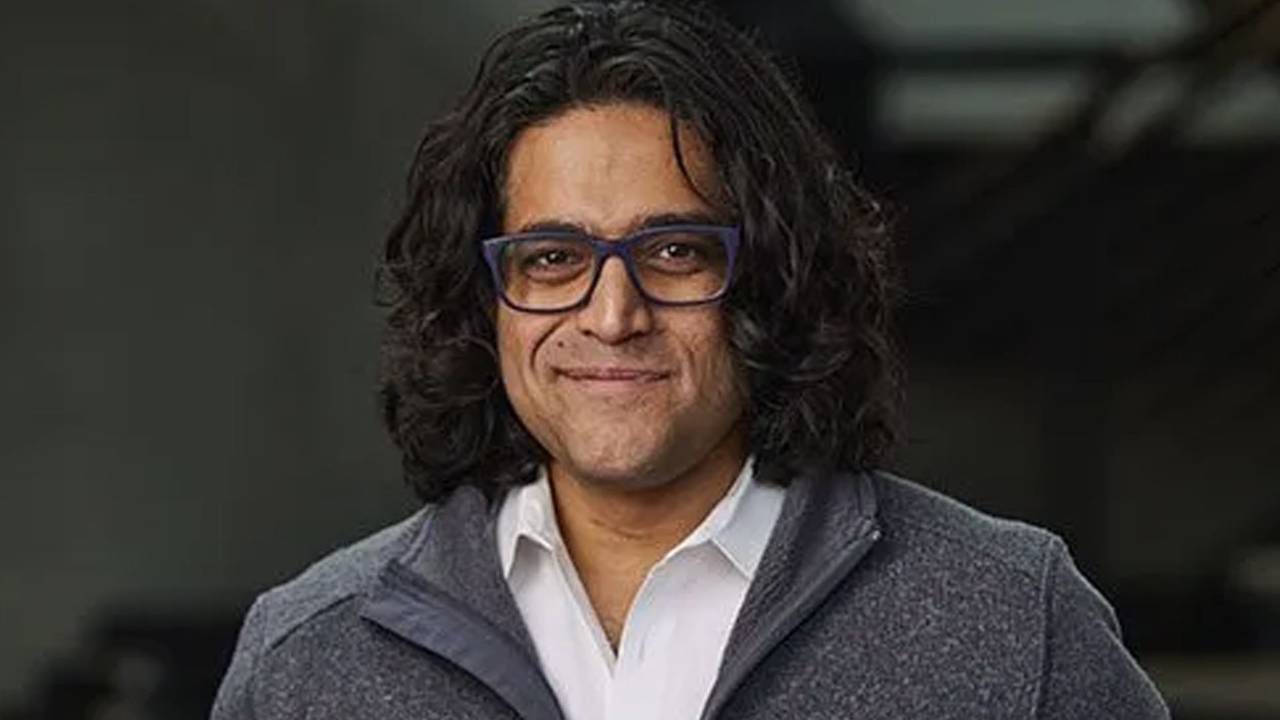
Raised in an Indian family whose Brahmin heritage stretches back thousands of years, Dr. Sarma Velamuri was deeply formed within Hinduism’s highest and most revered caste. In this episode, he offers an insider’s look at the beliefs and philosophy that shaped him—and shares the remarkable journey that ultimately led him to faith in Jesus Christ.
Watch this interview and subscribe to Maybe God’s YouTube channel today!
Transcript
Eric Huffman: What would lead a man born into Hinduism's highest priestly caste to embrace Christianity?
Dr. Sarma Velamuri: My ambition was to become the greatest Hindu philosopher of my generation. I would pray six times a day.
Eric Huffman: When did you start to question the underpinnings of your religion?
Dr. Sarma Velamuri: I grew up in Bombay, now called Mumbai. There'd be kids on the street that were begging, and I would always sit there in my air-conditioned car with my chauffeur and see these kids, and I would often wonder, like, "How come I get to sit here and that kid has to be there?"
Eric Huffman: Today, Dr. Sarma Velamuri offers rare insight into Hindu theology from the perspective of a man raised within an ancient Brahmin bloodline.
Dr. Sarma Velamuri: According to the Hindus, you are a part of the divine, so there is no difference between God and you. It's the only difference is whether you realize that you're God or not. Unfortunately, when you reach enlightenment and you reach heaven, you then realize that it's all in vain. You just get reset and come back to earth and start over. I just felt alone. I felt depressed.
Eric Huffman: Today, Sarma opens up about his unexpected journey investigating Christianity that led him to faith in Christ.
Dr. Sarma Velamuri: So now I'm a Hindu who prays to Jesus. I would look in the mirror, and I couldn't recognize the guy looking back at me. And so for many years, I was like, "I'm stuck. I don't want to do this." But as a Hindu, I have two choices: this man, Jesus, either needs to be denied or accepted.
Eric Huffman: Dr. Sarma Velamuri, thanks for joining us on Maybe God.
Dr. Sarma Velamuri: Thank you. Please feel free to call me Sarma.
Eric Huffman: Oh, thank you for that. It's an honor to have you here. I'm looking forward to getting into your story.
Dr. Sarma Velamuri: Thank you for having me. Looking forward to our conversation.
Eric Huffman: Before we sort of go back and tell the story, a large part of your story was shaped by a rather uncomfortable experience that you had in a church. I believe it goes that a pastor stood up and pointed you out and said that you were, because you were Hindu, worshiping the devil. Do I have that right?
Dr. Sarma Velamuri: Yes, that's right.
Eric Huffman: How did that land with you?
Dr. Sarma Velamuri: I was enraged. I was sitting in a church service. I was invited at Easter, and I'm sitting there and trying to understand the Christianese that's coming out of his mouth. I was a Hindu Brahmin, which I'll tell you about in a second. And suddenly he looks at me and points across the room and says, "You are a devil worshiper." And my first thought was, "I speak five languages. I can read six. If I'm a devil worshiper, you're a moron." It made me really angry. And it stayed with me.
And over a couple of days, I said, "You know what? I'm just going to prove to this guy that every religion on the face of the planet is really the same." And so I walked up to the fellowship, the Bible study leader in the university, and I said, "Hey, give me a Bible." And that's where the adventure started. Because I wanted to prove that the Bible scripture says the same thing as Hinduism does or ultimately any religion, for that purpose.
Eric Huffman: Well, we'll circle back to that moment and what changed then in a bit, but first, let's just kind of go back in time and talk about your upbringing as a Hindu in India. I feel like in conversations like this our audience is mostly Christian or Christian adjacent somehow here in the West. Hinduism is a big mystery to us in ways that even Islam isn't, where we feel more familiar because there's some shared language there. So just take us back to what Hinduism meant to you growing up as a child.
Dr. Sarma Velamuri: I'm going to try and explain Hinduism to you, but sometimes I liken it to the Matrix. It's very hard for you to experience the Matrix unless you're plugged in. But I think that is a statement that's true for people who are devout in any faith.
Hinduism today is practiced or is observed by about 1.2 billion people, mostly in India, Nepal, a few people in Southeast Asia. So I grew up as a Brahmin. The Brahmins are the priestly class. They're the educated. They're the upper class. I was trained from a very young age on how to pray. Think of the Brahmins as a Levitical equivalent in Hinduism. So your entire purpose in life as a Brahmin is to know Hindu scripture, is to know Hindu tradition.
Some of this is oral tradition that you learn and you pass down from father to son. I was very devout. To me, Hinduism was as obvious a path as breathing or eating. It's something that you don't question. It is ultimately to the Hindus a way of life that includes how you behave, how you eat, how you dress, how you worship.
I grew up the son of a public sector servant. So my dad was a government employee. He's a chartered accountant, which is the equivalent of CPA. So he was really good at work. Consequently, he got promoted every couple of years, and consequently, we moved every couple of years. It's almost like being an army kid. So I grew up in Bombay, Delhi, Calcutta, Madras. Ultimately ended back in Bombay, where I spent majority of my childhood.
My family is, I would say, extremely well placed in India, both historically and now. My grandparents on both sides of the family, on my father's side were judges. So when the British came to India, they used the Indian people to be able to enforce the law that they had put in the country. So my grandfather, my father's father, was a judge. My grandmother's father was a judge. My grandfather was a lawyer. These people are very hard-nosed, high-powered people that are intelligent and know what they want. So I grew up in an environment that was very much academic, very much devout, very learned. And you were encouraged to ask questions.
Eric Huffman: Sure. Did all of that come along with being part of the Brahmin class?
Dr. Sarma Velamuri: Yes. Most Brahmins are inherently seekers. Of course, this is a broad generalization, and as true as it can hold. I can say that most Brahmins that I have interacted with are seekers. They have a somewhat good understanding of what they believe. And it is a very complex belief system.
Eric Huffman: And how does one or a family even become Brahmin? Is it a choice or is it just blood?
Dr. Sarma Velamuri: You can't become a Brahmin. You're born into the caste. There's about many castes. When the British came to India, they had to figure out how to put a good definition to the caste system. So they came up with the caste system that frequently we hear of in literature now.
Eric Huffman: The British did?
Dr. Sarma Velamuri: The British did that. So the caste system existed. But the way that we think about it today in the Western world was a way that the British used to classify it. So there's more than four castes, but typically, nowadays, we say that there's four plus one caste. So the Brahmins are the priestly class. They're the upper class. Then you have the warrior class. These are the people that were the kings and fought the wars. Then you have the people who are the shopkeepers and the business class. And then you have the peasants.
And then you have this other class that is so inferior, according to them, that it stands outside of the class system. They're called the untouchables. And these are people who typically are considered the bottom of society. They are people who clean the toilets, who dig the graves, who live outside the city. And Christians are a part of that class in India.
Eric Huffman: Really?
Dr. Sarma Velamuri: Yes, sir.
Eric Huffman: Oh, just by virtue of being Christians.
Dr. Sarma Velamuri: Just by virtue of being Christians. Especially if you're a Christian convert from Hinduism to Christianity, you automatically become an untouchable. The other words used for untouchables today are Harijans, or people of God, or Dalits, or the broken.
Eric Huffman: Okay. So you can't become a Brahmin, but you can move from class to class in the other classes.
Dr. Sarma Velamuri: You cannot. So you're born into whatever class.
Eric Huffman: Unless you convert to Christianity.
Dr. Sarma Velamuri: Unless you convert to Christianity, which is an automatic, do not pass code, do not get $200, go straight to the untouchable class.
Eric Huffman: Wow, okay. And that's sort of a fixed system. And you're kind of at the top of that chart.
Dr. Sarma Velamuri: It's like winning the spiritual lottery as a Hindu.
Eric Huffman: Really? How did you feel about that growing up?
Dr. Sarma Velamuri: I felt great. I was very arrogant. I think I still am a little arrogant. I'm working hard on humility. But I was very arrogant. My ambition was to become the greatest Hindu philosopher of my generation.
Eric Huffman: Really?
Dr. Sarma Velamuri: I spent hours as a child praying, learning scripture. I even started learning the Hindu forms of worship, both in playing the veena, which is a classical instrument in India, which is thousands of years old, and also started doing yoga at an early age, which is one of the forms of expression of Hinduism.
Eric Huffman: So from an early age, you were on the path.
Dr. Sarma Velamuri: I was on the path. I was the promised child.
Eric Huffman: Yeah. Even through adolescence, you didn't have a rebellion against it?
Dr. Sarma Velamuri: I did not have a rebellion against it. That's the funny thing. I think my sister, who hopefully will hear this podcast, was the rebellious one. I was very much the compliant one. I just loved it. To me, there was this hunger that I just wanted to know more. And the more I learned, the more I wanted to know. And it was like this drug that fulfilled a deep part of who I was as a person to know Hinduism, to learn the scriptures, to dig deeper into finding out the unknown.
Eric Huffman: So, for the rest of us who just do not understand how the religion of Hinduism works, as you said, it's more than just the religious practice. It's a whole lifestyle, but the religious side of it is an enigma to most Western Christians and others. How does the hierarchy of gods work? How many gods are there, and how do you relate to them?
Hey Maybe God Family. I hope that this story is resonating with you so far. Conversations like this one remind us of the value of wrestling deeply with belief, identity, and truth. If you value honest stories and thoughtful conversations with people from different backgrounds, take a moment and subscribe to this channel because that helps more people discover these episodes. And it keeps you connected to future conversations that explore faith with curiosity, respect, and courage. Now let's get back to today's conversation.
Dr. Sarma Velamuri: So there's, I would say, thousands, if not hundreds of thousands of gods with a small g or a big G, depending upon, you know...
Eric Huffman: It surprises me that, given your background, that you can't name a number. Like, it's sort of squishy?
Dr. Sarma Velamuri: Oh, it's squishy. It's the reason it's squishy. And I used to say this as a Brahmin as well, was that here's a cup, and this cup could be a family deity, and bow down and pray to the cup. And I would do this as a Hindu, you know, when I was challenging other Hindus whether they really believed what they believed. That's the reason. So they have expressions of deity that are made up by people. And so there's hundreds of thousands of gods because of that.
Eric Huffman: Okay. An unknown number.
Dr. Sarma Velamuri: An unknown number. And they each have a different, I would say, level of importance. But ultimately at the top is the three main ones, who is the creator, the preserver, and the destroyer. And then the middle one, the preserver, has various avatars. An avatar is a version of one of the original three that comes down and lives on earth.
Eric Huffman: Okay.
Dr. Sarma Velamuri: And so there's about 10 main avatars of the middle god, the preserver.
Eric Huffman: The preserver is Vishnu?
Dr. Sarma Velamuri: Vishnu, that's right. And so they have 10 versions of that, or 10 events where the Hindus believe that He came down and assumed a form. It's not necessarily a human form. The first one's a turtle, the second one's a boar, and so on. That's why it's hard to explain how many gods they are.
Usually there is an overarching belief on 'I follow one main god of the three, and then I have sub-deities that I believe in based on my family, based on the stage of life I'm in right now, what I want. So they have gods who are responsible for education, for example. They have gods who are responsible for keeping you safe as you travel. You have gods who are responsible for business, and strength, and success at war, and so on.
Eric Huffman: Yeah. I gotta say it sounds pretty stressful to know which god I'm supposed to be talking to at any given time.
Dr. Sarma Velamuri: It's organic. You don't think about it. It's because you acquire knowledge just on the fly, on the run, constantly. So you're constantly surprised, and you're constantly learning something new that you never thought existed before. And a part of the reason is Hinduism has existed as long as civilization has existed.
And what do I mean by that? There is a civilization that they discovered in the Indus Valley, which is in the India-Pakistan region in the north. And they had two cities that they discovered called Mohenjo-Daro and Harappa.
What they discovered was they had clay tablets of cows. And there was this idea of the cow being something sacred to worship since then, which has been handed down for all of these thousands of years. So Hinduism is very, very old. There's a lot of oral tradition assigned to it that's associated with Hinduism. And as a consequence, it's very complex.
Eric Huffman: Sure.
Dr. Sarma Velamuri: And there's many facets to it. So it's a very different approach to explaining Hinduism compared to explaining Christianity, or explaining Islam, or explaining Zoroastrianism, or one of the other ones.
Eric Huffman: Yeah, just because of the time, how far back it goes. So it's not necessarily the same system today that it might have been when the clay tablets were.
Dr. Sarma Velamuri: Right, absolutely. The religion evolves. It's something that Hindus are very comfortable with. Every so often you'll have one religious leader who shows up and draws this enormous following behind him or her, usually a hymn. They read the old literature, they come up with a new interpretation or same take on a different idea, and they become gurus. And so suddenly they have these massive followings of people who are usually not literate, or if they are literate, are usually not aware of what the religion says, that they start contributing enormous amounts of money. Sometimes they sell their fields or sell their inheritance, give all that money away, and then follow this one person around, like a rabbi almost.
Eric Huffman: Yeah, interesting.
Dr. Sarma Velamuri: And so that person is now a new god, or a new avatar of one of the gods that you then follow.
Eric Huffman: Wow. And people are divine in some way, I guess?
Dr. Sarma Velamuri: Right.
Eric Huffman: And are we part of the gods?
Dr. Sarma Velamuri: So great concept to think about is they believe... firstly, Hinduism has this idea that everything is an illusion. They call that Maya. It is not possible to actually know the truth, because Maya is not just an illusion, it's outside an illusion that's personified.
So this is a being, usually Maya is thought of as a female being, whose job is to make sure that you don't understand the ultimate truth. And according to the Hindus, to answer your question, you are a part of the divine. So there is no difference between God and you. The only difference is whether you realize that you're God or not. And so your life, according to them, is a journey in waking up to the fact that you are the divine, that you are no different from the thing that brought everything into existence.
Eric Huffman: Wow. So is that the goal of the Hindu faith, I mean, generally speaking, to wake up to that reality?
Dr. Sarma Velamuri: I think so. I think a lot of people would say that is the goal. But the question is, what happens when you achieve that goal? You want to take a guess?
Eric Huffman: I mean, I'm a Christian, so some form of heaven, I guess, enlightenment?
Dr. Sarma Velamuri: Well, unfortunately, when you reach enlightenment and you reach heaven, you then realize that it's all in vain. You see that it's all Maya, the illusion, and you then just get reset and come back to earth and start over.
Eric Huffman: And that goes on forever.
Dr. Sarma Velamuri: And that goes on forever. So it's a cyclical treadmill or it's being like in a hamster wheel forever. Which is why I started having problems with Hinduism, because if you start thinking about if everything is an illusion, if karma is real, and karma is the Hindu concept of you reap what you sow, and you don't necessarily reap what you sow in this life. So the Hindus believe in reincarnation. So you can die and then you can come back to earth. And it depends upon how good or bad you were. You'll come back to earth as a man, if you were particularly good in your last lifetime, you'll come back as a human. If you're particularly bad, you might come back as a dog or you might come back as an ant or something else. And so you're paying for all of the bad things you've done, not necessarily in this life, but in the next life.
Eric Huffman: Sure.
Dr. Sarma Velamuri: And so you start having these existential problems, because if everything is an illusion, and karma is real, then you don't really have to care about that person on the street who's suffering, that child who's at the streetlight begging because, hey, you know what? Maybe they're just paying off some debt from their last life.
Eric Huffman: Yeah, they're getting their justice.
Dr. Sarma Velamuri: Yeah, they're getting their justice. So it creates a little bit of problems. And I'm not saying that Hindu people think this way. They all are extremely compassionate. They obviously care deeply about eliminating poverty, about making sure that everyone has enough to eat, that children are not abused. Hindu people care about these things, but their underlying belief system allows for space to explain these things away. And then if you really, really believe that, then why do anything? If it's all going to burn anyway, if it's all an illusion anyway, if none of this is real, then you have this nihilistic approach towards your life.
Eric Huffman: Sure.
Dr. Sarma Velamuri: And that also begins to beg the question of the conscience. So growing up as a Hindu, I didn't really have a conscience.
Eric Huffman: Say more about that. What do you mean?
Dr. Sarma Velamuri: It was really interesting. So this idea about... maybe I'm a deviant, which is possible, like all have sinned and fallen short of the goodness of God. But I didn't really have a conscience. It's almost like if you don't get caught, it's not a bad thing, the thing you just did is not a bad thing.
I had a bunch of friends that once used to shoplift, so I got into shoplifting with them. And it wasn't a big deal at that time. It's just a stick of chewing gum here.
Eric Huffman: A pen at the bank, yeah.
Dr. Sarma Velamuri: Yeah. So it's like, if you don't get caught, it's not really hurting the other guy, it's not going to affect his bottom line, it's not really wrong. And so when I became a Christian, suddenly there was this idea of a conscience, of doing things right for the sake of this underlying moral law that existed that was outside of you.
A lot of Hindu people might disagree with me. And I also want to caveat this. I am by no means an expert at Hinduism. I think anyone who claims to be an expert at Hinduism is probably not read enough to realize that there is such a vast mass of literature that you cannot be an expert in Hinduism. You can know some things. You can know a lot of common concepts, but I don't think... I think short of being a professor of theology who purely taught Hinduism, it'd be very, very hard for anyone to claim.
Eric Huffman: It's too big.
Dr. Sarma Velamuri: It's too big. I can literally make up something. I can go become a guru myself and what I say now becomes law. And therefore, I cannot be wrong.
Eric Huffman: Wow.
Dr. Sarma Velamuri: If I have a following of people who think that I am an avatar of the divine, then as a Hindu, you cannot necessarily contradict me. I cannot be wrong. Why? Well, because my word is law.
Eric Huffman: I'm a god now.
Dr. Sarma Velamuri: I'm a god now.
Eric Huffman: Yeah. Earlier you said that in Hinduism no one can really know the truth because it's an illusion. That's different than saying there is no truth to be known. Is it fair to say in Hinduism there is actually an ultimate truth underlying everything? We just can't know it in this life or is it all an illusion?
Dr. Sarma Velamuri: It's all an illusion.
Eric Huffman: Okay.
Dr. Sarma Velamuri: There is a concept of truth. There is a concept of moral uprightness, of dharma, the thing that you were put on earth to accomplish. But the problem with dharma is you could be a demon, and they have demons in Hinduism, you could be a demon who is out there killing people, but you know what? That demon is just accomplishing its dharma. That's what it's there for. That's what it's made to do. It's us assigning attributes of evil to this thing that is merely accomplishing its purpose. That's not right.
So the same thing comes with when you start talking about truth, when you start this idea of "what is truth?". So this is a rabbit hole that has no end to it. Or actually it does have an end to it. At the end of this rabbit hole of truth in Hinduism comes to "it's all Maya". It's all an illusion.
You know, I used to ask the monks in India this question when I was a Hindu. I would ask them these questions. I'd say, Look, scripture says that we shouldn't worship idols. So Hinduism has idol worship where they make things out of wood or stone, metal, gold, silver, and they bow down to these idols. And a lot of Hindus believe that there is a piece of God in that, that physical idol. It's not symbolic. It actually is God in there. And it might be a small piece of God. It might be a big piece. But there is an actual divine being enclosed within this object. But their scripture also talks about not praying to the object. So which is it?
So I started asking monks that I would run into in just my travels in India. And because I had access, because I was a Brahmin, my family had monks who they supported, so I'd ask them these questions and their reply to me was, "You are foolish. You are trying to ask questions to which you cannot possibly begin to understand the answer until you gave up everything. You renounced all human attachment, including your parents, your purpose, your set to be on earth. You need to give all of that up. You need to go into a forest and then you need to meditate with austerity. So forget food, drink, you're basically fasting, you're living in a forest, eating whatever nuts you find lying around. And then one day you will wake up and you will see the answer. Until that point of time, there's really no point in even talking to you."
Eric Huffman: Wow. And then even when you see the answer, eventually you'll find that answer was an illusion too.
Dr. Sarma Velamuri: An illusion, exactly.
Eric Huffman: I don't know how you get away from the inevitability of nihilism in that worldview. I'm sure I'm ignorant to the point of you know, just not making sense, but it just seems to me on the surface that nihilism is the...
Dr. Sarma Velamuri: It seemed like that to me, and not on the surface. And I'm sure there's other people with better answers, which is why approaching Hinduism as a Christian is very different than approaching Islam as a Christian. Hindus ultimately are seekers is my opinion. Like a lot of Hindus, most Hindus I've met are very, very devout. They are very interested in seeking God, like our God. They're interested in seeking the Creator. They're interested in knowing the truth.
In this comes all sorts of problems, the stuff they've been taught, the superstition, the fear of being rejected by your family, the fear of what if you offend this God that's inside this idol and then something bad happens to me. So there's a lot of fear, there's a lot of social pressure, there's a lot of things that keep us constrained. When I say us, I mean the Indian people or Hindus. They're not just Indians. Keeps them constrained is my opinion. And it's very hard to break that by explaining away what they believe.
So someone once told me this, "You don't remove darkness from a room by taking a bucket and bailing the darkness out of the window. You eliminate darkness by turning the lights on." So the way you approach Hindu quote unquote, "apologetics", is with the truth is. You start talking about Jesus and you start talking about His death and resurrection. You start talking about the cross, about His suffering, about sin, and about salvation. And that's the answer.
Eric Huffman: Yeah, you're right. I think when evangelizing as a Christian, other faiths like Jewish people or Muslim people, the presuppositions are different. And you have to kind of break down their existing worldview to introduce the Christian worldview and help them see the flaws and, you know, with the Quran in the case of Islam, before they can really accept the Bible. And it seems like with Hinduism, it's a whole different world.
Dr. Sarma Velamuri: It's a whole different approach. One of the reasons it won't work is some of their main books, they are works of art. They are, from a human perspective, nothing short of brilliant. From a management principle, right? Like people teach management philosophy out of the Bhagavad Gita, which is one of the main writings of Hinduism.
There's a lot of principles in there that have evolved over the last 3,000, 4,000, 5,000 years, however long civilizations existed. There's a lot of, quote unquote, "small truths", not divine truths, but small truths that guide human interaction that are very valid. So, us sitting here and trying to go to a Hindu and say that, look, these things are not valid doesn't actually work because these things are valid.
Eric Huffman: Which shouldn't really surprise us, even as Christians, that there is divine truth outside of our worldview, our religion even, because everyone's made in God's image. And Christianity teaches that God is reaching out to the whole world, even through the things He's made. I always find those similarities across world religions very interesting because I think it speaks to that truth. But yeah, there are obviously distinctions and differences as well. I'm curious about conversion, both into and out of Hinduism. Before we get back into your story, are there efforts among Hindus to evangelize?
Dr. Sarma Velamuri: Oh, absolutely. There is a large group now called the International Society for Krishna Consciousness, ISKCON. They're very active in the United States, and they're actively proselytizing, they're actively seeking converts into Hinduism. There are other sects that are actively proselytizing, actively seeking converts into Hinduism.
The surprising thing is not all of it is financially driven. Some of it is. There are some organizations that are out there because of the rich White people that they can bring in with their U.S. dollars into the country. But there's a lot of people who are actually very faithful, if that's a good word to use. They really believe what they believe and they're out there. And I was one of those people.
Eric Huffman: Really?
Dr. Sarma Velamuri: I actually had a friend that was a Hindu that converted into Christianity when I was a Hindu. And I used to teach the Bhagavad Gita in medical school to a small group of people, maybe like 20, 30 students, because the Christians had their own fellowship and they were trying to convert people. So we needed to start something, obviously.
And so I go and sit down and open the Gita with this girl and basically explain to her how she had got it all wrong and she rescinded her conversion and went back to being a Hindu. And I had to struggle with this a lot after I became a Christian till I realized that, you know what, Paul was having people put clothes at his feet while he witnessed people being stoned to death for becoming Christians. So I didn't do anything that's not been done before. And sought forgiveness from God.
Eric Huffman: One of the few things I know about, I think I know about Hinduism, is that it looks at all religions as being sort of equally valid in some way. Like there's truth, equal truth, even in all world religions. Is that true?
Dr. Sarma Velamuri: Yes. In those words has become... people never talked about equality of religion before in Hinduism. It wasn't a thing. Because why would you need to talk about it? It's a concept that doesn't even matter almost. Like, "What do you mean? I'm a Brahmin. Why would I care about Christians? You know, Jesus was born for the Americans."
Like, you know, when I became a Christian, a question that was asked was like, "What's wrong with you? Do you want to follow George Bush? Is that what this is?" And I was like, "What are you talking about? Jesus is a Middle Eastern guy."
So to them, this idea of equality doesn't even... it's not a question that gets asked. It's not a question that existed until the Christians and the Muslims, especially the Christians, I would say, came to India and started proselytizing and started converting people, especially those who are not educated or literate.
And then there was a movement that happened in the early 1900s, where Vivekananda, who's a guy from Calcutta, is a very famous sage, a lot of what we know about Hinduism in the West, a lot of English literature comes from his work. He and his master started talking about equality of religion. And they started talking about how all religions are equal, all religions are the different path to the same goal. And that is something new that's been existing, maybe for the last 100 years.
The Bhagavad Gita does talk about different ways that people can seek God, but ultimately, it's within the larger umbrella of Hinduism and the constraints applied there.
Eric Huffman: Oh, okay. Okay. That makes sense. Because the principle of evangelizing for your religion doesn't make a lot of sense if all religions are truly equal, but sounds like that was sort of a newer iteration.
Dr. Sarma Velamuri: Yeah, that's come up recently.
Eric Huffman: Okay. And what about converting out of Hinduism? What price does someone pay for doing that?
Dr. Sarma Velamuri: Great question. I can only speak about my lived experience and what I've seen other people. Very frequently, it's shameful. One of my main concerns when I was becoming a Jesus follower was that I'm betraying my parents, and I'm betraying my family heritage, and I'm betraying thousands of years of tradition that I owe everything to. I'm betraying the sacrifice of all of these people that have gone before me to bring me to this point.
So, one thing is you lose your family. You get disowned frequently. There is some amount of persecution that takes place with that. I think the idea is, look, it's very hard to disown someone from your family. You obviously care for them. You obviously love them.
I think the driving force there is saying, "Can we bring this person back? Can we apply enough pressure to make this person come back?" So that's, I would say, like the bottom tier is immediate pressure from your family.
One level up is you might not get jobs. When I was interviewing in India for internships and things like that, people would look at my name and be like, "You're a Brahmin. Wow." I'd be like, "No, actually, I'm not a Brahmin. I've converted to Christianity." And suddenly there's this enormous offense.
Eric Huffman: Really?
Dr. Sarma Velamuri: I'm not saying I lost a job or not because of that, but it was a conversation that would take place in a job interview, which I found bizarre. Then comes one layer above that is there is, I believe, a violent faction in almost every religion you can think of. There is a violent faction now that is growing very aggressively among the Hindus to the extent that there are anti-conversion laws now in India, which say that you cannot induce someone to convert into a religion with any form of inducement. And that could be money. That could be saying something like, "Hey, I know you deal with anxiety and you see demons at night, but if you call on Jesus, He will set you free." Guess what? Making that person feel better is an inducement, saying that you're going to feel better.
Eric Huffman: Wow.
Dr. Sarma Velamuri: So this law can be interpreted in various ways.
Eric Huffman: That's illegal now nationwide.
Dr. Sarma Velamuri: It's illegal. There are anti-conversion laws. Very recently there have been people who've been martyred. Graham Staines is a good example. He and his two sons were burnt alive in a car in Odisha. And his wife is still there and she continues to spread the gospel and talk about Jesus. And she's come out in public and forgiven the people who've done this.
As recently as last year, there was a pastor who was in one of the cities in the south who was evangelizing, had an apologetics ministry, and he was found dead on the side of the road. And the official stance on this is that he was drinking while driving his motorcycle between cities. And this is a man who was on fire for Jesus. He was just found dead and the was case closed. It's like, "Well, you know, he was drinking and driving his motorcycle."
Eric Huffman: Jeez.
Dr. Sarma Velamuri: It's like, "Wait a second. There's everything about this man and his character, everyone who knows him would say, "That's the last thing on earth a guy like this would be doing." But he was aggressively evangelizing. My belief is that he got taken out.
Eric Huffman: So they'll just sweep it under the rug, under that law, more or less.
Dr. Sarma Velamuri: Yeah, maybe. But there is consequences to the law. Like you will go to jail. There are people who've gone to jail for it. As recently this Christmas, we were in India, there was news reports of people driving around and tearing down Christmas decorations and setting churches on fire while the country's leadership was on stage talking about unity between all religions.
Eric Huffman: Wow, really? So the reality on the ground is much different than the narrative. Sheesh. I want to get into your conversion now. Just one more question about pre-conversion. What were you taught to believe about Jesus specifically before you became a Christian leader?
Dr. Sarma Velamuri: I went to a Jesuit school, and my exposure to Christianity was that there was a man, Jesus, there He is on the cross, and we can't talk about the rest of that. So the Christian kids would get taken out of class and they would go get taught whatever they got taught. And we would be taught moral education, how to be a good person, right and wrong.
So I didn't hear very much about Jesus. I saw once a play about Jesus being crucified and I went, "Huh, that's kind of weird. Their God is killed. He was a carpenter and..." That's kind of all I knew about it. I didn't understand any of the Christianese words. I didn't understand salvation. I didn't understand what they were talking about. It's just the framework, grace, the framework...
In fact, I had this guy who was five years ahead of me in medical school. He would sit me down and he would try to talk to me about grace. And I used to be like, "Why do I need grace? Your Christian students need grace. They're terrible. They're the worst. I am two standard deviations ahead of them in every class. I am at a place where I'm correcting my teacher's mistake. I read the textbook of anatomy in 17 days for fun."
Eric Huffman: Again, the arrogance.
Dr. Sarma Velamuri: "I don't need grace. What do I need grace for? Explain to me why I need grace," and things like that. And so as a Hindu, I just didn't see the point. I didn't understand it. I didn't know what the Jesus thing was. I mean, we knew His word. We watched Ben-Hur. There's a scene with Ben-Hur-
Eric Huffman: The old one?
Dr. Sarma Velamuri: Yeah, the old one with the chariot races. There's a scene in that with Jesus. And so when you say Jesus to a lot of Indians, they'll say Ben-Hur, maybe. Or the Ten Commandments, maybe.
Eric Huffman: It sounds like it was sort of seen as the White man's religion.
Dr. Sarma Velamuri: Correct.
Eric Huffman: Is that accurate?
Dr. Sarma Velamuri: That is very accurate. I used to think that you became a Christian so that you could drink wine, you could wear a white shirt and go to church and grow goatee.
Eric Huffman: A lot of Christians stop being Christians to drink wine. It's ironic.
Dr. Sarma Velamuri: It is.
Eric Huffman: Depending on what church you go to.
Dr. Sarma Velamuri: That's correct.
Eric Huffman: Wow. Okay, let's get into it then. When did you start to question the underpinnings of your religion as a Hindu?
Dr. Sarma Velamuri: I think I was always questioning. Even today, as a Christian, I question things constantly.
Eric Huffman: Sure. I love that.
Dr. Sarma Velamuri: I used to question the problems that I saw in India. I grew up in Bombay, now called Mumbai, 40 million people. There'd be kids on the street that were begging. And I would always sit there in my air-conditioned car with my chauffeur and see these kids. And the chauffeur would get mad that they were leaving stains on the window by their grubby hands touching the glass.
And I would often wonder like, "How come I get to sit here and that kid has to be there," right? So, somewhere in the back of my mind, I used to be like, the problem of evil. It's like, oh, this is just their fate, right? So, that existed at some level.
And then the more I started reading scripture, the more major problems I started seeing with it. And the main thing that began bothering me was the nihilism, the... you know, it's all going to burn anyway.
Eric Huffman: Sure.
Dr. Sarma Velamuri: And it's almost like the more I succeeded in medical school, the more emotionally deranged I became.
Eric Huffman: Really?
Dr. Sarma Velamuri: I almost became more depressed because there was no struggle anymore. I would walk into class and take the test in 10 minutes while everybody else would suffer through it for two hours. My wife was in my school. She was in my class in medical school.
Eric Huffman: Was this in Russia?
Dr. Sarma Velamuri: In Russia. I grew up Bombay, Delhi, Calcutta, Madras, mostly in Bombay, didn't really do well academically. I was more interested in reading my sister's textbooks, who was three years ahead of me than reading my own textbooks. Failed at a lot of exams and just didn't do standardized testing really well. So, I didn't get into college, really.
My mother taught introduction to international law and political science. She was a university professor. I end up in her class because, you know, they couldn't deny me. I see this advertisement, "Study in Russia". I'm like, "Oh, okay." So, I end up going to this educational conference. I called my dad up, I was like, "Hey, these guys need like a 50% mark to get in. I've got more than that. I'm going to Russia, I'm going to medical school." I was 17 years old.
Eric Huffman: Wow.
Dr. Sarma Velamuri: To my father's credit, he didn't think I was crazy. He showed up, he listened, and next thing I know, 30 days later, I'm on a plane going to Russia. I was on a plane five days after 9/11 happened.
Eric Huffman: Whoa.
Dr. Sarma Velamuri: My parents, I think, were enormously courageous to put this kid who doesn't speak any Russian on a plane and ship him over to St. Petersburg. So, there I am in medical school. I failed my first class in chemistry. I hated it. And then I realized like, "Hey, if I don't shape up, I'm going to end up back in India, in stage zero again."
So I started reading the textbooks just out of curiosity and suddenly I'm like, "Wait a second, this is really interesting. I get it." Everything just fit together. And then I just instantly rose to the top of the class. And the more I succeeded at school over a period of two years or so, the worse off internally I felt. I was praying all the time. I used to have these idols. I'd set up a small shrine in my dorm room. I had the Bhagavad Gita. I used to read it all the time. I used to pray all the time in the background. I would pray three, four, five times a day, six times a day. While my friends are out partying on Friday nights, I would be at home reading.
And then Saturday morning, my roommate would come in after having gone to a club or whatever and he would see me on my way out because I was going to the temple to pray. And I just felt so bad on the inside. I just felt alone. I felt depressed. I felt unhappy. And till I came to this point of this guy calling me a devil worshiper. And I said, "You know what?"
Eric Huffman: How'd that happen, by the way?
Dr. Sarma Velamuri: I got invited to church for an Easter service and I went because I'm a Hindu and at Easter, you go to church. And this guy points at me and says, "We all worship a living God. All these people out there worship dead gods. You are a devil worshiper." That woke me up.
Eric Huffman: He knew that you were a Hindu, I guess.
Dr. Sarma Velamuri: I don't know. He just pointed me out. I need to reach out to this guy on Facebook or something and be like, "Hey, we need to talk." So I was really angry. I was going to the gym at that time and I was like, "You know what? I beat the snot out of this guy. Just leave me alone in a room with him for five minutes."
So this sticks for some reason. I just couldn't shake it. I was like, "What does he mean?" And so I said, "This is bizarre." So I go to the leader of the Bible study, she's in medical school with me, and I said, "Give me a Bible. I want to prove that it says the same thing as every other religion on the planet. In fact, I'll write you a book. I'll have two columns, and I'll show you the same scriptures. And then after that, I'll read the Quran, and I'll just add a third column." Because the Hindus believe that, you know, always lead to the same end.
So she says, "What kind of Bible do you want?" I was like, "What do you mean, what kind of Bible?" She's like, "Well, there's different translations." I was like, "What?" And so she's like, "Well, there's the NIV version, and there's a King James Version, and there's the Message version." So I was like, "I don't know, well, you pick a version, you pick a version, and I'll pick a version. Let's read the same verse out."
So I picked the King James Version, because it sounds the most official. And she says, "Okay, well, you know, here's a regular English NIV version, just as a favor to you. I want it back. My brother gave me that copy." So I start reading John. I discovered Ecclesiastes. I'm just flipping through it, I find Ecclesiastes. So I actually started reading Ecclesiastes first.
Eric Huffman: Wow. It's heavy.
Dr. Sarma Velamuri: And it was amazing. As I read Ecclesiastes, suddenly this heaviness that was inside me began to crystallize. I began to understand why I felt so bad. You see, Koheleth, the guy who wrote Ecclesiastes, is basically saying that you can't just lead a happy life. You just can't do it. It's not possible. I have sought knowledge. I have pleased myself in every way possible. I have written books. I've done this. I've done that. And it's all futile. It's all vanity. It's all just a vapor. It's all useless.
And the book sort of has this big theme that's left out. And it's so obvious, because it's left out, about seeking God. And it shows up at the end, it says like, "While you still have breath, seek God." And so it's building up to this crescendo. But as a Hindu, I didn't know what the ending was. I'm just reading this, and I'm like, "Yes, this guy gets it. It's all futile. The Maya thing," right?
Eric Huffman: Sure.
Dr. Sarma Velamuri: And then he's like, "Wait a second, there is an answer." And then I started reading John. So I started reading John and it was very interesting because I started responding to the word. I start "In the beginning was the Word and the Word was with God and the Word was God and all things have been created through Him, and nothing has been created except through Him." And I'm going, "Wait, wait, there's an absolute beginning." This is now beginning to make more sense to me.
Because, you know, all this intellectual firepower and nothing to do with it, right? From the whole Brahman heritage, seeking answers, being told you gotta go meditate in a forest to get the answer. It's no, no, no, there is absolute truth. There is an absolute beginning." And He was in the beginning and the Word became flesh and dwelt among us. It's like, "Wait a second, wait, wait, wait. So this is like an avatar, right? Jesus, the avatar of Vishnu, right?"
So I'm reading and then he comes across this man, Nicodemus. Now I'm sitting there, and I'm like... You know, I'm young, I'm arrogant. I think I know everything, right? But I'm sitting there, and I'm like, "I am teaching the Gita to all these people." So I'm sitting there, I'm going like, "Yeah, I am sort of a teacher of the law."
Eric Huffman: Like Nicodemus.
Dr. Sarma Velamuri: Like Nicodemus. "And I'm seeking Jesus in secret, like Nicodemus. I don't want anyone to know I'm reading the Bible because you know what, I don't want to become an untouchable. I don't want to be an outcast. I don't want to betray my family." And so Jesus tells Nicodemus, he's like, "No one can come into the kingdom unless they're born of the Spirit. What is spirit is spirit. What is flesh is flesh. And you cannot see the kingdom of God unless you're born again." Nicodemus says, "How is this possible? How can a man enter the womb again?" I'm asking the same question. I'm like, "Yeah, what gives?"
And he says, "Do I need to explain this to you, really?" He asked Nicodemus. I said, I'm going, "Yeah, You need to explain this to me, Jesus. Go ahead, explain it." And then He says, "For God so loved the world." He said, "I did not come to condemn the world. The world is already condemned. But I came to give life for God so loved the world that He gave His only begotten Son, that whosoever believes in Him should have eternal life, but not perish, because the world is already condemned." And I'm like, "Oh, okay."
And then I'm reading John 10, He talks about, "I am the good shepherd. If you want to have access to the pasture, the shepherd comes in through the gate. I am the gate. Thieves and robbers jump the wall." I was like, "Thieves and robbers jump the wall. Do you know what thieves and robbers jump the wall is? Thieves and robbers jump the wall is people are taking scripture, Christian scripture, they're taking the Word of God and they're modifying it for use."
I have read every single book written by Gandhi. Every single book. I had to. I grew up in India. A lot of that is coming from the Gospel of Matthew. So I'm reading Matthew.
Eric Huffman: So you know the map.
Dr. Sarma Velamuri: Yeah. I'm reading Matthew later, I'm going like, "Wait, wait, wait, wait, wait, back up the bus here. This is coming from the words of Jesus. The reason people are lighting up when they read this is because it's coming straight from the source." But again, going back to John, I'm reading John, he says that, "My sheep hear My voice. They know My voice. They run away from the voice of the stranger." And I'm praying, "I'm Your sheep. I'm a seeker. I am Your sheep. I hear Your voice. So let's go."
Then He talks about, "You cannot enter the kingdom of heaven except through the gate." I'm like, "Okay, great. I'll come into the gate. Jesus, I am praying to You." So now I'm a Hindu who prays to Jesus. Don't want to be a Christian. Don't want to be associated with those people.
Eric Huffman: Sure.
Dr. Sarma Velamuri: So I'm praying, and then it comes to this place where suddenly I'm like, "Well, you know, it is talking about the same things. It is saying, love your neighbor, be kind to the poor, do good to the other." But then I realized that, Hey, you know what? The core of Christianity is not these moral teachings. These moral teachings are important. They have their place. But the message of Jesus, the gospel is very clear. He's saying the time is at hand, the Kingdom of God is upon you. That's the gospel. That's the good news.
I was like, "Wait, wait, wait. The Kingdom of God is at hand? This thing of finding eternity has already happened, it's available now?" The whole point is your existence right now, where you live right now, to introduce the Kingdom of Heaven into that. And so I'm like, "How do I do this? How do I get into this?"
And then it culminates with this phrase in John where it says, which is, I believe the crux of Christianity, "And they came and they took Jesus and they crucified Him." And I was like, "And He had a barbaric death. He was whipped." The Jews counted when they whipped, right? The Romans didn't count. So He got whipped? He was disfigured to an extent that He couldn't be recognized. He got stretched out on a cross and crucified. I'm a med student. I've seen pain. I mean, you know, I've been in the hospital. I understand suffering. I was like, "Wait, wait, wait, this man did nothing wrong, but He was crucified. Why?" And I'm going like-
Eric Huffman: And there's no bad karma in His past to explain it.
Dr. Sarma Velamuri: Because He was with the Word in the beginning, this man utterly sinless, did nothing wrong, dies a very painful, gruesome death. So now as a Hindu, I have two choices. I could say that this is all fake news. That, you know what? This is not real. This is maya. This is Lord of Croc. But my other option is to actually believe the words coming out of Jesus's mouth. And then He resurrects from the dead because these men who had judged Him were wrong. And the Father was like, "I am going to show you that this man is Him."
And He rises from the dead. So I was like, "Okay." And Jesus Himself is saying, "I am the way, the truth, and the life. No man comes to the Father except through Me." So I'm going as a Brahmin, I'm like, "I'm kind of stuck."
Eric Huffman: Yeah. Because there's so many important distinctions. It's not in day. You're talking the vagaries of the worldview you were raised with and the lack of clarity and absolute clarity that Christ is claiming. Not saying "I am one of the many, many doors. I am one of the many, many ways." He's like, "I am the way. I am the door." And so there's a clear choice you have to make there.
Dr. Sarma Velamuri: My immediate response was, "You know what? Scripture has been changed by man. The Christians have changed." And then I said, "You know what? That's not fair. I am reading the Gita, I am reading the Vedas, I'm reading the Upanishads, all these books of the Hindu faith, and I'm not going like, Man has changed this. So I need to apply the same standard to the gospels that I'm applying to Hindu scripture." I'm going to come back later and I'm going to go through scripture and I'm going to be like, "Man has changed this, man has changed this, man has changed this." But for now I got to accept this at face value.
Eric Huffman: Yeah. Just to do a fair experiment.
Dr. Sarma Velamuri: Just to do a fair experiment, because you don't start off with assuming everything is changed because then again, it's nihilism, right? It's like, where does that end? What do you believe? What is truth? So you've got to have some basis for beginning your exploration. My basis was "I'm just taking everything at face value and what is written."
And if God really allowed this message to be changed, He's not really God, and I don't need to worry about it. And I was like, "I'm not stupid enough to be an atheist, in my opinion. And therefore I must believe in a God. If I believe in a God, I need to believe in a God that doesn't allow His Word to get corrupted or violated. And if that is true, and I'm reading the Gita and all of the Hindu stuff, all the Hindu scripture at the same face value as I'm reading Holy Scripture, which is the New Testament and the Old Testament, which I read later, then this man, Jesus, either needs to be denied or accepted." That's the two choices. I said, "You know what? This is great. I'm so glad I was born a Brahmin because I'm allowed to pray to Jesus. I'm just going to pray exclusively to Jesus."
So I started devouring the Bible. I read the whole of the New Testament, read the whole of the Old Testament. Talks about throwing away the idols. So I threw away the idols. I stopped teaching the Gita, and the Hindu students are like, "What are you doing?"
Eric Huffman: Right.
Dr. Sarma Velamuri: I was like, "Well, I pray to Jesus now."
Eric Huffman: "I'm a Hindu who prays to Jesus."
Dr. Sarma Velamuri: "I'm a Hindu who prays to Jesus." And they're like, "You're crazy."
Eric Huffman: Yeah.
Dr. Sarma Velamuri: "No, I'm not crazy. I know more than you. That's the only difference between you and me is you're ignorant and I'm not because I'm a Brahmin."
Eric Huffman: Interesting. Because Jesus doesn't, as you said, give us that option of reducing Him to one of the avatars.
Dr. Sarma Velamuri: Correct.
Eric Huffman: It's all or nothing, really. So the more you got into Jesus, the more that choice became clear. Were you going back to the Bible studies still?
Dr. Sarma Velamuri: I never went to the Bible studies.
Eric Huffman: Well, she gave you the-
Dr. Sarma Velamuri: She just gave me the Bible. And they were afraid of me, I think. I think I was very rude and very arrogant in med school. I frequently made people cry in class. Like a guy would lift his hand up and ask a question and I would say something like, "Put your hand down. I'm sorry. Not everyone is smart enough to be in medical school, and that's okay. Just go home and be a janitor. Gandhi said that there's no shame in work. All work is noble. Just be the best janitor you can be and stop wasting our time."
Eric Huffman: Brutal.
Dr. Sarma Velamuri: I was that guy. And my wife judged me... you know, she wasn't my wife then, but-
Eric Huffman: She was in medical school?
Dr. Sarma Velamuri: She was in medical school with me. I got judged based on my worst behavior, which was in public for all to see, because you know what? I was this all-knowing prince that was the future of Hinduism, the greatest contemporary Hindu philosopher to walk the earth.
Eric Huffman: But you got the Bible from that girl at the Bible study, the Bible study leader and you set out to do a very specific thing, which was like a Hindu smackdown on the Christian claim of exclusivity. Did you ever go back to them and say-
Dr. Sarma Velamuri: Yes. They were very sneaky. They never came after me. They never asked me how it was going. They were praying constantly is what I found out later. And they'll keep inviting me to these things I couldn't say no to. For example, they invited me to a ski camp in Moscow, $50 for the whole week. I was a poor student. I was like, "This is great." So I end up at the ski camp. Once I'm there, I find out it's actually a prayer retreat for Christian students.
Eric Huffman: It's a classic move.
Dr. Sarma Velamuri: So now I'm stuck. This is going to sound crazy. I'm in this room full of people and they start praying and they start praying in Latin. And I did Latin class in medical school enough to understand what they were praying. And they're talking about the magnificence of God, the throne room of heaven. I'm like, "This is great. This is perfect."
After they stop praying, I walk up to the guy in the front who I now know to be a pastor. I say, "I wonder, how did these guys learn to pray in Latin? I want that." He says, "Latin? Son, that's not praying in Latin. They're praying in a language they don't understand as is enabled by the Holy Spirit." I'm like, "What?" He's like, "Yeah, in the Bible, it's called praying in tongues, but basically it's praying in a language given to them by God." I'm like, "I want this."
Thankfully, a lot of the students around didn't know enough theology to tell me I needed to get baptized in water first or whatever. I don't know how that works. They just said, "Do you believe in Jesus?" I said, "Absolutely. But I'm not a Christian, I'm a Hindu." And so they lay hands on me, and they say, "Let's just thank God for Your Holy Spirit in you because you believe in Jesus as your Lord and Savior." And I was like, "Absolutely. I believe in Jesus. As long as I believe in resurrection from the dead, I believe every word He says is true. And in fact, I probably know Bible better than you guys." So they lay hands on me and I start praying in this language I don't understand.
Eric Huffman: Really?
Dr. Sarma Velamuri: And I deconstruct immediately. I start crying. I don't know how else to respond. My brain is like fried and I'm just crying. And I'm not upset. I'm just crying. And I cry for three days. So I'm up all night praying loudly and these guys can't get any sleep in the room with the students. And I was going back to St. Petersburg from Moscow, booked the train, the cheapest train possible. It's a sleeper. You sit on it, you sit in a chair and you travel through the night. I had my head on the chair in front of me and there's a puddle of water on the floor. And I was like, "Yeah, the gospels talk about this woman who washes Jesus' feet with tears." I was like, "I understand how that's possible now."
So I get off the train and I'm like, "I gotta go to church and tell these people." So I get off the... the snow piled high. It was like January or something. I show up at church. I've been crying for three days. I look like a mess. I have a bag with me and they were like, "What is going on?" I go to the pastor and I was like, "Hey, I'd like to address your congregation. I have made a decision to follow Jesus." And the guy's like, "Okay." And there's like 30 people in the church. I walk up to the front and I talk about how I believe in Jesus exclusively and that I'm a Christian now and that I'm a part of these people. That was it. Like I just, I couldn't shake it. For years afterwards, I would look in the mirror, and I couldn't believe that I was a Christian. I just couldn't believe it.
Eric Huffman: Sure.
Dr. Sarma Velamuri: I couldn't recognize the guy looking back at me. That's when my personality started changing. I started becoming like, you know, one of those people who smiles all the time and is kind to everybody. Like that, you know, you mock usually. And I couldn't believe that I was following Jesus. And I wished I didn't have to, but I would have these wrestling competitions in prayer with the Lord.
There's this episode in the Bible where Jesus says, "Unless you eat My flesh and drink My blood, you can have no part of Me." And people leave Jesus because, you know, as a Jew, you're not supposed to eat flesh or drink blood.
Eric Huffman: Yeah. Not a good idea. Yeah.
Dr. Sarma Velamuri: So Jesus looks at Peter and says, "Why are you still here?" And Peter says, "I'm stuck. You have the words of spirit and of life. If I were to go, where would I go?" And so for many years, I was like, "I'm stuck. I don't want to do this, but what choice do I have? What am I going to go back to? Nihilism? Like the whole Maya thing where everything dies? No." And so I didn't have a choice. I didn't have an option but to believe in Jesus. I was just stuck. I was emotionally stuck. My brain was like, "Hey, we can argue this 10 different ways," but inside the faith just exploded. And that's the effect of the Word of God. He says that it will not return without accomplishing the thing that He sent his word to accomplish.
Eric Huffman: What? Gotta imagine at the back of your mind or the front of it you had the conversation with your parents and family looming.
Dr. Sarma Velamuri: Oh boy, yeah.
Eric Huffman: How long did it take for you to come out to them as a Christian?
Dr. Sarma Velamuri: It took me three years to come out of the closet. I lived in a foreign country. I would go back home for the summers. It was very hard because I was afraid of being disowned. I was afraid of persecution. I would pray on the inside all the time. I would pray to Jesus. I would pray in this language I couldn't understand. I would seek God. But I didn't have the courage to go to church. I didn't know any Christians because I grew up in this Hindu environment.
So I would just pray, read the Bible in secret. I did that for three years. I didn't know any better. I would go to the temple with my father and I would stand there and pray Christian prayers and declare that, "God, reveal Yourself to all these people, bring them into Your Kingdom." I would pray circles around the temple. I went to the yoga classes and sat there. And while everyone else is meditating, I would be praying to Jesus, to God, "Please save all these people and open Your Word to them."
Eric Huffman: Wow.
Dr. Sarma Velamuri: So then I graduated med school. I was 23 years old. I go back home and I was like, "This is it. I got to tell my mom and dad." So I sit down and I tell my mom and dad. And the first thing my father... and I was afraid. I was like... I mean, I was 23. I had no money. My medical degree was useless because most medical degrees are useless unless you start an internship in a residency. And I did it in a foreign country. I don't know any people here. Nothing, no money, no options. And the first thing my dad does is he drives me to the bank, writes me a check and says, "This is your medical school fees. We're done. You're no longer my son."
Eric Huffman: Oh my gosh.
Dr. Sarma Velamuri: "I have paid your sister's university fees. It's only right that I do the same for you. And you're no longer my son." And that was hard.
Eric Huffman: Oh yeah.
Dr. Sarma Velamuri: And I was young and angry and very arrogant, very, I would say, ruder than I need to be. But I had this massive argument with my father on like, "Why are you worshiping these idols made by human hands? You think God lives in the temple? Like you think the Creator of Heaven and Earth, like, you know... it's like Jesus is the way, right?" So very ineffective way of evangelism, but sort of shared the gospel very aggressively.
And then I was like, "You know what, fine." I packed a duffel bag, I was like, "I'm going to go sleep in the park. I am not going to live in this house where idols are worshipped." I would sleep in the park. I told my mom, "You'll find me in the park. I will start teaching English to the local English school. I make some money and then, you know, get my license recognized. Might take me a few years, but you know, God is with me. And if you need me, I'm there."
God is loving and gracious and compassionate. I had an uncle who showed up and clearly saw that there was enormous conflict at home. He made up an excuse of needing his apartment house sat, which was lying empty. So I ended up staying in this place. They gave me food and a place to stay. I would get calls from people saying, like, "What are you doing? How could you betray your family? Your parents have sacrificed so much for you. What are you doing?" And I just had to say, like, "I can't help it. I don't have any other choice but to walk on this path."
Eric Huffman: Because you had had the experiences you'd had, but for them, it probably seemed like insanity to give up everything you'd been born into, all the privilege and to dishonor your family. It probably seemed out of left field for them.
Dr. Sarma Velamuri: Yes. I prayed constantly. One thing that happened was my grandparents were 95 and 84 and they both developed rather rapidly progressing dementia. So they couldn't take care of themselves. One ended up breaking a hip, ending up in a hospital. And I'm sitting there going, "I have an MD degree. The least I can do is be in the hospital with them." So one goes into the hospital, they come out, the other goes into the hospital, he comes out, she goes back into the hospital. So the next three or four months, I'm basically becoming a caregiver. I'm staying at home now full-time with my grandparents, feeding them, carrying them from the bathroom to the bed, changing their diapers, giving them showers, feeding them, you know, cooking at five in the morning when they wake up.
And I would get these calls mostly from my dad's side of the family, saying, "What are you doing? Why are you talking about Jesus? Look at what you've done to your family." And my mom, in the meantime, reads the New Testament, comes to me and says, "You know what? I think you're right. I think Jesus is who He claims to be. What are we supposed to do?" And I'm like, "I don't know what we're supposed to do. I'm not discipling you. You're my mother. And so, you know, we go to church." "How do we find a church? I don't know any Christians there."
So I had this map. So I look at the map and I go, "God, show me where the church is." I feel like there's a small green patch on the map. So, you know, I wake up, I take one of those auto rickshaws, those three-wheeled things, they call them tuk-tuks. I point to the map. I tell the guy, "Take me there." I'm evangelizing to the rickshaw driver, and the guy goes like, "Oh, you're a Christian and you're looking for a church. There's nothing there." I was like, "Just take me there."
He takes me to this massive white building that he's like, "Here's the church." And I'm like, "No, I didn't ask you to take me here. I asked you to take me to the spot on the map." I was like, "This is my money." So he takes me there. We couldn't get to within a few kilometers of the place. It's like packed with people. There's a massive church meeting there, one of the Assemblies of God churches.
Eric Huffman: Like outdoors?
Dr. Sarma Velamuri: Outdoors. There was 6,000 people. So they didn't have a building large enough. So they erect a tent in a field and that's where they met. And that's how I found the church in India.
Eric Huffman: Wow.
Dr. Sarma Velamuri: I took my mom to this church, and I was like, "Hey, she believes. Baptize her." So they were like, "Huh?" And they're like, "Wait, what? Who are you? Where'd you come from?" They hear my name and they're like, "You're a Brahmin?" I explained the whole situation to them. My mom gets baptized. And we're living in this place of enormous conflict. Jesus says, "I came not to bring peace, but a man's enemies will be of his own house. I come to divide a man against his son, a father against his son, a mother against her." That's what happened in my family. Created enormous conflict. And I'm getting all these calls saying, "This is your fault. Your parents are going to break up because of you."
Eric Huffman: Did your dad know that your mom went to church with you?
Dr. Sarma Velamuri: Yes. And it caused no end of problems.
Eric Huffman: Can only imagine.
Dr. Sarma Velamuri: It's like his companion of, you know, how many ever years, 40 years, 30 years is now suddenly like changed teams. And I feel bad for him, but I was like, "I didn't ask her to convert. I didn't evangelize to anyone. I just shared my story and told them why I believe what I believe." I said the same thing to all my relatives who would call me up and say, "This is your fault." I'd be like, "Yeah, it is my fault, but I don't have a choice. If you come and sit down with me, I will explain why I believe what I believe." But now they're afraid.
Eric Huffman: Sure.
Dr. Sarma Velamuri: Like, "What if I become like that guy? What if it's contagious?"
Eric Huffman: What if I get the leprosy, right?
Dr. Sarma Velamuri: And so for two years, I was in India changing diapers and cooking. And people would call me up, and I would say, "Hey," you know... not all calls were nice. Some of them were threatening. And I lived in fear that I would get lynched or burnt alive on my way home from church one of those days. God is faithful. None of that happened.
And I would be like, "Hang on, let me go wash my hands because I just changed your father's diaper," and they'd be like, "What is that you're saying? You want me to stop changing his diaper? Are you going to change his diaper?" "No, no." "Oh, you want me to stop talking about Jesus? Well, you see, the problem is I'm doing what I'm doing because of what I am saying. My faith is what is driving me to torpedo my career, sit at home as a 23-year-old and not pursue a job, not pursue training. What 23-year-old graduates med school and then sits at home for two years and changes diapers on their grandparents?" And I was like, Jesus says, "Unless you pick up your cross and follow after Me, unless you nail your career to the cross, you're not going to be My follower." I was like, "Happy to do it."
Eric Huffman: Look after the sick, feed the hungry, clothe the naked. That's basically what you were doing.
Dr. Sarma Velamuri: Yeah. And then my grandparents, like I kind of owe it to them, I feel like.
Eric Huffman: Yeah, of course. But I think it's obvious it was Jesus, the change Jesus brought about in your life, that the old you would not have probably made time for such a thing.
Dr. Sarma Velamuri: Absolutely not.
Eric Huffman: Wow. The most surprising part of your story to me is, I mean, aside from the obvious that a Brahmin Hindu medical student became a Christian while trying to disprove Christianity, is that when you became a Christian and moved back to India and made all these faithful, risky decisions to tell your family and all that, I would have expected generally that you had a strong group of Christians around you, that there was community and you were part of a church. That's usually where that strength comes from. But you were kind of on your own in terms of human connections. You had Jesus and the Word. How did you get through that without the communal...? I think there might be people watching now that have made a decision about Jesus, but they don't feel the support of a community, you know?
Dr. Sarma Velamuri: Yes.
Eric Huffman: And I'm just wondering how that worked out for you or you found the strength.
Dr. Sarma Velamuri: I made a lot of mistakes. In fact, because of this community of people, both here in the United States and in India, who have probably elected to follow Jesus and don't know what to do next, I decided to put all my sort of experiences down in a book. We're working on finding a publisher and all of that, but to document the story for my kids, for others, to encourage them to say, like, "Hey, you know, God is faithful. When you decide to follow Him wholeheartedly, He shows up. Jesus shows up."
I was 23 years old. I didn't know anything. I know, you know, my left hand from my right hand. I thought I knew everything, but I didn't clearly. I don't know if the church was suspicious of a plant from the Hindus, because, you know, what Brahmin converts? Or more likely, I didn't know that I should ask for help. I probably came across as this very confident guy who had it all together, that's out there preaching the gospel to his Hindu family and his mother has become a believer. This guy's fine.
Dr. Sarma Velamuri: And I was full-time taking care of two babies, basically. They were 94 and 83. I had a full-time job. I had two full-time jobs living in this apartment and doing things. I didn't realize that I should be going to Bible studies. I didn't realize I should be... And there was this fear. There was so much fear that going to church was this enormous undertaking for me. Like every Sunday it was like stepping out and being like, "I'm okay not coming back home today." And maybe that's all in my head but that's how it felt.
Eric Huffman: Right.
Dr. Sarma Velamuri: It felt like every Sunday going to church was, this is it. There is a chance that I would not come back home because, you know, someone finds me and discovers that I have converted. I'm not supposed to convert. There's a militant faction of Hinduism in India that is everywhere. So there was a lot of fear. And I think-
Eric Huffman: Makes sense.
Dr. Sarma Velamuri: ...the fear maybe kept me from reaching out to the church as much as I should have. Also, I don't know that the church necessarily knew what to do with people like me back then.
Eric Huffman: Sure.
Dr. Sarma Velamuri: I think now maybe they know better, but-
Eric Huffman: Yeah. But where did the strength to have the conversations you had with mom and dad even, where did that come from?
Dr. Sarma Velamuri: There was no strength. It was just weak. It was just a lot of fear and trembling and a lot of praying. A lot of strength came from Isaiah. And, you know, God being like, "You could be afraid of these people. If you want to be afraid of people, I'll give you something to be afraid of. Fear Me. Start with fearing Me, understanding that I control your destiny, understanding..."
In Jeremiah, there's this verse which says that, "You want to do great things? Don't seek after great things. I will give your life as a ransom to you wherever you go." And that's where I was like, you know... that really helped me. I would pray for hours before I had conversations because... and this was not like super faithful prayers. It was like, "Oh, please help me, God. It's like I am dying. I don't know what to do. I don't know what words to say. I'm just going to go have the conversation. I need You to like help me."
Eric Huffman: But not doing that, I mean, facing God without being real with your parents about what He had done for you was a more fearsome proposition than facing your parents.
Dr. Sarma Velamuri: Yeah. And He says that, "Deny Me before men, I will deny you before the Father." I felt like very much arm-twisted into talking about my faith, which this is not how Jesus works. Obviously, Jesus is loving and kind. And if I had not had that conversation at that time, I think I could have gone another 10 years and then had the conversation and Jesus would just give me more grace.
Eric Huffman: Did you have any romantic interest at that part of your life in your 20s?
Dr. Sarma Velamuri: Oh, yeah. As though I need to complicate my life any further. So there was this girl in medical school. I'm 17 years old when I go to Russia. So I meet this girl. And showed no interest in women before this. I was a nerd. I used to play video games, you know, add this stuff that all teenagers deal with, like, unfortunately, with pornography and all the bad stuff, but not to the extent it was controlling my life.
I think at one point of my time, my sister was like, "Does he like girls at all?" "I definitely like girls." But I meet this girl, she's in my class, I asked her out, she says, "No." I'm convinced this is the girl I'm getting married to. And she's from Sweden. She's blonde, blue-eyed, super pretty. I asked her for coffee, and she says, "No." So I asked her for coffee again, she says, "No." And then I tell her, I was like, "You know, there's this hole inside me that I feel like you fill."
Eric Huffman: I have a you-shaped hole in my heart.
Dr. Sarma Velamuri: I have a you-shaped hole in my heart. I didn't know that was corny.
Eric Huffman: It's corny, bro.
Dr. Sarma Velamuri: I suck at picking up women, thankfully. So, not a skill I ever need to use again, praise God. So I asked her, she says, "No." She's a believer. So she's a Christian believer. And she's like, "This hole in his heart that he feels, you know, that's clearly the Jesus in me that he's seeing, right?" So she tries to get away from me as far as possible, right? She's like, "No, the last thing on earth I want to do is like replace Jesus in this guy's life."
And so she was in my class. It's kind of hard to dodge me. I don't think I was being creepy. I hope I was not being creepy. But I just kept asking her out. I become a Christian, and then I'm like, "Oh, I hope I'm not a Christian because of this girl." So in my immaturity, I walk up to her, and I say, "I can't talk to you anymore." She's like, "What?" I was like, "I can't talk to you anymore. My faith is more important than any relationship. I need to prove to myself that this is not because I'm attracted to you."
So for a year, I didn't talk to her. She was in my class. It was really awkward. I had to send messages to other people. It was so immature, bizarre. I was 19. A month before we graduate, she comes out for coffee with me. And we've been in the same Bible study. We've been in Bible school. We've been on mission trips together in a group. We've been in worship team together. I said, "You know, this is going to end." And I keep asking her out and she keeps saying no for five years.
Finally, I'm like, "Hey, this is going to end with us getting married." A month before we graduate, she says, "Yeah, I think so." I'm like, "I'm going to India. I don't know what the future holds. I don't know if I'm going to survive this."
So I go back. So not only do I have to tell my parents that now I'm a Christian, I need to now come and tell my Hindu Brahmin father that there is a White girl. He obviously says no. So she comes, she meets them. And you know what Jesus told me, the thing that really convinced me to start pursuing Karin, who is my wife now, was that Jesus... it's in John. Jesus starts talking to the Pharisees about how they are not children of Abraham, that He is, you know, "before Abraham was." And the Pharisees say to Him, they're like, "We know who our father is, dot, dot, dot. Do you?"
And so Jesus grew up in this environment where people thought He was born out of wedlock, because Mary was pregnant and they were not married. And Jesus was like, people are going to find reasons for what you do and assign bad intentions to it all day. Does not mean that you should not do it. And so I was like, "Great." It's all the permission I needed.
So my father said no. I came to Houston, I was an intern at Baylor, and now finally have a job. And so I call Karin up, she comes here, we get engaged in Rice Village. I call my dad up, and I say, "Hey, I'm engaged to this girl that you said no to." And he's like, "I still don't give you permission." I was like, "Hang on. I'm not asking for permission. I'm informing you." He's like, "Well, you're not my son. I don't care. You don't have to inform me." I was like, "You might say that, but you're still my father. You might say I'm not your son, but you're still my duty, dharma, is to inform you. I'm informing you. If I were to run away, I would have run away two years ago, by the way."
Eric Huffman: Sure.
Dr. Sarma Velamuri: "So I'm not running away. I'm doing this in public." So we got married in Sweden.
Eric Huffman: Did you?
Dr. Sarma Velamuri: And then we went to India. And my father, I think is very humble of him, he came around.
Eric Huffman: Did he?
Dr. Sarma Velamuri: He organized a reception for us and invited the entire Indian family. And she met like 700 people in a day.
Eric Huffman: Gosh.
Dr. Sarma Velamuri: And now we have three kids. We just got back from India, our first trip in 14 years. My father's come around. He talks to me now. I think he regrets, as I do, a lot of words that were said.
Eric Huffman: Of course.
Dr. Sarma Velamuri: It takes two hands to shake. So I had my own part in that.
Eric Huffman: Yeah. I guess he's still not a Christian.
Dr. Sarma Velamuri: He is not.
Eric Huffman: Yet.
Dr. Sarma Velamuri: He's a free agent. He has free will. And he has, I believe, seen the power of Jesus. He got healed once. We were praying for an infection he had and he got miraculously healed. I think he sees our lives. He sees how much I have changed. He said something that really touched me the other day. He said that he's proud of me, which means a lot, especially if your promised child has turned his back on his heritage and become untouchable.
Eric Huffman: Sure.
Dr. Sarma Velamuri: So yeah.
Eric Huffman: Those are such important words for any son to hear from his father.
Dr. Sarma Velamuri: Yeah, absolutely.
Eric Huffman: What a blessing! Now that you look back on your time as a Hindu and on Hinduism, and I guess even on the preacher's words to you that night about you worshiping the devil, how do you process the validity of Hinduism? I guess I want to ask how right do you think that preacher was that night versus Hinduism just being an almost correct path?
Dr. Sarma Velamuri: I think it was prophecy. I don't know that he knew that he was prophesying because, you know, most Christians I know would not ever point to someone, and at least most Christians I know who are in the right minds would not point to someone and say, "You're a devil worshiper." That's a little extreme, unless they're an actual Satanist. So I think he was prophesying.
I think there is a lot of spiritual evil in Hinduism that we're not getting into in this conversation necessarily. So I think he was right. What was the second question? Sorry.
Eric Huffman: Well, I just wonder if you interpret Hinduism as almost right religion that shares most things in common with Christianity and is rather harmless, or whether you think there are more nefarious forces at work in that.
Dr. Sarma Velamuri: I don't think Hinduism is almost right. I don't think that it shares things with Christianity. I think when you look at something from 50 light-years away, like all planets look the same. They're all circles. So it shares things in the sense that it's a circle, and Christianity is a circle. But I think if you get any closer, it's very different. I don't think there's anything in common. I think there are sayings in common, like be kind to the poor, but that's because there's an underlying moral value that is assigned to humanity because of the Creator.
Like in Romans, Paul talks about it is obvious to all people that there is a Creator and that they have given up the knowledge of their Creator to worship form things like beasts and animals and the likeness of man and created idols. God does not live in temples created by human hands.
So I think that Hinduism is a way of life for a lot of people because they're born into it. There is a lot of pressure to keep you in that form. There's no reason to actually even question it unless you're a real seeker. And I believe that people who are real seekers find Jesus and people who are real seekers who don't find Jesus, I guess this is an avenue to hear about Jesus and to start reading the New Testament, the biographical account of Jesus, and find out for yourself.
Eric Huffman: I hope so. And I remember being, you know, I was a sort of a sorta Christian for a lot of my life, pretty progressive in my politics. I just wanted to be a good person. I remember at that time of my life thinking that all religions pretty much different paths to the same place. And there was a film that made the rounds online called Zeitgeist that made the claims that Christianity basically borrows from Hinduism. And it's just a more modern iteration of the same ideals. Dan Brown picked up on some of that in his Da Vinci Code book. What do you say to somebody that goes, "You know, Christianity just sort of is a copycat of this older, much older religion of Hinduism"?
Dr. Sarma Velamuri: There are underlying truths that are evident to everyone because of the Father in Heaven that has made us all. There are spiritual truths that are evident to all because of the Father that's made us all. These truths existed in every country before the gospel was preached in that country. There is an enemy, ha-Satan, the accuser of our brethren, the person who accuses us before the Father who has perverted these truths.
And as a consequence of that, you see these forgeries of reality in different religions. There's things that smell almost right. It's like you baked a batch of cookies and you say they're chocolate chip cookies, but you know what, one of those chocolate chips is dog poop. Are you going to eat any of those cookies? So it's the same thing. It's like there are ingredients that are true. There are things that are biologically right. We won't get into the yoga conversation.
Eric Huffman: Well, I would like you to close, actually, because I think that's the other part of this is that in recent decades, you know, Eastern influence has made its way into even to Christianity in the West. We've got yoga classes happening in churches. And as someone who's familiar with the underpinnings of yoga, what's your opinion on that?
Dr. Sarma Velamuri: I think I want to start a movement called Not Yoga. So it's like yoga with an exclamation mark before it. That's a computer geek. The exclamation mark in computer code is "not."
Eric Huffman: Oh, got it.
Dr. Sarma Velamuri: So I'll have t-shirts with "Not Yoga." There is a biological system that activates when you do some of the yoga stuff. I don't think a lot of people in churches are actually doing yoga. I think they're doing all the movements. But yoga ultimately starts with an acknowledgement, with an invocation of things, an invitation to surrender yourself to the thing that is not you, right? So it opens gates for dark things to happen. Actual yoga that is by people who are indoctrinated and started, as a Christian, I don't think you could in good conscience do that.
Now, there's a bunch of exercises, which some of which will get you into trouble, some of which will not. As a physician, I was reading the other day, yoga has these breathing exercises. It's been shown that these activate nitric oxide synthase pathways that are not normally active that decreases your blood pressure, that there's a biochemical cascade that takes place that is measurable that I can explain to you why it happens.
Like I said, and see, this is not an original thought, C.S. Lewis says this, "A counterfeit $5 bill only has value because there is an original $5 bill." If there's any benefit coming from whatever biochemical pathway is being set off by people performing yoga, it's only working because that's the counterfeit to the thing that actually exists. So there is things that yoga creates a biological benefit to, because there's a biochemistry behind it. But you need to know how to separate the spiritual side of yoga and the dark things happening with the exercise. It's beyond me on how to do that. I've practiced yoga since I was four, till like, you know, whatever, till I became a Christian. So the short version is it needs redemption. It's not me that's going to redeem it. Jesus is the only person that can redeem it. But I don't know, like-
Eric Huffman: And in the meantime, you suggest Christians staying away?
Dr. Sarma Velamuri: I think that the scripture says that "in those days, each one will be taught of the Lord." And I believe that people who hear the voice of Jesus, because they call on Jesus, they should pray and ask Him for it. And if they hear a yes, I would love for this person to post in the comment, talk to you maybe. And I'd be very curious to understand in what framework. And most of the time, if they hear a yes, I guarantee you they're not doing yoga.
Eric Huffman: Yeah, okay. Well, I appreciate the comment harvesting. I've never had a guest do that for me. So thanks for that.
Dr. Sarma Velamuri: Subscribe, like, and share.
Eric Huffman: I hate that we're over time, but just one last question. Thank you for all that you've shared with us. But somebody that's watching or listening now, that's a seeker—you've said that word several times throughout this conversation, a seeker—whether they're raised Hindu or whether they're just sort of agnostic about religion, what would be your general word of wisdom or advice to them if they're genuinely seeking after what's true?
Dr. Sarma Velamuri: Assuming that you're an English speaker listening to this, my recommendation is start reading the biographical accounts of Jesus in the New Testament called the Gospels. There's a book called John. I would start there, then read Matthew, read Mark. And then look for people around you, pray and ask God, like ask God to introduce you to people that can help you understand this.
And there's no pressure to convert. I think Jesus works in our hearts to bring us the truth. And when you see the truth, you will come to this place where you will feel like you don't really have an option but to do what Jesus tells you to do. And until you're at that place, I think it would not be intellectually honest of you to make a decision. And so you'll find a lot of people who just want you to pray a prayer so you can get into heaven. I don't subscribe to that school of theology. I don't subscribe to that school of following Jesus. I want people to follow Jesus because they're in love with Jesus, because they have received the love of Jesus and respond with this and don't know what else to do about it.
Eric Huffman: I love that. I also love the encouragement to people that don't know what they believe yet to go ahead and try to pray. You don't have to wait until you figure it all out to start praying. And sometimes prayer can be the spark for understanding. It's so good. Well, Sarma, thank you again for joining us on the podcast. When the book is finished and published, be sure to let us know so we can put it in the description so everybody can find it.
Dr. Sarma Velamuri: Thank you, Eric. Very grateful for you having me, for hearing the story. I also want to say that, you know, if I said something that offends someone that brings them closer to Jesus, I'm happy. If I've said something that offends someone that takes them away from Jesus, it's probably just me, just ignore it.
Eric Huffman: That's a great disclaimer. We should put that on all of our episodes, guys. Well, thank you again, and God bless you, brother.
Dr. Sarma Velamuri: Thank you.