
Why this Preacher Publicly Confronts Mormons
Inside This Episode
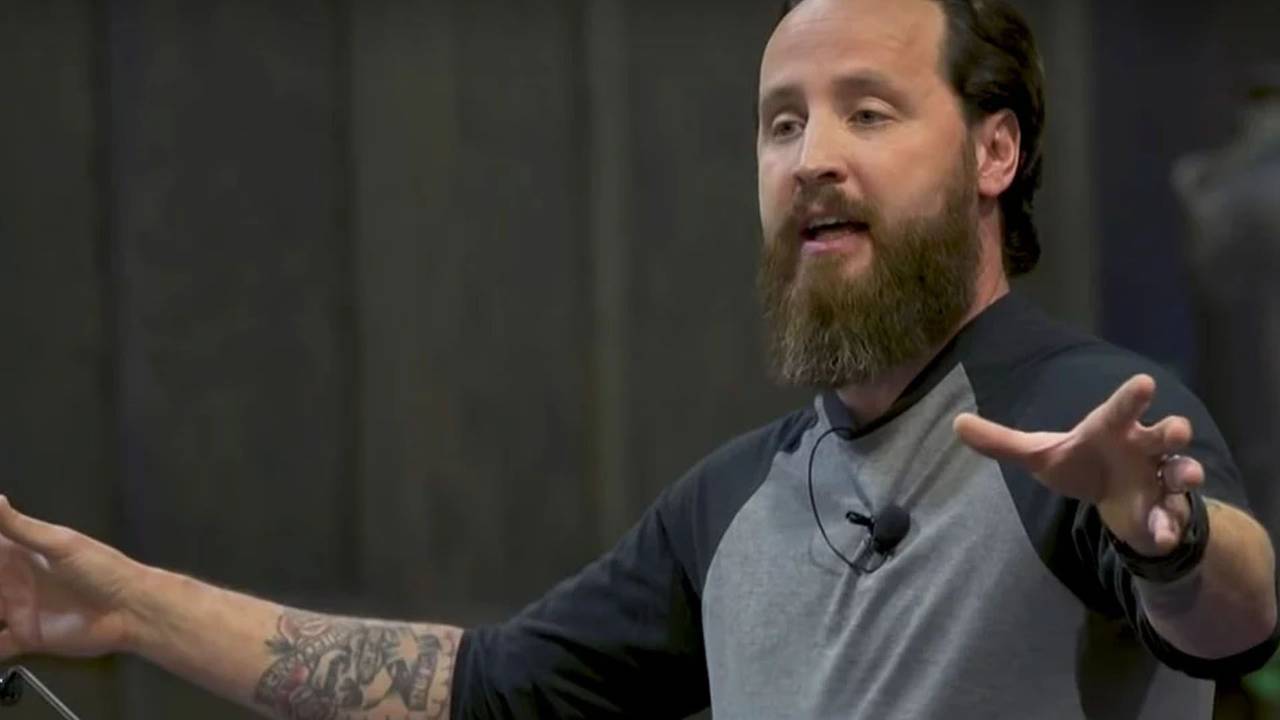
In this episode, we sit down with Pastor Jeff Durbin to talk about his decades of engaging Mormons in Salt Lake City, the theological differences between Christianity and Mormonism, and why he believes these conversations matter. Pastor Eric also asks Jeff about his interactions with Roman Catholics, the key theological differences he sees, and why those conversations are just as important in today’s church landscape.
Learn more about Jeff Durbin ➜ https://apologiastudios.com/
Please subscribe to Maybe God’s YouTube channel today!
Support future episodes ➜ www.maybegodpod.com/donate
Transcript
Eric Huffman: You're probably best known for your work doing sidewalk evangelism, specifically with Latter-day Saints.
Jeff Durbin: As zealous as you are, as faithful as you are as a Mormon, is it possible that you've been led astray?
Eric Huffman: Where did that passion come from?
Jeff Durbin: I heard the gospel in my later teen years. A guy that I knew pretty well came over to me while I was reading the Bible, he says, "What level of heaven are you going to?" I ended up staying up all night long. I basically created my case against Mormonism.
Eric Huffman: For more than 30 years, Pastor Jeff Durbin has boldly defended the Christian faith, best known for opposing abortion at clinics and engaging Mormons on the streets of Salt Lake City.
Jeff Durbin: Mormons teach a version of Jesus that is an idol. It's a Christ that has no existence and no ability to save.
Eric Huffman: There's a quote from Pastor Voddie Baucham. He said, "What a shame if you win the argument, but lose the man." What do you make of that?
Jeff Durbin: I genuinely think it's important for us to make sure that if we are engaging with the world, it is not to beat them up and not to win arguments. There's no trophies for that. The trophy is that person standing next to you in heaven one day. The reward is that person having their eyes open to Jesus.
Eric Huffman: Not to put you on the spot here, preacher, but what's the gospel?
Jeff Durbin: Well, it's...
Eric Huffman: Pastor Jeff Durbin, welcome to Maybe God.
Jeff Durbin: Thank you, Eric. It's an honor to be here with you today, brother.
Eric Huffman: Thanks, man. I'm looking forward to get into this. You're probably, at least recently, best-known for your work doing sidewalk evangelism, specifically with Latter-day Saints, our Mormon friends. People that have found you online probably saw that, at least in recent years. I know that's been a passion of yours. But where did that passion come from specifically to reach that group of people with the gospel?
Jeff Durbin: I wasn't raised in a Christian home, going to church, under the hearing of the gospel, in the Word of God. I heard the gospel in my later teen years and made a profession of faith in Christ. I just started devouring the Bible and carrying my Bible with me to high school classes and getting in trouble in high school for reading the Bible and not listening to the teacher.
In one of those classes was actually a theater arts and we were rehearsing for a play, and a guy that I knew pretty well came over to me while I was reading the Bible while everyone was rehearsing, and he sat down next to me and he was like, "Oh, you're reading the Bible?" I was like, "Yeah, I'm reading the Bible." And he's like, "You're a Christian?" And I said, "Yeah, are you a Christian?" He said, "Yeah, I'm a Christian too." I was like, "Isn't it great to be saved?" And he goes, "Yeah." Like, you know, obviously it was strange for him to hear it that way. At some point he says to me, he says, "What level of heaven are you going to?"
Eric Huffman: Wow.
Jeff Durbin: And I'm brand new to this. Like, I just learned that Jesus was God kind of a thing. I heard that question and I was so new to the Bible and I thought, "This is just something I didn't know about." And so I said, "Well, hopefully the highest level." So he tells me he's with the Church of Jesus Christ of Latter-day Saints and that he's a Mormon. I knew nothing about any of this.
After school, I drove over to the local Christian bookstore where I had become like a fixture. I mean, I used to just go there and sit down and just steal information from the books without buying. I knew the owner pretty well by that point. His name was Tony. And I walk right in and it's just Tony and I in the store. And I said, "Tony, can you tell me anything about the Church of Jesus Christ of Latter-day Saints?" And he was like, "Jeff, that's not a church, that's a cult." And so he runs to the back and gets a bunch of materials for me, some books, and he comes and he throws them at me. He's like, "Here, just take them."
And so I go home, I'll never forget this, I go home and I just start devouring these books. I'm just reading and reading and reading. And it was even some documentary things and I'm watching those. So what happened was I ended up staying up all night long throughout the entire night studying. In the morning, I got up early before classes and I went to a local print shop and just started making photocopies of original source documents and Bible verses, pages of scripture. I basically created my case against Mormonism in this book kind of a thing.
And so I go to school and I find my friend and I was like, "Wade, you're in a cult." And I throw the book at him. That started sort of a journey where he actually invited me into his life and into his family's life. And it was an amazing experience. His family was not... they were not nominal, they were devout.
I used to go over his house regularly for dinner to sit with his family to eat dinner. They had missionaries over regularly to come and talk to me. They took me to the temple with them. Obviously, not inside the temple, but they took me to the Washington D.C. Temple just to like, you know, look at how beautiful it was and everything else. I spent so many months with my friend talking to him and engaging. And this is, I think, what really ignited the passion within me, not just my love for those people. They were just so precious and so sweet. Just lovely, lovely people.
After school, he came over to my house and we're in my bedroom and we're talking, and he says to me, "Jeff, I know that everything you're saying is true. I know that it's true." He said, "But I can't leave the church. If I leave the church, I lose absolutely everything. I cannot leave the church. And I know what you're saying is the truth."
I was a new believer at the time and I don't even know where this verse came from, but it just came right out of me. I said to him, I said, "What shall it profit a man if he gains the whole world and loses his soul?" And I just saw in his eyes somebody who knew the truth, but felt stuck and knew he was lost. That just created with me a love and a passion for the Mormon people that I've never ever lost.
Eric Huffman: Wow, man. That's awesome. That's such a personal story. I've seen all the outpouring of that in your life and the ministry you've done. But I didn't know it was such a personal thing for you that goes so far back.
Jeff Durbin: Right. 16.
Eric Huffman: Have you heard from him? Have you kept in touch with that guy and his family?
Jeff Durbin: Unfortunately, I haven't. No, I haven't.
Eric Huffman: Just curious.
Jeff Durbin: I have tried to look into it a couple of times, but no. I haven't seen if there's been any real transformation in his life. I hope there is.
Eric Huffman: Yeah. Yeah. So when you threw the book at him and he eventually came around and said, "I know you're right," what was it exactly? What were the points you were making that distinguished authentic Christianity from Latter-day Saints, from Mormonism that I think most people may or may not know about? What are those distinguishing factors?
Hey, Maybe God family, I hope you're enjoying this conversation as much as I am. And I hope that it's helping you wrestle with your questions about God and Christianity with honesty and courage. Whether you're a lifelong Christian or you've stepped away from the church or you're still figuring out what you believe, Maybe God is a space where you can ask those big questions without fear. And you can hear from people who have real conviction that's born out of their life experience and real stories. So before you keep watching, please take a moment to subscribe to Maybe God. That really helps more people discover these conversations and to make sure that you never miss an episode that could spark a breakthrough or speak into a doubt that you've been struggling with. And be sure to let us know in the comments what questions or topics that you'd like us to explore next. As always, thank you for being a part of this community.
Now let's get back to our conversation with Pastor Jeff Durbin.
Jeff Durbin: It's interesting because then, early on at the very beginning, when I'm really learning the Bible myself, I mean, I'm learning about what scripture says about God and the gospel itself. And so I'm this baby learning all these things, but what I was learning were the basics.
Early on, one of the other things that God in His providence blessed me with was at one of those Christian bookstores, one of the employees came to me one day and he gave me a tape cassette box, our cassette tape box, just filled with all these tapes of the late Dr. Walter Martin from the Christian Research Institute going around the country, around the world, and speaking on different issues, whether it was Mormonism, Jehovah's Witnesses, Roman Catholicism. And he was teaching about the Trinity, defending the Trinity, and the salvation by grace through faith in Christ. I'm devouring all of that early on and learning it, obviously seeing it in scripture.
So when I was engaging with Mormonism very early on, it was on the basics. It was on who is God, the person and work of Jesus Christ, of course, what is the gospel, how is a person reconciled to God, what's the nature of scripture, what is the authority of scripture. And it was really those central foundational things that really I would bring into conflict with Mormonism. It was in terms of a contrast or a comparison between what the Bible says about Jesus and what Joseph Smith taught about Jesus.
Jesus, according to scripture, is the truly eternal God, not created, always existent as God, the creator of all things. In Mormonism, you know, the God of this earth or the three gods of this earth are just three gods among many gods, a pantheon of gods. The gods in Mormonism, like all pagan deities, have genealogies. They have a god before them, a god before them, and ultimately, you can become a god one day yourself. And so, it was really early on, just the basics, who is God and what is the gospel? And of course, with that, bringing the authority of Scripture, the ultimacy of Scripture and God's revelation to the Mormon.
Eric Huffman: Yeah. Well, I mean, that's some obviously significant differences. And unless people have seen The Book of Mormon musical or have been a Mormon themselves, I don't think a lot of Christians know these distinctives. I think most Mormons I've run into would say it's offensive that you would even consider a Mormon coming to Christ as a conversion. They're already in Christ in their minds. And a lot of polite Christians in America, I think, would probably just tacitly agree with that. You know, we're all kind of on the same team. And a lot of Christians would say, "Well, some of the Mormon families I know are the best families, they're the best people," and it sounds like one of your experiences with that family at 16.
Jeff Durbin: That's true.
Eric Huffman: Why are these distinctions so critical that you've devoted at least part of your life to speaking out against them and shining a light on them?
Jeff Durbin: Well, because it's a fundamental assertion of the message of Jesus and the Christian faith that Jesus says, "I am the way, the truth, and the life, and no man comes to the Father but by me." And so, like it or not, that's what Jesus taught, that He is the exclusive way to reconciliation and peace with God. I don't think that most people would deny that in terms of taking the Bible seriously.
Yes, the Bible clearly teaches that there's no other name under heaven given among men whereby we must be saved. However, scripture doesn't just say that Christ is the exclusive way to reconciliation and peace with God for salvation and eternal life. It also tells us that in this fallen world it is possible to have a false Christ, a false Jesus, a false spirit, a false gospel. That's what Paul says.
And this is what I think is so compelling, Eric, is that very early on, very early on within the Christian church, we're talking the first century, the apostles are still alive. In 2 Corinthians chapter 11, the Apostle Paul is warning the church in Corinth. And he says that he's afraid that as the serpent deceived Eve by his craftiness, your minds will be led astray by the simplicity and devotion which is to Christ. And he says that someone could come preaching another Jesus, another spirit, and another gospel, and he basically says, "And you might put up with them." Obviously meaning you shouldn't be putting up with a person who's teaching a different Jesus and a different gospel.
So if we just consider this, this isn't like a 2,000 years down the road problem for the Christian church. This is right in the middle of the work of the apostles identified as it's possible in the first century, shortly after the ascension of Christ, for someone to believe a false Christ and a false gospel that cannot save. So that's the real issue is that Mormons teach a version of Jesus that is an idol. It's a Christ that has no existence and no ability to save.
Eric Huffman: And where do they get this from? Just again, for people that may not be familiar, where do Mormons get this authoritative so-called teaching doctrine about Jesus being born and created, let's say, not just begotten of the Father, not eternal, but entering into time and space as a person into existence? Where do they get these ideas? And what are some of the other teachings that might surprise people to hear?
Jeff Durbin: Well, it is interesting because I would say that Mormonism is purely and clearly a man-made religion and contradicts the scriptures throughout its theology, its soteriology, and everything. Everything that Mormonism becomes is something that was evolution. So early on in Joseph Smith's experience, Joseph Smith is in New England, you've got his experience in Palmyra, New York, and you have, of course, the publication of the first edition of the Book of Mormon.
And in his experience and surrounding him and the community around him, that was a monotheistic Christian community all throughout. Of course, early on in United States of America and the colonies, that's what you see is this really strict devotion to the Trinity and to the authority of Scripture. But in New England especially, he's surrounded by Presbyterians, he's surrounded by even Roman Catholics, he's surrounded by Baptists, he's surrounded by Anglicans, it's all around him.
And so when he initially publishes the 1830 first edition of the Book of Mormon, that is interesting because you have statements in the Book of Mormon that are clearly monotheistic. You have modalistic statements in the Book of Mormon, you've got heretical teachings in the Book of Mormon, but it's essentially, clearly pointing towards the monotheism that is in the atmosphere around Joseph Smith.
But as time goes on and the Mormon Church is moving across the country, settling in different places, you begin to see Joseph Smith's theology transform from heretical views, heretical monotheistic views, monotheism to polytheism. So Joseph Smith at one point says, "I wish to declare I have always and in all congregations when I have preached on the subject of the deity, it has been on the plurality of gods," which is interesting because that's also not true.
Joseph Smith early on was promulgating a version or versions of monotheism, but his theology transforms into polytheism to the degree that in his most famous sermon called the King Follett Sermon, it was a funerary discourse he gave at the funeral of a man named Elder King Follett. In that discourse, he says that this has been made known to him by the Holy Spirit. So what he's giving is not his own private opinion, interpretation. These are the words of God from a prophet coming from the Spirit of God, according to Joseph Smith.
And Joseph Smith says this about God. He begins to explain God in ways that just cannot be confused. He says that God was once a man as we are now, has a body as tangible as man's flesh and bone. And he says about God, he says that we've imagined and supposed that God was God from all eternity. He says, "I will refute that idea and take away and do away the veil so that you may see." He says, "You've got to learn to become gods yourselves the same way all gods have done before you."
And so you see, in Joseph Smith's theology, you go from early on in the publication of the Book of Mormon and some monotheistic statements to clear polytheism. And it's a polytheism, Eric, that dwarfs a lot of pagan religions. There's a famous couplet in the Mormon church. I was just talking to some more missionaries last night. They first were like, "I'm not so sure what you're saying is true." I said, "Well, have you ever heard this? 'As man is, God once was; as God is, man may become.'" They all went, "Yep." They understood that.
One Mormon prophet said that there are more gods than there is matter. That is really the essence of Mormonism is pagan religion. It's a polytheistic religion that believes in many gods before God and that you can become one one day. And that's, I think, one of the most important things for Christians to hear is that even the story of Jesus and Mormonism, I'll just say this quickly, it's variegated within early Mormonism and prophets and apostles.
You have Mormon prophets and apostles teaching that Jesus Christ was a polygamist here while He was on earth. You have Mormon prophets and apostles teaching that Adam in the Garden of Eden was our Father and our God and the only God with whom we have to do, that Elohim, Heavenly Father, came down to earth as Adam with one of his goddess wives with him and he created the human race initially himself first. You have different views early on in terms of God learning and growing and even possibly sinning.
But the story of Jesus is something that comes to us from Joseph Smith, that story of him, and this is the key issue, Elohim and one of his goddess wives produced Jesus, Lucifer, and all of us in the pre-existence through physical sexual relations. A lot of Mormons today try to get away from that, but there really is no avoiding it with the statements of the prophets and apostles.
But Jesus is essentially our elder brother, and he is Lucifer's brother and our brother, and there's the spirit existence we have before this. And then we come to this earth and take on physical bodies. But at the very beginning of Mormonism and that claim, you have to see that that is not the Jesus presented to us in Scripture.
In Scripture, Jesus is the creator of all things, including Satan himself. He's not his brother. Jesus is, of course, repeatedly throughout Scripture said to be the eternal God, that He has always existed in face-to-face relationship with the Father from all eternity. En archē ēn ho Logos, John chapter 1, verse 1. That He is God, the creator of all things, and He condescends to save His people from their sins. It's a very different Christ than Jesus who is the product of a sexual relationship between Elohim, one of his goddess wives, and Lucifer's brother. That's a very different Jesus.
Eric Huffman: Putting him on par with Lucifer is... that's crazy work. They still believe Lucifer fell, I guess, and that he's a malevolent spirit in the world?
Jeff Durbin: Yes, but their version though, their version of Satan or Lucifer's fall is different than you would see classically within the Christian church historically in terms of Satan. You know, whichever verses you want to take to describe Satan's fall, whether he wanted to ascend and be like God and was cast down out of heaven for pride and those sorts of things. It's very different in Mormonism.
In Mormonism, there's a different story. You can see that Joseph Smith was kind of interacting with some of the controversies around him surrounding Reformed theology, Calvinism, the issue of free will. And so you've got Jesus who wanted people to have a free will and Satan who took a different opinion. And so then Satan takes the angels with him.
Early on in Mormonism, Mormon prophets and apostles were connecting the fall of Satan and the people or the angels or the spirits that went with Satan to those who today are born cursed with black skin. It's a real mess in early Mormonism when it comes to our Black brothers and sisters and, you know, the curse of black skin and not being able to hold the priesthood. But a lot of that is connected to the association with Satan and his fall.
Eric Huffman: Gosh, that's troubling. What do modern saints say about that as part of their... Did they see it as a stain on their history and it was a mistake, like Catholics with indulgences, or is it like, "Oh, that was then, and it was right then, but we've changed since?"
Jeff Durbin: It's interesting because one of the things that Mormons will say, is they'll say, "We're the one true church and look at the mess of Christianity. You've got Roman Catholicism, Eastern Orthodoxy, the Protestants, and goodness gracious, how many different denominations of Protestantism are there?" They'll say that sort of thing.
But within Mormonism, there are hundreds and hundreds and hundreds of sects of Mormonism. There's Salt Lake proper, and then there are just hundreds of sects of Mormonism. So in terms of what one Mormon will say over against another, I mean, I think a lot of Mormons that people today who would say, "I'm truly following the prophet, I'm following him with his words about polygamy, about the Blacks," those would be, I would say, truly consistent Mormons. But those aren't Salt Lake proper Mormons.
So if you were to ask them about the Blacks and curse with black skin and not able to hold the priesthood, they would hold to what the original prophets and apostles said about that. Whereas Salt Lake and the major portion of the Mormon group, they would now follow what modern Mormon prophets have done in terms of contradicting the earlier prophets and apostles.
Mormonism today, the Salt Lake version of it will essentially say the Blacks now today can hold the priesthood. Many of them today, especially those that BYU is pumping out today, BYU is pumping out a lot of leftist and liberal Latter-day Saints, at least they're all around, many of them would condemn the statements of Joseph Smith and Brigham Young about Blacks and about things related to the priesthood. So it kind of depends, Eric, who you're talking to.
Eric Huffman: Yeah, that makes sense. I mean, these are human beings we're talking about. After all, we should expect that kind of fragmentation.
Jeff Durbin: Messiness.
Eric Huffman: Yeah. Oh, it's a mess. And then the polygamy thing just sort of went by the wayside for the mainline Mormons as well. But there are some purists, let's say, that hold on to polygamy.
Jeff Durbin: Oh, oh, for sure. As a matter of fact, I love going to Salt Lake and South Jordan and all that, just to go and... We have a church plant there, but also just to minister to the Mormons and be there. I love the Mormon communities. I truly, truly do. Today, if you go to Airbnb, you can search around Salt Lake and South Jordan and those areas for a large enough house for your missions team and Eric, you'll find them. You'll find some large houses, which strangely have like three levels and three houses and one house and full kitchens.
We affectionately call one of the places we usually stay because it accommodates our whole team, we affectionately call it Polygamy Palace because it is clearly a home built for multiple families in one home. That's all over Salt Lake and the surrounding areas. The people today, many will, Eric, come into contact with early Mormon documentation. They'll read Brigham Young in Journal of Discourses saying that the only men who become gods or the sons of God are those who enter into polygamy.
Eric Huffman: Wow.
Jeff Durbin: Now, there's no way out of that. Now, if your goal in Mormonism as a faithful Latter-day Saint is to become a god one day through exaltation, and you're now looking at, "What did Brigham actually say?" And now you're reading your prophet, Brigham Young is a prophet in the Mormon church, say, that the only men who become gods or the sons of God are those who enter into polygamy, many Mormons have a switch today. They will see Salt Lake proper as apostate, as not faithful, and they will go back to the original.
So some people wonder like, "How do these people get caught up in these polygamous cults, you know, whether it's Northern Arizona, Colorado or Utah, how do they get caught up in these polygamous Mormon cults?" And the answer is they're trying to be consistent.
Eric Huffman: Wow.
Jeff Durbin: They're Latter-day Saints. They read Joseph, they read Brigham, they read the original prophets and apostles, and they say, "This is the path. This church has fallen away from this." So polygamy is still a thing, very strong. Eric, have you ever been to Salt Lake?
Eric Huffman: No, I haven't. I'd love to go.
Jeff Durbin: I would say we should go sometime. If we're ever going to go again, I got to let you know.
Eric Huffman: Please, I'd love to.
Jeff Durbin: You can come experience it. I will say this. That it's a normal experience for us while we're out, if we're going to like a restaurant or like, you know, we like to go to this place called the Pancake House that's near South Jordan. We'll take the team there. And numerous occasions when we're in a restaurant like that locally, you will see a man come in with five or six women, you know, look like they just came off the prairie and a bunch of different kids. And it's obvious it's out. It's clear. Everyone knows it, understands it. And so it is still very much a part of Mormonism. And here's the thing, Eric, it can't not be.
Eric Huffman: Yeah. I was going to say, I mean, it seems like in a weird way, I have more respect for those people who are living it out fully.
Jeff Durbin: That's what I've always said.
Eric Huffman: I mean, it's strange to say that because I don't respect that practice at all. But and I also want to say anybody watching this who hasn't watched your videos, it seems like we might be having a little fun with someone else's religious group or... Your love for the Mormon people comes through in your videos. And if anybody has any doubt about that, I hope they'll go watch your sidewalk engagements with Latter-day Saints, because you genuinely love these people. We might be having a laugh here or there, but we can laugh at Christianity too in some ways.
Jeff Durbin: I laugh at Christians all the time.
Eric Huffman: And I cry a lot.
Jeff Durbin: Me too. Me too.
Eric Huffman: But you genuinely love these folks. What is it that you see working in these conversations? Because you've walked several... I mean, not several, I mean hundreds, I don't know if you have the number of Mormons that you've walked across that threshold into sincere, genuine Christian faith. What is it that tends to get their attention and bring them to that decision?
Jeff Durbin: That's a good question, Eric. I learned very, very early on that, I mean, going out onto the streets, in front of the Mormon temple or in people's homes, having conversations with them and Mormon missionaries, that it is truly not me. It is not my convincing, it is not my creative argumentation that's going to ultimately win them.
A lot of times, I think if you watch enough of our evangelism on the streets, there's a million different places we can go, but I think you'll probably notice that we are forcing ourselves to stay in a single lane with the Latter-day Saint. Like, is it possible for us to go into the Book of Abraham and the Book of Joseph and to pull out the facsimile of Joseph Smith's original papyrus, the Book of Breathings and the Book of Dead? The thing that he said he was translating into the Book of Abraham, is it possible to demonstrate that he didn't get one single word right in the translation, that he specifically and completely lied to the Mormon people about his ability to read ancient dead languages? Is it possible? Yes.
Is it possible to talk about Joseph Smith's clear moral failings when it comes to sexuality and his relationship with his wife and the introduction of polygamy? Is it possible to talk about Joseph Smith's reputation in his area where you've got his own neighbors, many of them, writing public affidavits and joint statements about his low character and that he was a con artist? Is it possible to talk about Joseph Smith's arrest record, like, you know, 1826, he was arrested in Bainbridge, New York for crystal ball gazing, God's Law was still part of law on that day, and occultic practices were forbidden and criminal? And is it possible to do all that? Absolutely. Was the man's history just wild? Yes.
But we want to stay in one lane because, again, I learned very early on that when someone's eyes are open to the truth, it has nothing to do with me. I have so many experiences, Eric, and I'm sure you have these as well as a pastor where I maybe was talking to a group of people or a person and I was so sure, I was so sure. "Man, I think God is really moving in this person's life right now. I think God is really opening their eyes." And this one over here that is so hostile, like this person's just hard as a rock.
What ends up happening, and this has happened so many times, is it was the one who was so completely hard and resistant that God shatters and opens their eyes to the truth. And when you talk to them and ask, like, "Well, how? How did God do that? Because you seem like you were just... if you were spitting on me, you were throwing things at me. Like, why? How did God do that?" It's always the same answer. "It was that scripture you gave me. It was, "I went home and I read that verse and I sat there and God did not let me escape from it and God used that to open my eyes to the truth."
So what do we try to do is we try to stick to the basics of who God is and what the gospel is and just make sure that we are giving so much scripture repetitively because it is the gospel that's the power of God for salvation. It's not me. I have nothing to do with this. I'm just a means. I'm just a spoken wheel. It's God who's doing this. Of course, He uses the church to do it, each of us to do it, but He uses it by His Spirit and His Word. It's His Word that opens the eyes of the blind.
That's what we try to do is make sure... honestly, we're pretty plain vanilla when we're on the streets with Latter-day Saints. We're just constantly sticking to those themes. Who is God? What is the gospel? And we're trying to make sure that we're giving them as much scripture as possible so that God by His Spirit can use that to bring them to life.
Eric Huffman: Man, that's so good. And it's a good reminder for Christians hoping to have better conversations with people because, I you could always go in guns blazing with everything that's wrong, with everything about the religion in question, and just tear it down or burn it down. And keeping the gospel and the Bible front and center and leading people in that way, I think is more productive generally. So not to put you on the spot here, preacher, but for anybody watching right now that might not have any concept of what the gospel really is, they know what Christianity is or what it looks like, and they might know something about Mormonism or whatever, but what's the gospel, Jeff?
Jeff Durbin: Well, it's one of the first things that Jesus is saying. When, if you read in just the first chapters of the Book of Matthew, you're new to the Bible, you're opening your New Testament, you're opening Matthew up, and you get four chapters in, and you read Jesus conquering Satan in this great trial in the wilderness. There's so much there that's so beautiful about Jesus as a true and perfect Israel and the true image of God.
But He comes out of the wilderness and He's preaching that the Kingdom of Heaven is at hand, the Kingdom of God is at hand. And it says that He is proclaiming the good news of the Kingdom. And so there is an element to the gospel that is good news from God about Christ coming to rule and to reign. And it's good news. And then you go deeper and you say, "Okay, but what's good news about that?" Well, what's good news about that is that Christ has come into the world to save sinners.
The very start of the story of the gospel has to start with the true assessment of each and every single one of us. And that's simply this, is that all have sinned and fall short of the glory of God and that there is none righteous, no not one, none who seeks for God. The condition that we are all in is worse than we all think. I would say even as Christians, we don't fully comprehend outside of Christ what our condition truly is before our holy God. We are dead in our sins and trespasses, Scripture teaches, by nature children of wrath. And so our condition is so broken and so fallen, there is no way—and this is clear in Scripture—for any one of us, any sinner, to be reconciled to God or have peace with a holy and perfect and just God through somehow making ourselves better or becoming righteous enough in ourselves or obeying enough of God's Law.
What the gospel tells us about is a story of a holy God who condescends in the person of Christ to live a life as our substitute in our place. And that's the glory of the gospel is that Jesus comes not to simply help us, not to simply give some and then we do the rest, but Jesus comes to literally substitute Himself for us, to live the life of perfection that we have not. That was what was said about Jesus is that He's the Lamb of God with no spot, no blemish. He comes to take away the sin of the world. Jesus is the righteous one. He perfectly obeys God's Law in the place of His people, and He goes to the cross to die a death that each and every single one of us truly, truly, truly deserve. Because God is just and God is holy, and because He is perfectly just and perfectly holy, He can never simply abandon justice and just let people go and say, "Well, I choose just... now, don't worry about it. You've victimized all these people, you've sinned against them and Me, and let's just not worry about it."
No, God is truly just. He actually does something in Christ that you see in no other religion. And that God Himself in the person of Christ comes to take the justice of the Father, the wrath of God, and the place of God's people, the death that we deserve. We deserve to die for our sins. It says in Scripture, "The wages of sin is death."
And then this is the glory of the gospel as well. He doesn't just take our death and die and go away, but He conquers our greatest enemy, death, and He rises again from the dead so that all who turn from sin to Him in faith to trust in Him and what He's done on their behalf, they receive the gift of peace with God, no condemnation, the gift of eternal life.
We are reconciled to God not because of anything in us. It is truly just something we receive by faith. It is Christ and His righteousness that we receive as a gift, and He takes our life of sin, misery, and death upon Himself. And so there's a great exchange where Jesus has made sin on our behalf, and we become the righteousness of God in Him. And that is one way. It only has been one way since the very start of Scripture. And you see it in Father Abraham. It is through faith, faith in Christ. It is a simple, receptive, childlike faith that just receives this gift that's through Christ and through Christ alone.
Eric Huffman: Yeah, that's the difference. It's faith to receive the gift. And the gift of salvation. And I don't think that's the case in any other religion, like you said.
Jeff Durbin: None.
Eric Huffman: What is the recipe for salvation according to Mormonism, to go back to that group?
Jeff Durbin: It's a lot. I mean, if you take statements from just the Book of Mormon, you see the common thread with every other man-made religion. There's a passing nod to God's grace, but also it's really you. 2 Nephi 25:23 is one of the simplest ways to put it because it's a contrast to Ephesians 2:8-9. It says this: "For by grace are you saved." And every Christian hears that and goes, "I know that verse. Through faith and that not of yourselves is a gift of God, not according to works, listen, lest a man should boast." But 2 Nephi 25:23 goes like this: "By grace are you saved after all you can do."
Eric Huffman: Wow.
Jeff Durbin: But here's the thing, in terms of just being honest and at least gracious to the Mormon, that's no different than every other man-made religious system on the planet. They're all somehow, yeah, God does this for me, and He meets me halfway or however much, and then I have to do the rest through my own obedience.
So if you're looking at the Book of Mormon, there's an example. If you look at their Articles of Faith, it says—this is something that every Mormon is going to memorize, their Article of Faith—it says that we believe that through the atonement of Christ that all mankind may be saved. And then it says, "Through obedience to the laws and ordinances of the gospel." There it is again. You have Jesus did His part, but you still have to do your part, your obedience, your works of righteousness, that has to be combined together with Christ's work so that God can accept you one day or bring you to the highest level.
And then it gets more problematic, though, Eric, if you step outside of those official statements like in the Book of Mormon or in the Articles of Faith or in Doctrine and Covenants and you start to actually explore what the Mormon prophets and apostles have taught, you see that there's even more requirements. For example, Brigham Young saying, polygamy... If you're not a polygamist, you'll never become a god one day. You'll never get to the highest level of heaven and exaltation if not that work. And so it just becomes a pile-on of more and more.
Eric Huffman: It sounds so familiar. It sounds eerily familiar to anyone, I think, that looks honestly at other world religions, even ones that are Christian adjacent. We share two-thirds of the Bible with our Jewish friends. And Jesus had a lot to say about rabbis that added on to the Law and just piled on people with all these expectations of obedience. The same thing with Mormonism. And you could probably say the same thing about Islam, Jehovah's Witness, other religions.
One that has been on my mind a lot lately, brother, is our Roman Catholic friends. I wonder if you have any thoughts about the role that obedience plays in saving oneself in the Roman Catholic worldview as opposed to the pure gospel, as you've articulated, which is saved by grace through faith so that no man may boast. It's a gift from God. Of course, Christians should obey God, but as a fruitful outflow of the salvation gift we've received, not as a prerequisite to be saved. If you're watching and you hear nothing else, just hear that point, because that's the demarcation line. But with our Catholic friends, what do you see there that needs to be said?
Jeff Durbin: Well, you make a good point, Pastor Eric, and that is that in Romans chapter 3... I would say read Romans 3, 4, and 5. Read all of Romans, but 3, 4, and 5 for this discussion where Paul couldn't be any clearer. It is so abundantly clear that we are saved apart from the works of the Law. He says in Romans 3 that there shall no flesh be justified in His sight through the Law. He says, because through the Law is knowledge of sin. And so he makes it very clear that it is not through works of the Law. It is a gift by His grace, he says, through the redemption that's in Christ Jesus. It is a gift by His grace. That is like Paul is stuttering, by the way. It's a gift-gift. It's a gift by His grace through the redemption that's in Christ Jesus that God puts Jesus forth as a propitiation through faith in Him, through His blood, so that God would remain just and the justifier of the one who has faith in Jesus.
But what's interesting here is that Paul knows that the gospel brings this up with people who think they can earn their way to God. They'll say, "Oh, that's just so gracious that such a gift is what we just don't obey anymore." Well, he addresses that. He says that we maintain, in Romans 3, that a man is justified by faith apart from the works of the Law. That's by the way, faith alone. Faith by itself apart from works is faith by itself, faith alone.
But he then says at the very end of Romans chapter 3, "Do we then make void the Law through faith?" Well, this is really important. Which Law is he talking about? The same Law that he just said will never justify you. He says, "Now do we now make void the Law through faith?" He says, "No." He says, "Actually, we establish the Law." So to all people who would say like, "This is all grace and just abandoning Law," Paul says, "No, it's all of grace. It's all faith alone. It's God does this. It's all a gift. But now that you are saved, you establish the Law because you're saved."
But in Rome, Rome has much like every other man-made religious system, a system of works that ultimately are added to our story of salvation that have something to do with our own righteousness or our standing before a holy God. Now, one of the great things about our communication with our Roman Catholic friends and family is there are so many points of common ground, so much contact.
For example, the Roman Catholic and the Christian, the Protestants, have so much amazing common ground that we just don't have with Latter-day Saints. When you're talking to a Latter-day Saint, you're starting at the bottom. You have to provide definitions and you have to sometimes convert the Mormon to Mormonism before you can help convert to Christ. It's true.
But with the Roman Catholic, what do we agree on? This is the Word of God. Now, obviously, they have the Apocrypha and the deuterocanonical books, so we can talk about that, but they at least will affirm what's in the pages of this book are the very words of God and they're authoritative. They believe in the Trinity, the deity of Christ, the virgin birth, the physical resurrection of Christ, that Christ is returning again, that salvation is through faith in Jesus. But then they, of course, don't stop there. They'll say, "Yes, it's by grace. Yes, it's through faith. However, it's also..." and then you have the sacramental system of the church.
You've got all the different things that are in process in the Roman Catholic's life that they have to cooperate with. They have to cooperate with the means of grace and grace. I mean, put it this way, the easiest way I can put this is Mass. For the Roman Catholic today, the theology of the Mass definitely evolved over time. And so, what you have today is the Mass being this presentation of the work of Jesus Christ, His death on the cross, His bloodshed, that if you miss it, if you aren't going to Mass, if you are not participating in that, then whatever sins you've accumulated as a Roman Catholic, that week or that day or before that Mass, whatever sins you've accumulated, you are still accountable in some sense to God, and this is now broken fellowship with you and God.
And this is where you get into things like purgatory and temporal punishments, and you get into this story of essentially this: When I stand before God as a Roman Catholic, do I stand before God because of the perfect life and obedience and righteousness of Jesus credited to me as a gift or do I stand before God with some combination of righteousnesses: Jesus, Mary, and the other saints through the treasury of merit, my own obedience and righteousnesses, you know, is it enough? Do I have sins now that I'm accountable for after initial justification?
Here's the key issue. In Roman Catholicism, it is a gospel that does not bring peace. Roman Catholics don't know from day to day whether they truly have peace with God. Whereas if you look at the Scriptures, if you just read Romans... just take Romans, Paul's explanation of the gospel, just read Romans and see that the result of the gospel that Paul preaches is that, Romans 4, that we are counted righteous apart from our works and that He never counts our sins against us, and that we have been justified by faith and we have peace with God, and that there is therefore now no condemnation for those who are in Christ Jesus, and that nothing can separate us from the love of God that's in Christ Jesus our Lord.
You can go on and on with statements to demonstrate that what the gospel and Scripture brings is peace with God. And it is not because of us, it is not because of our doing or our own spiritual enlightenment and our understanding. It is a gift of God's grace through what God has done in Jesus Christ. And what Rome does not give to people is peace, peace with God. Can I just say one last thing about that just quickly?
Eric Huffman: Please. Go ahead.
Jeff Durbin: My mentor, my spiritual father in the faith, my friend, Dr. James White, has debated all of Rome's best apologists and best representatives throughout just decades of ministry. One of my favorite Roman Catholics on the planet is Dr. Mitch Pacwa. And Dr. White has done a lot of debates with him.
One of the most compelling parts of any of their debates was where Dr. White—and they have a good friendship, very, very good friendship—where Dr. White asked him about that. Like, "Do you know that you have peace with God? Can you say with Paul, 'I have been justified by faith and I have peace with God'? Do you know that you have peace with God as a Roman Catholic priest?" I mean, talk about dedication and you talk about a life of discipline. He says to Mitch Pacwa, "Do you know you have peace?" And Dr. Pacwa says, "I don't." He didn't know whether he has peace with God, to which I want to just... I know I'm hearing right now the Roman Catholic who's saying, "Well, that's the sin of presumption. You think that that's a sin to think that." I would say, "Well, this is the glory of the gospel because John says in his letter, he says, 'These things have been written unto you that believe on the name of the Son of God, that you may know that you have everlasting life.'" God wants us to know.
Eric Huffman: Yeah, and to have peace. Peace is all over the New Testament. It just doesn't make me angry like some false teachings. It just makes me sad. I just want my Catholic friends to have the glorious peace you have when you absorb the grace of Jesus and you go to bed knowing, "I screwed up a lot today, but my soul is secure because of the perfect sacrifice and finished work of Jesus at the cross." I don't see that in my Catholic friends and neighbors.
Jeff Durbin: Amen. Amen. I have Catholic friends and loved ones and family, and my desire, my hope for them is that they would know the gospel of God's grace and peace that you have in Jesus Christ. I do believe, and I believe that I've met them, many of them, Roman Catholics who I believe are truly in Christ, truly know Jesus, and understand the gospel. But here's the thing. They are that way despite the teachings of Rome. There are people within the Roman Catholic communion that are just reading their Bibles. And many times they just aren't aware of the whole system itself, because if you believe the system, you have to ultimately reject Paul's gospel. And that's my main point.
Eric Huffman: Yeah, that's right. These are tough topics, and obviously, we're going to step on toes and things like that. If you're watching and you're a Roman Catholic, I hope you'll chime in in the comments and let Jeff know everything he needs to know about your feelings.
Jeff Durbin: I'm always willing to listen.
Eric Huffman: You can take it. I've seen it in your videos. The big question I wanted to talk about as we wrap up is, you know part of our mission here at Maybe God is to inspire people to have better conversations, especially Christians to have better conversations with unbelievers. And you have really gone after it and you've mastered that art in so many ways. And I admire your tenacity because I know also you're a pastor and a speaker and author and a father and a husband. Just to go out night after night and talk to strangers, it shows your heart, brother, and I'm grateful.
Now, in terms of the rest of us, I'm not as naturally confrontational as you are, I think, and you've inspired me to be more strategically confrontational for Christ. What is the sort of mindset you go out on the streets with when engaging with potentially hostile people in a potentially confrontational way? You face death threats and things like that for what you do? No?
Jeff Durbin: Yeah.
Eric Huffman: What's your strategy? What's your sort of mindset going out into the world like that?
Jeff Durbin: Well, I would say the first thing, and this is truly it because honestly there's so many other things you could be doing on a Saturday night. I've often said, you know, when I'm out on the streets and people are like, "You know, what are you doing? You hate us and you know, what are you doing?" I'm thinking to myself, "If you only understood I have a wife and children at home, I could be doing a lot of other things right now. I'm here not because I want to win an argument or want to get one over on you. I'm here because I love you. I love your community, and I don't want to see you remaining lost."
I think that it has to be first and foremost—and I know this is sort of the answer everyone expects to hear, but I genuinely mean it—it has to be motivated by a love for God and a love for His truth and a love for His gospel and a love for these people. I would say don't even really... I don't want to steer people away from reaching the lost, but if you're not truly in love with God and the gospel and truly you love these people, then spend some time first falling in love with the gospel, falling in love with God's truth and really developing it with yourself, a love for these people, a genuine love for this group that you're trying to reach. Because if that's not there, then you are just going to try to win arguments. You are honestly harming probably many people and yourself.
I would say go spend time with your family. If you're going to be hateful, if you're not truly going to love them, if it's not really about God's glory, well then go spend time with your family, be discipled, fall in love with these things truly before you go out there. But I would say... this is where I think other Christians might disagree with this and it's okay, but this is where a lot of my own Reformed theology comes into play here. And you don't have to be Reformed to believe this. You can affirm these truths because they're there in Scripture.
In John chapter 6, Jesus says, "I've come down from heaven not to do my will, but the will of Him who has sent me. And this is the will of Him who has sent me, that of all that He has given to me, I should lose nothing, but raise it up at the last day." Jesus also says in John 10, same book, couple chapters later, He says that He's the Good Shepherd. And He says that His sheep hear His voice and they follow, they come.
So let's just believe that, that when we go out there, this is a work of God, of God drawing people to Himself. Sometimes you go out there and it looks like nothing is being accomplished. Sometimes it looks like, "Man, this was a waste of time. This was so hostile." I've been there dozens of times before, people grabbing you, roughing you up, spitting at you, throwing things at you, cursing you out. And I understand that's very difficult, but God says in His Word that no man can come to me unless the Father who sent me draws him and I will raise him up.
What I go out there with is... somebody might say this: "Jeff, you're really calm and you seem very gracious. I don't know if I can handle it that way." My answer is I can't either. I genuinely can't. I'm a martial artist. I'm a fighter. And I have been my entire life. Someone say, "I'm just not as patient or as gracious as you." I'm like, "You have no idea." What you're seeing out there is not me like in myself. That is something that the Spirit of God has done in my life. And it's motivated by a particular view of God that this person is hostile, not to me. Their hostility is not really towards me. What they see in me is probably the face of their father. What they see in me is the reminder of their rebellion, their suppression of truth, their hostility towards God. And I have to recognize that their anger and animosity isn't at me.
I'm the messenger of God's love and grace to their life. And so my duty is to be there, to be the means of God's grace in their life, to give them the truth and to trust that when God moves powerfully in somebody's life, nothing, nothing on earth can stop Him. Not even them.
Eric Huffman: Amen.
Jeff Durbin: So I rest in those truths. I know that Christ has people He's going to bring to Himself. He used this church to do it. And so I'm going to go. And that's what I'm doing.
Eric Huffman: I was thinking earlier, you were saying to people, if you don't have love for God and love for your fellow humans in your heart, don't even go out and try. Because I was thinking, if you don't have that love with you when you hit the sidewalk, you're not going to find it on the sidewalk when they're spitting at you and cussing at you and attacking you. Some of y'all get attacked and physically assaulted. And so, yeah, you got to be prayed up. You got to be ready to face some of that and not internalize the criticism. Because, man, you catch a lot of heat. Is there a certain setting or a group of people that you come across on the streets that is more hostile than most?
Jeff Durbin: I would say any of our work at abortion clinics or in the abortion arena for sure is the most hostile. I would say the most hostile group that we've probably ever confronted or been confronted by is Antifa.
Eric Huffman: Oh, really?
Jeff Durbin: Not that we're, you know... It's just a lot of, you know, usually thin as a rail liberal dudes and things like that. They're very hostile, very angry, things like that. I would say that the most hostility is definitely in the arena of the area of abortion.
Eric Huffman: I thought you were going to say that. It was a leading question. That was when I first came across your work was within Endabortionnow.com. I mean, it's just a powerful movement of grace, God's grace, working through y'all outside of abortion clinics and other kinds of rallies and places where abortion is being lifted up as a moral good. You guys go and have loving, honest conversations with anybody who will talk to you about the unjust taking of human life in the womb. And you've been doing that for how many years, Jeff?
Jeff Durbin: I think specifically in this area, we're going to save lives at the abortion mill and then also get bills into the legislature since... it's been 15 years.
Eric Huffman: And of your church members, leaders, you yourself, I know you guys have adopted a lot of kids as well. Can you put a number on that for me just for...
Jeff Durbin: Well, I would say that the children that have been saved literally from death through End Abortion Now, raising churches up to do the same work that we do, mostly across the US and also globally, tens of thousands of babies have been saved from death at the abortion mills at this point. Literally tens of thousands. Locally from our own church, it's probably close to 1,500 maybe now at this point, our local churches saved from death at the local mills.
And then adoptions, yeah, Apologia Church families, many have adopted babies. We've adopted three children. One little boy who's turning six in a couple days. Then twin girls that we adopted a little over two years ago, and they're doing wonderful. So we have three of our own and it's wild, Eric. I mean, I'm 47 years old, I have four biological children. My youngest biological child is about to be 18 years old. And now we're starting completely over with a brand new. We call it Durbin 2.0, because we didn't expect it, we didn't see it coming. My wife and I were talking last night, like, "This is wild." If we didn't have children, like, "What would we be doing with ourselves right now?" I mean, like, we could...
Eric Huffman: Don't let those questions in, Jeff.
Jeff Durbin: Yeah. No, thankfully, we still get time together. Her parents have moved in with us, and they help with the kids and all those things. But at the same time, I think... we're young and so like, wow... because we married and had kids early. Like, you know, she had just turned 18. We grew up together. And as soon as she turned 18 and we just got married and we had kids right away. That means my kids are grown now with their own children. What would we be doing with ourselves? I mean, we'd just be like... you know, I don't know. "Do you want to just walk around the neighborhood or something?"
Eric Huffman: Netflix? I don't know.
Jeff Durbin: But now we've got these amazing little children running around. We get to pour into them. It's amazing.
Eric Huffman: A whole new family. Same wife, same wife. Not a new wife, but new family.
Jeff Durbin: That's right.
Eric Huffman: Just one wife for brother Jeff Durbin.
Jeff Durbin: That's right.
Eric Huffman: Man, I think as we wrap, just final word to Christians. I think you've diagnosed this. I've heard you talk about it and I felt it a lot, especially, I came out of the Methodist Church. I'm no longer Methodist, but that was sort of my denomination growing up. There's a plague of politeness in a lot of Christianity these days, mainstream Christianity, we're just too nice, or we try to be. We're nice, polite people, and that keeps us from speaking truth in a bold and loving way.
On the other side, I think there is a temptation sometimes just to sort of Nick Fuentes-kind of guns blazing, take-no-prisoners approach. And you've always been toeing that line. There's a quote from Pastor Voddie Baucham, who I know we both respect. Recently passed away, sadly. In one of his last sermons, he said, "What a shame if you win the argument, but lose the man." Now, I wonder if, you know, given your experience and your passion for reaching the lost and speaking the truth, what do you make of that quote from Voddie?
Jeff Durbin: Sounds just like something Voddie would say. He had such an amazing way to take important biblical concepts and truths and principles and to condense them down into a line. Voddie was masterful at that. Eric, I think that, as I get older, especially, and more experiences and, you know, even experiencing more pain in this life, and there's the human experience of sin, and then also victory and then joy and then pain and all those things, I think that I've grown more and more committed to looking at my own heart, my own mind and making sure that my motivations are pure and that my love is pure for this person, and it's genuine. And it's not just about winning the fight or scoring points or making the person feel bad. It's genuinely I don't want to waste time just trying to harm people with my words or make them feel small or to beat them up. I genuinely want to make sure that this moment I have with the person is truly redemptive and that I'm redeeming my own time with them and that it's meaningful.
I'll just say maybe it's also my own experience just in life and the sanctification God's done in my own life. I genuinely think it's important for us to make sure that if we are engaging with the world, it is not to beat them up and not to win arguments. There's no trophies for that. There's no victories in that. The trophy is that person standing next to you in heaven one day. That's the trophy. There's no rewards of any meaning or any value because you won an argument online in a comment box section or something like that. The reward is that person having their eyes open to Jesus and knowing Him like you know Him.
I would say that that has to be the focus of all of our lives. I'm not saying anywhere that I do it perfectly. I know I have failures completely. I know that I do not do this perfectly all the time. And I know that there's many, many, many times, every time when I go out to hit the streets or to go to the sidewalk outside of an abortion mill, I have to ask God to fix my motives, fix my heart, fix my mind. To keep my mind pure, to help me to love these people, to truly love them. And so it's not like, you know, all of us don't need work; we do. But I think we have to just keep at the forefront of our minds that we are sinners in a fallen world, and though we're redeemed in Jesus, we're still a work in progress. And we have to make sure we're constantly checking our motivations: why am I actually doing this?
Eric Huffman: Yeah, that's right. And constantly remembering what the Lord brought us from and how bad it got and how bad we still are, but just certainly how bad it got. I'm constantly retelling my story. When I was 20s and early 30s, I would have been Antifa if Antifa was a thing. I was angry, super progressive politically. I was in the Methodist pulpit as a pastor, but I was not a Christian. I didn't believe in supernatural stuff. I just wanted to make the world more just, social justice, etc., etc. And I would have been the counter-protester at your protest. I would have hated guys like you.
Jeff Durbin: Yeah, I heard your story. It's amazing.
Eric Huffman: Jesus turned me around, and now you're one of my heroes. Not to inflate, I know you're not here for that, but I just have always looked up to you since becoming a Christian and I know many others have as well. And I think about your story too, Jeff, the fact that you were flat on your back about to overdose on drugs and illicit substances, and God saved you from that hell.
Jeff Durbin: Right. Right.
Eric Huffman: It's just amazing to see what He's done with you.
Jeff Durbin: I don't know. What do you think it is, Eric? Do you think maybe there's a degree of where you just know you're awful and you have just maybe a terrible past? Maybe there's a degree of graciousness that can flow from that kind of person that's a little easier just to know like, "Look, I don't deserve to be here in the first place. You're talking to a scumbag yourself." And maybe that's where some additional measure of grace comes from. It's like, I shouldn't be a part of this and God should have overlooked me for sure.
Eric Huffman: I had a guy tell me once, and I can't say exactly what he said because I'm trying to maintain my witness here. He told me the beginning of grace is understanding what an a-hole you are.
Jeff Durbin: I like that quote. I'm going to post that on Facebook today.
Eric Huffman: And this is like Paul saying, the Apostle Paul, you know, who we all look up to as whatever, he's like, he said, "I'm the chief of sinners." And I continue to be the worst sinner I know. I think it's important when we're talking to other people that they know that I'm the worst sinner that I know. I don't see them as a worse sinner than me because they're not in church on Sunday mornings, you know. So...
Jeff Durbin: Yeah, no. I truly think, Eric, there are so many times where maybe this younger person that I'm talking to, I know in my mind that I have definitely out-sinned them. And so when I'm communicating that we're dead in our sins and they're fallen and they're broken and they've offended a holy God, I'll even try to communicate to them as much as possible, "And I want you to understand that I'm pretty sure I have you beat in this area of sin, whatever category it is. And so this isn't me talking down to you. It's trying to pull you out of the same pit that I was in. And I'm pretty sure I've got you beat when it comes to this category of sins."
Eric Huffman: There was an old country preacher that I... when I was a kid, I still remember it because he would start every sermon with a prayer and he said something like, Lord, if the people here knew who I really am, they wouldn't listen to a word I have to say, but would you speak anyway? I keep that in my back pocket a lot.
Jeff Durbin: Man, do you not feel like that every Lord's Day?
Eric Huffman: Every single Sunday.
Jeff Durbin: Every single Sunday.
Eric Huffman: What are you doing with me, God?
Jeff Durbin: I know.
Eric Huffman: I think that's part of why He keeps using guys like you. I pray that He'll keep using you and telling the truth to people that all of us we need to hear it.
Jeff Durbin: Amen.
Eric Huffman: And a world full of folks that are searching. And he's using you, brother, so we're grateful.
Jeff Durbin: I'm grateful for your blessing and the encouragement, brother. It means a lot to me.
Eric Huffman: Let me know when we're going to Salt Lake, I'll pack my bags.
Jeff Durbin: I'll make sure. I'll let you know when we're going out next time for sure.
Eric Huffman: Jeff Durbin, thanks for joining us on Maybe God.
Jeff Durbin: Thank you, Eric.