
Why This Man Risks His Life Debating Islam | Ft. Dr. David Wood
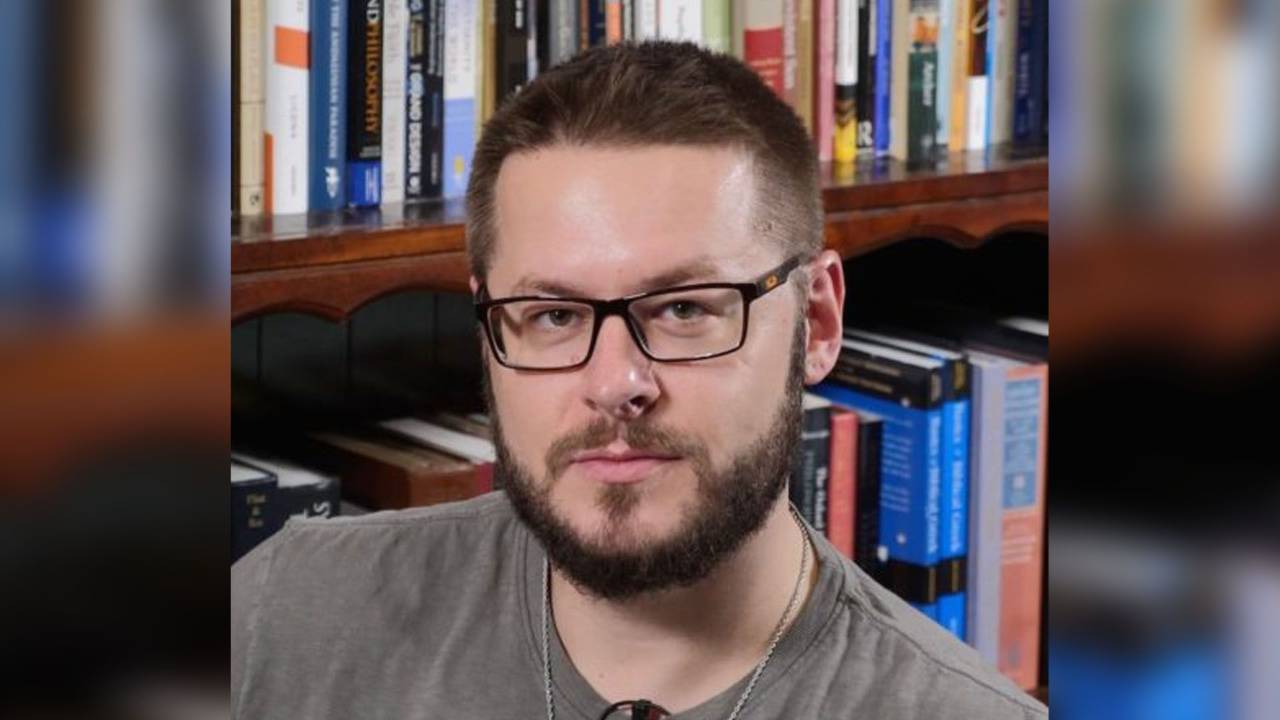
Inside This Episode
Why would someone risk everything to challenge one of the world’s largest religions? For nearly twenty years, Dr. David Wood has fearlessly defended Christianity and exposed what he believes are the hard truths about Islam and the Quran—no matter the cost.
In this powerful interview, David opens up about his own conversion from atheism to Christianity inside a jail cell, the mental health diagnosis that shapes the way he lives and works, and the story of his best friend, Nabeel Qureshi, whose decision to follow Jesus changed both their lives forever.
Please subscribe to Maybe God’s YouTube channel today!
Support future episodes ➜ www.maybegodpod.com/donate
Transcript
Eric Huffman: Why does this man risk his life debating Islam?
Dr. David Wood: My best friend was a Muslim. When he became a Christian after about four years, I thought, "Oh, cool, I'm done with Islam." But then it was about a month before he got his first death threat, and it was attached to his car. The penalty for leaving Islam is death. As Muhammad said, "If anyone leaves his Islamic religion, kill him." And that's when it kind of hit me like, "Wait a minute, I can't be done with this."
Eric Huffman: For 20 years, Dr. David Wood has stood firm, defending Christianity and confronting Islam with unshakable courage.
Dr. David Wood: It's sad that so many people have been led into Islam by just lies, and how so many Muslims, their confidence in Islam has been propped up with nothing but lies. Their main argument for a couple of decades was the perfect preservation of the Quran. The Quran has been miraculously preserved right down to the letter, such that there is not one letter of difference between any two Qurans in history. It's completely made up.
Eric Huffman: Today, David Wood offers a rare glimpse of how he converted from atheism to Christianity inside a jail cell and the mental health diagnosis that leaves him unafraid to stand in such a dangerous spotlight.
Dr. David Wood: I am a diagnosed psychopath. So you actually are drawn to dangerous situations. And if you're dealing with Islam and people are sending you death threats, it's actually helpful to be like that.
Eric Huffman: I just want to know how many death threats you've gotten.
Hello there, Eric Huffman here, host of the Maybe God podcast. Before we get started, I wanted to welcome all the new viewers who have tuned in over the past few months. I really love seeing all the ways that you support and challenge each other in the comment section, even when we don't always agree.
It might come as a surprise that over 90% of you who are returning to our channel today haven't yet subscribed to Maybe God. And this is where I want to be really honest. What we're doing here is building a community of people, no matter where you are on the spectrum of faith and unbelief, by asking the biggest questions and sharing bold truth, and having better conversations. And we can't do that without you.
By subscribing today, you're also saying yes to this movement that we're building together. So I want to thank you in advance for subscribing to Maybe God. And I really hope you enjoy my conversation with Dr. David Wood.
Dr. David Wood, welcome to Maybe God.
Dr. David Wood: Hey, how you doing?
Eric Huffman: Now, you truly have a miraculous story that I want to get into about growing up, becoming an atheist early in life, dealing with mental illness, winding up in prison for five years. Before we get into all of that, I just want to say I've watched your videos for a long time, watched your debates. I've learned a lot from you over the years. I so admire your courage in speaking out, especially in regards to Islam and its relationship to Christianity.
Just tell us, I'm sure it's dangerous work because of the nature of things you're talking about, how often do you get death threats, and how many death threats have there been?
Dr. David Wood: Yeah, it's been way, way too many to count. And it wouldn't just be against me. It would be about my wife, my kids, any of my family members, other people around me.
But it's actually decreased over the years because the platforms now have AI that catches death threats. Because now I'll see them if I'm watching, if I'm looking at comments as they're being posted, like instantly, I'll see a death threat, and then like a second later, it'll disappear.
Eric Huffman: Really?
Dr. David Wood: So AI is… the bots on social media are set up to catch this sort of thing. No, but sometimes I get like 40 or 50 death threats in a day.
Eric Huffman: Does it affect you?
Dr. David Wood: Oh, no, no. To me, that's like admitting that you're getting seriously desperate because you don't like the information that I'm sharing and it's really frustrating you and making you angry that people are sharing this information. So it's kind of an encouragement in a weird way.
Eric Huffman: Got it. Well, I guess it has to be said, like literally moments before we started rolling this interview, we've started getting news about the shooting of Charlie Kirk. And I'm literally shaking because it just came down the newswire. We don't know anything about his condition yet. I'm assuming by the time this interview airs we will know more. I pray that he's okay.
Does it affect you in any way when somebody carries an attack like that out on an outspoken Christian in the public eye?
Dr. David Wood: I mean, that could kind of happen to any of us. A lot of things seem to be unraveling and it's driving lots of people crazy. You're always going to have some subgroup of people who are willing to get their way through violence and so on. So that's something that can happen.
Eric Huffman: It's interesting how you take it. It doesn't seem to shake you, even though... because you speak out on a particularly hot topic, Islam and what's wrong with Islam and Muhammad, that puts you in the crosshairs, so to speak. Why do you continue to do that? Why do you do what you do?
Dr. David Wood: Well, a couple of reasons. One, to be fair, I am a diagnosed psychopath. So things normally don't affect me emotionally. You're kind of born without a normal sense of fear over things. So there's that.
But a lot of it is really that someone just needs to do it. And if you're not willing to lay your life, at least on the line, for future generations and for your family and things like that, then, okay, guess what's going to happen? It's going to be bad consequences. I mean, how many generations that came before us were actually willing to put their lives on the line so that we could have a better future and so on? So anyway, so there's that.
There was the idea that just not enough people were going after the claims of Islam. When I was getting started, I mean, there were like a handful of people in the world who were actually responding to Islam publicly. That actually allowed Muslims to kind of intimidate a lot of people. If there's not a lot of people speaking out, you can kind of target that handful of people.
But at first, the reason I was dealing with Islam was just my best friend was a Muslim. If he'd been something else, if he'd been a Buddhist or something, I would have been studying Buddhism. But my best friend in college was a Muslim. So I started studying that.
When he became a Christian after about four years, I thought, "Oh, cool, I'm done with Islam" because that was the reason I was studying Islam. But then it was about a month, it took about a month before he got his first death threat and it was attached to his car. So this isn't someone online, like it is usually with me. It's someone who knew where he was and who attached a death threat to his car.
And that's when it kind of hit me like, "Wait a minute, I can't be done with this because I can't be like my friend just became a Christian and now he's under a death sentence, and I go on to deal with things I'm more interested in. I can't just leave him like that. So I have to keep dealing with this stuff too."
And then over time, I realized that because he's an ex-Muslim, he's a more attractive target for a jihadi than I am. So that was actually part of the reason I always dialed it up with rhetoric and so on. I was trying to make sure like, "Okay, if you're going to come after someone, let me make sure I'm a better target than he is just because of the way I speak about Islam and so on."
And then really over time, it just became, wow, Muslims make really awesome Christians. And that became the driving force and so on. So, again, at first it's just, "Hey, my best friend's a Muslim. I'll talk about it because of that." And then, "Oh wait, if they're threatening him, then they got to deal with me too." And then over time, it was just, "Wow, Muslims make awesome Christians."
And there's a reason for that. There's a reason for that. There are some problems. There are some problems built into Islam, but there's the flip side that makes them actually positives in a weird way.
So it's basically Muslims are told all their lives that the worst possible sin you can commit is the sin of shirk. That's associating a partner with Allah. So if you say Jesus is Lord, you've just associated a partner with Allah. That is a one-way ticket to hell. And so the worst possible sin you could commit is saying Jesus is Lord.
They also know that if they leave Islam, a Muslim knows if he leaves Islam, at the very least, his relationship with his family is going to be very, very strained from that point on. It's pretty frequent. Matter of fact, it's the most common thing I hear that when someone leaves Islam and tells his family, the family either just casts him out right then, "Don't ever talk to us again, unless you're a Muslim again." Or there's a period of like six months or a year or something like that, where they try to convert the person back to Islam. And then if he doesn't convert back to Islam, then it's get away from us.
Eric Huffman: Wow. It's a lot to lose.
Dr. David Wood: Yeah. They understand, hey, I'm giving up my family. And like my friend, Nabeel, I mean, he really, really loved his family. And fortunately, he did maintain a relationship with his family, but it was strained. There was lots of arguing and so on.
And then on top of all of that, it's understood that the penalty for leaving Islam is death. It's a death sentence. Muhammad said, "If anyone leaves his Islamic religion, kill him." You know, it doesn't happen a lot in the West, but if you're a public apostate from Islam, you always have to be kind of wondering, is someone ever going to come and carry out this penalty?
And so you got those three things. You got this, it's the worst possible sin. It's a one-way ticket to hell. You're going to have to give up your family, not just your mom and dad, your sisters, your brothers, your cousins, aunts, uncles, and so on. And on top of that, might get your head chopped off. That's a lot of psychological pressure to keep someone in Islam and to keep them from considering alternatives to Islam.
But the flip side that I said, which makes it a positive, is once you have a Muslim who says, "You know what? I've been told all my life that this is the worst possible sin, and it may cost me everything, including my entire family, and it may get my head chopped off. But you know what? I want to know Jesus anyway." That's kind of someone who will lay down his life for Jesus. And so it's already built into you that you're serious about this.
If it doesn't cost you something, you might not take it as seriously as a Muslim. In fact, if you wanted to compare it to something, it's more like people converting to Christianity in the first century.
Eric Huffman: I was going to say the same thing.
Dr. David Wood: Yeah, when you're getting persecuted, when your family is going to turn their backs on you and stuff like this, you just didn't know, you didn't know what your life was going to be like and so on. But you're just like, "It sounds like this guy rose from the dead. So if I'm going to follow someone, I'm going to follow Him, no matter what it costs and so on."
So yeah, they're kind of in that situation. And so it's bad. It's bad that there can be persecution. It's bad that there can be bad consequences, bad if they have to give up their families and so on. But it's good. It's good that they end up being such awesome Christians.
Eric Huffman: So that's what fuels you. I do want to talk more later about your psychopathic diagnosis and your friend Nabeel and his role in your story. First, let's sort of set the table for Christians and skeptics who may be watching. What is it about Islam that makes it worthy of so much of a Christian apologist's time? What is it that Christians need to know?
Dr. David Wood: Well, the most important factor, and this is one of the reasons I stayed with it, is that I realized, hey, I'm a former atheist, so I'm actually more interested in atheist objections. But almost everyone who was going into apologetics back then was dealing with atheists, because that's what people were encountering on college campuses and so on.
But I mean, Muslims make up about a quarter of the world's population. Muslims make up about a quarter of the world's population. I was just looking. I was like, Okay, there's that guy over there in the UK who's responding to it. There's that guy in Australia. There's that guy in Canada. There's like three people in the US that were responding to Islam. I was like, "Shouldn't a quarter of the world's population be kind of a big priority for Christian apologetics?"
It was a weird situation, because you can just wreak havoc on the claims that are made to support Islam. I mean, it's all made up. So I'm not saying this because I'm not a Muslim. I'm saying this because I've been dealing with these arguments for years. Most of their arguments are just completely made up.
One of their main arguments, their main argument for a couple of decades was the perfect preservation of the Quran. The Quran has been miraculously preserved right down to the letter, such that there is not one letter of difference between any two Qurans in history. It's completely made up. It's completely made up.
You look at their sources. First, they're trying to preserve the Quran from memory, and entire chapters came up missing when people just forgot to remember those chapters. After Muhammad's death, they were still trying to preserve it by memory. After Muhammad died, large passages were lost because the only people who had those passages memorized died in battle. Verses were eaten by a sheep. The verses are not in the Quran.
Eric Huffman: Eaten by a sheep.
Dr. David Wood: Yes, yes. Anyone who wants to look it up, it's Sunan Ibn Majah 1944. They can look that up. It's after Muhammad died, and Aisha's talking about certain verses of the Quran that aren't in the Quran today, and she had the only copy, and a sheep came and ate them. That's what you have when you go to their sources. You've got the manuscripts. Over the years, there are tens of thousands of textual variants in their manuscripts.
Even in different parts of the world today, Muslims use different Qurans. They'll usually have the same number of chapters and so on, and most of the same content, but they do have differences and sometimes even contradictions.
Muslims don't know it because the Ottoman Empire had their preferred Quran, and they spread that over their empire. But Muslims who are outside that still continued using different versions of the Quran. So anyway, the point is, it's just a completely made-up argument.
Eric Huffman: Sorry to interrupt, but I remember Hatun dealing with that in a pretty powerful way at Speaker's Corner, right? Where she brought the different versions out in front of the Muslim speakers there.
Dr. David Wood: Yeah, that was one of the great moments in apologetics and polemics history right there, because we couldn't figure out how to get the point across to these guys, because they're saying... I mean, you could kind of get their perspective, right? You can kind of understand where they're coming from, because a Muslim's been told all his life, perfect preservation right down to the letter. And he hears this from all his scholars and from his imams and from his family and so on. It's a miracle of his, it's totally made up, but that's what he hears all of his life.
And then a Christian comes along and says, Oh, no, no, no, that's all a lie. Entire chapters came up missing, large passages came up missing, verses were eaten by a sheep. You have different Qurans in different parts of the world today. Who are you going to believe? You're going to believe the Christian that you've been told all your life is going to try to lie to you about all this stuff?
And so we couldn't get the point to stick. And all of a sudden, Hatun just brings these Qurans that she's collected from different parts of the world and shows up to Speaker's Corner with 26 different Arabic Qurans. We're not talking about different translations, 26 different Arabic versions of the Quran. They all had differences. And she's sitting there holding them, "Okay, is this word in this verse the same as this word in the same verse of a different version of the Quran?"
And Muslims were so glued to their perfect preservation argument, they actually... the response we saw immediately after that was she printed all of these Qurans herself with differences in them to make it look like there were differences in the Quran. And eventually, eventually they were forced into admitting that they didn't have this perfect preservation. And therefore they finally backed off that, although you still find it at a popular level, like their Dawah guys stopped using that argument because it was just a lie.
Eric Huffman: What's a Dawah?
Dr. David Wood: Dawah is like a combination of apologist and evangelist, but their version of it. But actually, they believe it's okay to deceive people if their deception leads to you converting.
Eric Huffman: Is that in the Quran?
Dr. David Wood: You have deception being allowed in the Quran. Lots of people have heard of Takiyah. Takiyah is not like a blanket allowance to lie in any situation. It's for certain circumstances. If you were threatened, if someone's going around killing Muslims and they say, "Hey, are you Muslim? You would be allowed in Islam to say, No, I'm not a Muslim. I don't believe in Muhammad. I don't believe in that dude."
But also they're allowed, and this is Surah of 328, especially helpful if you read the commentary, which gives Muhammad's companions and how they were understanding this. But it's saying, don't take disbelievers as friends unless it's to guard yourselves against them.
Eric Huffman: Yeah.
Dr. David Wood: So this isn't, Hey, someone's coming to kill you. It's don't be friends with these guys, unless it's a situation where they're going to be more powerful than you and your open disdain for them is going to put the Muslim community under a microscope. So don't do that. So you can pretend to be friendly.
And in the count, you have Muhammad's companion saying, "This is why we smile in their faces while cursing them in our hearts." It's yeah, Hey, we're your buddies, but boy, we're waiting to get you. I just wanted to clarify that even though you have this kind of deception is allowed in Islam, I just want to clarify that doesn't mean that if your Muslim friend tells you something, he tells you, Hey, we're friends, it doesn't mean he's trying to deceive you. Your Muslim friend may not be aware of any of this. He may have reinterpreted these things.
Don't think everyone's just lying to you people. In other words, Muslims in the West who tell you Islam is a religion of peace. A lot of them believe that Islam is a religion of peace. So I don't think they're trying to trick you, but the point is they are allowed according to their sources. But it just became the principle in Islam that if the goal is good, then deception is okay for reaching this goal.
Eric Huffman: End justifies the means.
Dr. David Wood: Yeah. There's a recent Muslim apologist who was forced to admit that their scientific miracles argument was bogus because, you know, they've been using this for years. And the Quran contains miraculous scientific knowledge, that is only being confirmed now. It was all complete nonsense.
But you had a Muslim, a Muslim Dawah guy who came out and said, "Muslims, we need to stop using this argument. It's been debunked. They've crushed it. We're just going to keep embarrassing ourselves with this stuff."
But then he said something interesting. He said, "Now, the reason I became a Muslim was because of this scientific miracles argument." And he said, "That was the argument that Allah used to get me into Islam. But now that I see that it's been debunked, I have to reject it, and I stay for other reasons."
And it's like, "Wait a minute, you just said, you believe that God uses the deception of his followers who are lying to people to get people to convert to Islam, and you believe that your God is using your deception and so on."
So they just do, they believe... I mean, think about it, right? If I tell you a thousand lies to get you to convert to Islam and you believe it and you get to spend eternity in paradise, how mad are you going to be at me for lying to you all this time? And that's kind of their mindset and it's disturbing, but kind of means that everything they tell you really need to look it up. And as soon as you look it up, it does not go well.
Eric Huffman: Yeah. Let's talk just for people that might be new to this whole conversation. I think most polite Christians in the West think, you know, we should look at Muslims as our equals, and we should, from a biblical standpoint, everybody's made of the image of God, but we shouldn't look at Islam and Christianity as equals. Certainly, shouldn't fall for the, I would call it a delusion or deception that the God of Christianity and the God of Islam are the same God. As I've heard a lot of Christians say, I know you certainly agree with me there. What are the distinctions? Let's start with like the distinctions between the Quran and the Bible.
Dr. David Wood: Well, the Quran claims to be a continuation, right? It talks about the previous scriptures and then it's basically the most recent and final revelation. But the Bible is written over a period of about 1400 years or so, written by about 40 different authors in a bunch of different situations on multiple continents and multiple languages.
The Bible is actually a collection of a bunch of writings. So it's basically the testimony of a cloud of witnesses of various things and so on. The Quran is all just one guy. It's Muhammad. And he's talking about Moses said this, he's talking about Abraham said this, he's talking about Jesus and John the Baptist said this, he's talking about them saying all these things, but it's just him saying that they said all these things.
And so Muslims kind of view it as, Oh, you got all the prophets in your book and we got all the prophets in our book. Well, yeah, but you know, you have what Muhammad is saying about all these prophets. And he basically turns them all into a mouthpiece for him. You go to any prophet, they're just proclaiming whatever he says. And it was apparently just his way of getting his point across, "Hey, everyone, I got a new revelation. Moses says this thing that I want to say and I'm saying that Moses said it, and so on."
You have the Bible, lots of different authors, multiple languages, the Quran is just kind of one guy saying all this. So the Quran is in Arabic. You also have a different view of what the Quran is. The Quran is not supposedly the teachings of Muhammad, although Muhammad was teaching the Quran. He's basically like a mailman, right? He's receiving the message and then just handing you the message. Versus the Bible where we believe that human authors were inspired to write. But it's Luke sitting down and saying, "Hey, I'm writing this gospel and so on." We believe he's inspired by the Holy Spirit to do this.
But Luke is sitting there writing and Matthew's sitting there writing. For Muhammad, it's the angel Gabriel just telling him something or just like inserting it into his heart, the message, and so on. So anyway, he's just kind of a mailman with respect to that.
Eric Huffman: I've tried. I've read the Quran. I almost said I've tried to because I did read it, but it's hard to make sense of.
Dr. David Wood: I know where you've been.
Eric Huffman: And there's several reasons for that, I guess, that you talk about a lot. What are some of the key reasons or differences between the Quran and the Bible that make the Quran so difficult to comprehend, at least from a Western perspective?
Dr. David Wood: Well, you've got the issue of how they're arranged. Like the Bible starts off with creation and then ends with the end times and the future judgment and things like that. And then you've got everything that happens in between and so on. But it's organized well, let's say that. The Bible is well organized. The Quran, apart from the first chapter, which is just a prayer, apart from the first chapter, they just said, "Hey, let's arrange it from longest chapter to shortest chapter."
The first chapter after the prayer is Surah 2, which was revealed when Muhammad is in Medina. So it's already like after all the stuff that happened in Mecca, now you just jump right into Medina. And it's weirdly arranged because they didn't arrange it chronologically. They arranged it by longest chapter to shortest chapter, basically. And so it's all completely disorganized.
Eric Huffman: That makes sense.
Dr. David Wood: Yeah. In order to understand it, you have to understand... but it's a serious principle because the fundamental principle of interpreting text in Islam is based on the doctrine of abrogation that Allah can say one thing one day and then two weeks later can give a completely different revelation. And that the one that comes later cancels or abrogates or replaces the one that came before.
Well, in order to know what you're supposed to follow, you need to know which one came later. But you can't tell that by reading the Quran because the Quran is just completely disorganized. So you have to go outside the Quran to understand what comes first, what comes later and what abrogates what and the historical background to understand what's going on.
So the Quran is one book that came from one guy, but you can't understand it without going outside of it. And the vast majority of Muslims, you do have a small group called Quran only Muslims. They only believe in the Quran. But the vast majority of Muslims, because of passages in the Quran, like Surah 4, verse 65, which says that you have to accept all of Muhammad's decisions. The Quran is not Muhammad's decisions. Muhammad's decisions are in other Muslim sources called the Hadiths, where they actually recorded all the stuff that Muhammad said.
And Surah 33, verse 21, which says that Muhammad is the pattern of conduct for Muslims to imitate. Most Muslims believe that Muhammad's life and teachings are also an authority alongside the Quran. Then you get into these massive multi-volume collections of stories about Muhammad and so on. You have to know those too.
Eric Huffman: Let's talk more about that, about Muhammad being the model of character, let's say. Anybody who has any knowledge of Muhammad's life knows that there are some problematic things there. What are some of the most problematic aspects of Muhammad's life and character, especially when compared to Jesus, the central figure of Christianity?
Dr. David Wood: Yeah, well, Muhammad, he was kind of known for... he gets special moral privileges. Like whatever the revelation is for other people, he gets special privileges. So, for instance, it's in the Quran that you can marry up to four wives. You can have up to four wives. Muhammad had at least nine at one time, and it's just Allah gave him a special revelation that he can have as many wives as he wants. So he gets the special privileges.
But it also became a thing that whatever he wants, he would just get a revelation saying that Allah really, really wants him to have it. And even his wife, even his wife Aisha, she noticed this. She said, "After one of his convenient revelations," she said, "Your Lord hastens to satisfy your wishes and desires." It's like anytime you want something, Allah just comes in with a revelation and gives you that.
And speaking of Aisha, she was six years old when Muhammad claimed to have had a dream that Allah was giving her to him as a gift. So it's a six-year-old, he comes up to her, "Hey, I just got a dream. And Allah says that he wants me to have you."
Eric Huffman: As wife?
Dr. David Wood: Yeah. They arranged the marriage contract. They eventually consummate the marriage when she's nine. So he was 54 years old at the time, and he consummated marriage with a nine-year-old girl. That's certainly-
Eric Huffman: Problematic.
Dr. David Wood: Yeah, that's very problematic. So you have things like that. He took the wife of his own adopted son. So he had an adopted son named Zayd. And Zayd had a wife who was very beautiful. One day, Muhammad saw her almost naked, and he starts praising Allah. And it's because he's praising Allah, because as soon as he saw her practically naked, Allah instantly revealed, "Oh, yeah, she's going to be yours. Even though she's the wife of your own adopted son, she's going to be yours."
So his adopted son divorces his wife so that Muhammad could take her. And then it still sounded like incest to people. Like, That was your own adopted son. What's going on? So the solution is Allah abolishes adoption in Islam. There's no adoption in Islam anymore. You could take care of an orphan, but you are not adopting an orphan into your family. And the reason was just to block criticism of Muhammad.
So you have those kinds of things all over the Muslim sources. I mean, he tortured a man and executed him because the man knew where some money was hidden. Then Muhammad takes that guy's wife back to his tent after torturing and killing her husband and so on. And that became one of his wives and sex slaves. It's all kinds of things.
Matter of fact, it's interesting. Surah 66, the opening verses. People don't know the historical background, but the historical background is Muhammad got caught in the bed of one of his wives, Hafsa. He got caught in her bed. She came back early, and he was in her bed with one of his slave girls. Now, he was allowed to have sex with the slave girls. That was understood. His wives didn't like it happening in their beds. Like that's my bed, my bed. You're doing it in my bed.
So she got mad and then Muhammad... and then all his wives start complaining, "This is what you do in our beds when we're not around? This is disgusting." He swore an oath. He said, "I swear, I swear by Allah, I will not have sex with that slave girl anymore." And then the opening verses of Surah 66 are Allah telling Muhammad, "Hey, I didn't tell you to make that oath. You can break your oath. Go ahead and break your oath to your wives and go back to having sex with your slave girl."
Eric Huffman: That's in Quran?
Dr. David Wood: That's straight out of the Quran.
Eric Huffman: Jeez. I also have heard and have some knowledge of parts of the Quran allowing Muslim men to be aggressive with their wives, to hit their wives if necessary. Is that accurate? I don't want to misspeak.
Dr. David Wood: Yeah. That's Surah 4, verse 34 of the Quran. There does seem to be... no, it doesn't say this. It says that from those... no, this is the most... apart from the beating, the worst part is that it says... what it actually says is, "As for those from whom you fear rebellion or disobedience or something like that," you'll get different translations, but it's they don't have to actually do anything. Your wives don't have to do anything. It's if you fear that they're going to be disobedient or something like that, then you admonish them. It just says, admonish them, banish them to beds apart, and scourge them or beat them.
Most Muslims take this as like a progression. Like you say, "Okay, first I'll warn you, then I'll banish you to a separate bed. So we're separating in our house. We're not sleeping in the same bed." And then the final step is to beat you. It doesn't say that, "It just says these are the three things you can do." So you could, in theory, just skip to the beating if you want.
But the fact that it says that if you fear rebellion or disobedience from your wife, you can beat her, that's the creepy part. Because Mohammed said in the Hadith, "A man will not be asked as to why he beat his wife. Don't ask a man why he beat his wife." Now, why? Because it's not about what she did. It's about if this man had some sort of fear that she was going to do something. So you can't judge this man's fear. How can you say he's not afraid of his wife being rebellious or something?
Eric Huffman: It's totally speculative. It's subjective, whatever the husband feels.
Dr. David Wood: Yeah. And people don't understand, like, I mean, it's in Sahih al-Bukhari where a man beat his wife until her skin turned green.
Eric Huffman: Gosh.
Dr. David Wood: I mean, her skin had turned green from the beating. Aisha, his child bride, who's bringing this woman to Mohammed to try and get justice for her, Aisha says, "I have not seen any woman suffering more than the believing women." In other words, pagan women aren't treated like this. Muslim women are treated worse than any other group of women on the planet. Why is this?
Skip to the end of the story, Mohammed condemns the woman for being a bad wife and causing her husband to beat her until her skin turns green.
Eric Huffman: Was Mohammed himself known to hit his wives?
Dr. David Wood: You have passages. It's interesting because the Hadiths that were translated in like the 1980s or 90s, it would say, "Mohammed hit me in my chest." It's Aisha talking. "Mohammed struck me in my chest, which caused me pain" or "hit me in my chest, which caused me pain."
Then we started using that to show, hey, Mohammed actually took his own advice and was known for beating his wives. You look at more recent translations, now it'll say, "And he shoved me or something like that." So it's interesting that as we use their sources to criticize Mohammed, they'll change the translations.
Eric Huffman: What impact does it have on a culture, or in this case, a religious group, when their key figure is a low character guy? By all evidence, Mohammed was not an admirable man, but when he's the one everyone's told to look up to, how do you see that impacting the Muslim community writ large?
Dr. David Wood: Oh, I mean, you see it very early on and you see it still today. It's interesting because when we bring up, hey, Mohammed did this, Mohammed did that, they'll be like, "Ah, but in the Bible, David committed adultery and killed a man. So who are you to say..." Yeah, but he's condemned for that in the Bible. He's not propped up as the perfect moral example in Christianity. No one's told to follow David like that.
Mohammed is the pattern of conduct and so these are complete... Muslims still don't get this. It's like in the Bible, God takes sinners and sometimes just rebellious misfits and still uses them to accomplish His purposes. That's not saying that we have God's stamp of approval on everything these guys did. No one believes that. Whereas you guys do believe that Mohammed has God's stamp of approval on these various things that he did.
But you see this very early on because several years after Mohammed's death, but his wife, Aisha, marches an army out, Aisha is called the mother of the faithful. That's her title in Islam. Aisha is the mother of the faithful. She marches an army out against Ali, who was Mohammed's son-in-law, who was called... his title is the commander of the faithful. So you have the mother of the faithful march an army out against the commander of the faithful and the people start slaughtering each other. And these are people on both sides of the battle who'd fought alongside Mohammed at various battles, and now they're killing each other. And it was all over a disagreement. It was all over a disagreement. And it's like, where did you guys get the idea that you start killing each other over disagreements?
Mohammed's your moral example. Mohammed's your pattern of conduct. And you can follow that all the way down till today. You can see, if you really wanna see people putting Mohammed's practices into example and so on, you have a pretty good idea of what that's like just by looking at ISIS. That's a group that says, "We're gonna follow Mohammed exactly." And anyone who's out of line will wipe you out. But even without that, it's understood. You can look up various studies on abuse of women in various places or just like rights that women have in various parts of the world. Every study you look at, it'll be 11 of the top 12 worst places in the world to be a woman are Muslim nations. Or it'll be 18 of the 20 worst places in the world to be a woman are Muslim majority nations.
Eric Huffman: And that's not because they've been colonized by White men or because of poverty or anything. You're saying it's a direct correlation with the Quran and lifting up Mohammed as the model.
Dr. David Wood: Yeah, because when you start challenging these practices, when you have a lawmaker who is trying to change things, it's the religious leaders who are objecting. It's the religious leaders going, "Whoa, whoa, whoa, you can't mess with the age of consent or marriage or something like that in Islam. You're attacking the prophet, you're attacking him."
Eric Huffman: One common thing you hear from more mainstream Muslims sometimes... I remember a friend of mine confronted me, he's a Muslim, and I would say we're acquaintances, not friends, just to be clear. But he came to me and said, "Why do Christians claim solidarity with Jews more than Muslims? Jews don't even believe in Jesus. We Muslims and you Christians have Jesus in common. We all revere Jesus." And you hear that a lot. Why all this animosity when we all revere Jesus? What do Muslims say or believe about Jesus? What does it say in the Quran?
Dr. David Wood: This is actually an interesting situation because Muslims do agree with us on a lot of things that pretty much no one else agrees with us on. To give a basic rundown of the areas where we agree on or where they're saying something very favorable about Jesus. So the Quran says that Jesus is the word of Allah. That's interesting. It doesn't call anyone else the word of Allah, just Jesus. And they don't seem to understand the implications. It's clear where they got that from, right? That he's the word of God, right? They did not understand where this came from or that this is like talking about His deity. Muhammad apparently just thought it was a title of Jesus.
But anyway, the Quran calls Jesus the word of Allah, calls Jesus a spirit from Allah. He's born of a virgin in Islam. He, even as a baby, was speaking. Now what He was speaking was Islamic theology and so on. But anyway, he's miraculously speaking as a baby. He's sinless in Islam. He is the Messiah in Islam. He lived the most miraculous life in history, according to Islam. He even created... in the Quran, he created in the same way Allah creates. Like Allah created Adam by fashioning him out of clay and then breathe the spirit into him. You have Jesus in the Quran making clay birds and breathing into them and then the clay birds are flying away. And it's like he's creating in the same way that Allah creates.
And so you have all these claims about Jesus lives the most miraculous life in history. And even that he's going to return to set everything right. And so in an interesting sense, Jesus is the final prophet who's going to be here in Islam. Some say Muhammad's the final prophet. Yeah, but Jesus is going to return later and even abrogate some of what Muhammad taught. So you have lots of those kinds of issues.
And it's important to point to that common ground if you're talking to Muslims. One of the easiest things to do is, hey, isn't it interesting that the Quran says all these things about Jesus. But why is Jesus so radically different in Islam, even from Muhammad? Like Muhammad's not sinless according to Islam, Jesus is. Muhammad's not born of a virgin; Jesus is. Muhammad's not the word of God; Jesus is. Why is Jesus so amazingly unique in Islam? There is no answer, there's no answer.
There's an argument built into it. It makes sense for Jesus to be so radically different in Christianity, it makes no sense for Him to be so radically different in Islam. So why? They can't give an answer, they just say Allah knows best.
So you have those kinds of things, but also then you have the areas where they disagree. Now this is very interesting and this is instant sign of a false prophet. Because Jesus' followers, they spent a few years with Him learning from Him, but when they went out and started preaching in the book of Acts, it's kind of what's the most important takeaway? That's what they were focused on. And what did they go around preaching? That Jesus died on the cross for sins, He rose from the dead and we have to obey Him because He's Lord. So it was His death, resurrection and deity. Those are the elements that Paul says are required for you to be saved. And so this is what they go out preaching.
But simultaneously we're also told to watch out for false prophets, false prophets are gonna come, false prophets and false teachers are going to come. What are they gonna do? They're gonna lead people away from this gospel. And then all of a sudden you get Muhammad. Muhammad comes along and says, "Hey Christians, you believe in God, so do I. You believe God created the world, so do I. You believe in prophets, so do I. You believe in the books that he reveals, so do I. Hey, you believe in Jesus, so do I. You believe He's born of a virgin, so do I. You believe he's the word of God, so do I. You believe that He performed all these miracles, so do I. You believe he's the Messiah, so do I. You believe he's gonna come back one day, so do I. There are just three things that we have to disagree on and we need to get these right and then we're good to go: He didn't die on the cross for sins, He didn't rise from the dead and He's not Lord. Now if we could just get past those, we're on the same page." And the response should be, and it was, we know, my goodness, we've been waiting for you. Because you are like the supreme example of a false prophet with that sort of thing you're coming to us with.
Eric Huffman: I've never thought about it, how on the nose his objections to Jesus were relative to the big three professions of faith of the early Christians that He died, rose, and is God. Wow.
Dr. David Wood: Yeah. So the situation with Muslims, this is one of their main arguments now. The Jews they reject Jesus, but we Muslims, we believe in Him. Well, no, you believe what Muhammad said about Him. And that includes he didn't die on the cross, he didn't rise from the dead, and he's not Lord. So don't act like you guys are... like you're agreeing with us about Jesus. You're simply accepting everything Muhammad said about Jesus.
And who is Muhammad? He's a guy who basically turned everyone into his sock puppet, including God, right? Anything he wants, "Oh, yes, God wants me to have this. Oh, you guys are challenging me? Oh, but Jesus said that, Jesus said he agrees with me." He just turns everyone into a sock puppet to agree with him. And you guys think we're supposed to think, "Oh, wow, what a great idea. I guess we're on the same page with these guys." No, it's a massive insult.
But as far as Jews, you have a pretty big spectrum of Jews, right? On one hand, you have Messianic Jews who actually believe in Jesus. You have Messianic Jews in the world today. You have lots of them. And the early followers of Jesus were Jewish Christians. So you had tons and tons and tons of Jews who believe in Jesus over the centuries.
At the other end of the spectrum, you have Jews who really don't like Jesus, say nasty things about Him and so on. But you also have this big spectrum in between. One, the biggest perspective is like in Israel, when you ask them about, "Hey, what do you think about this, about Jesus and stuff like that? "We don't think about Jesus much."
In other words, what lots of Jews in Israel think about Jesus, it's more like what I think about Buddha, not like what I think about Muhammad, right? Like I am aggressively opposed to Muhammad. I don't believe in Buddha, but I'm not aggressively opposed to him in saying, hey, we have to stop this guy.
Most Jews seem to be more like that. Like we're not thinking of this as a huge issue. You Christians are trying to make it into an issue, but we weren't thinking about him until you brought him up. I was talking to a Jewish guy over there and he was saying, "Yeah, Jesus won." And I was like, "What? You don't believe in Jesus?" He goes, "Yeah, yeah, but His way won." I go, "What do you mean?" He goes, "Yeah, yeah, Jesus came to expose all the religious hypocrisy of these religious leaders who were saying, you know, you can't even help someone on the Sabbath." He goes, "Guess what? No one does that anymore." He goes, "If you get injured on the Sabbath here, guess what? You're getting taken to a hospital and they're gonna take care of you. No one is gonna say, oh, but we can't travel on the Sabbath anymore."
So that sort of religious extremism that Jesus came to confront. Yeah, he won. He won at the end of the day, his way won. And so, yeah, you got a bunch of perspectives. You can kind of lump most Muslims into a category when it comes to the Islamic view of Jesus. I mean, among Jews, you have a pretty broad spectrum there.
Eric Huffman: Real quick, you don't have to go long with this one, but who do they believe, who do Muslims believe died on the cross if not Jesus?
Dr. David Wood: There's no specific answer there. To be fair, you even have a minority position, which it's always been a minority position, but it's always been there, that the Quran is not denying that Jesus was killed on the cross. So you have a minority position that that's not what the Quran is saying there. The Quran is basically saying, you Jews didn't get the victory over him. And they'll quote other Quran verses, which is don't say of those who've died in the way of Allah that they are dead. They're not dead, they're alive.
So with claims like that, they're interpreting that Jesus wasn't killed and wasn't crucified. It's not, you didn't really get him. You didn't really get Him the way you think you got Him. He's actually alive with Allah. But again, that's a minority position.
The dominant position by far has always been some version of substitution theory, which is that Allah took someone else, miraculously disguised him, made him look like Jesus, and then this other person was crucified in his place. And you've had all sorts of candidates over the years and the commentaries of who this is. And you have kind of different categories of explanations.
Sometimes you'll have the punishment versions where Allah's taking someone who is bad and making him look like Jesus. And then this bad person is crucified and this is Allah's way of getting to him. But you have other ways. You have the volunteer versions where Jesus actually says, "Okay, who's volunteering to be made to look like me and so on?" And someone raises his hand and "I'll do it." And Jesus is like, "No, you're too young and so on."
Eric Huffman: And these theories are in the Hadiths, not the Quran?
Dr. David Wood: These are mainly in their commentaries. So they're commentaries. But what eventually became the most common to hear among Muslims is that it was Judas. You have that going way back as an explanation. That's in the punishment category where Allah was picking someone to punish. So very common to hear Muslims today say, "It wasn't Jesus who was crucified, it was Judas who was crucified." Again, it's not Muhammad who was saying that, it's commentators saying that that's what the verse means.
The disturbing part is, I mean, think about what a perfect reversal of the gospel that would be.
Eric Huffman: Oh yeah, that's right.
Dr. David Wood: I mean, the innocent Jesus-
Eric Huffman: The man who most deserved it got it, yeah.
Dr. David Wood: The Christian view is the innocent Jesus died on behalf of sinners. The most common Islamic version that you'll hear is, no, no, no, the guilty Judas died on behalf of the innocent Jesus. It's completely flipped.
Eric Huffman: One of the most confusing parts of reading the Quran for me is trying to figure out whether Muhammad liked Jews and Christians or not. Because in some parts-
Dr. David Wood: Depends on when.
Eric Huffman: Yeah, is that what it is? In some parts he says, "Honor these people, they know the truth," and in other parts he says, "Treat them like infidels." What is the truth there? What is Muhammad's take on Jews and Christians?
Dr. David Wood: That depends on when you ask him. But yeah, when he was in Mecca, he's really propping up Jews and Christians. He's telling his followers... Back then when he starts off, it's, Hey, it's gonna be Muslims, Jews, and Christians, and we're all gonna be united against the polytheists. We're all gonna be on the same page. But he's saying that he's a prophet in line with the prophets of the Bible.
So he's telling them all about all these various prophets, and he's one of them. And he's telling his followers, "When we are eventually around some Jews and Christians, you're gonna see those Jews and Christians have been waiting on me. They're gonna be like, "Oh, he's finally here. This is the guy we've been waiting on. We've been waiting for this guy." That's what he's telling his followers for about 12 years in Mecca. "Once we run into Jews and Christians, they're gonna give me the thumbs up and you all are gonna see that I've been speaking the truth."
Well, eventually, the Muslim community moves from Mecca to Medina, and he gets to Medina where there were three Jewish tribes. And the three Jewish tribes were basically ready to laugh him out of the city for his claims that he's a prophet. It's, "Are you kidding me? How do we know about you? What do we know about you?" And his story is, "Oh yeah, I'm identified by this amazing mole on my back. It's in your sources." And they're going, "What are you...? What? What are you talking about? This makes no sense."
So Muhammad is really embarrassed by this. He's been building up the Jews and Christians as authorities on who is and who isn't a prophet for all these years. And it gets to them, and they're like, "You're not a prophet, what are you doing? Get out of here." And so how is he going to explain this? It's "they know I'm a prophet and they're lying". That's what the explanation came to be. It's, "wait a minute, I've been telling my followers all these years I'm in their books and they know it and they recognize me when they see me. But now they see me and they're saying, 'we don't recognize you. What's the explanation?' Either I'm wrong, I've been wrong this entire time, or they do know it, I am in their scriptures, and they're just lying about me." Which that meant that it's not just that they don't see it or that they're disagreeing or something like that, they know it and they're deliberately opposing God's true prophet. They're deliberately opposing the will of God. And that just means they're evil. They're hostile towards God. They're not my friends.
So you actually see that the Quran in Surah 5 at this point, it switches to Jews and polytheists are the enemies of Muslims. Christians and Muslims together are against them.
Eric Huffman: Interesting.
Dr. David Wood: And later on the Christians reject him and then it becomes, it's Muslims versus everyone and everyone else has to be subjugated.
Eric Huffman: Wow. Man, it is a strange book. Anybody that wants to explore it for yourself, I would encourage you to maybe listen to people like David, find David's YouTube channel. If you wanna read the Quran and see the parts that he's referring to for yourself, you are more than welcome to do that. But prepare to be confused, I would say. It is a confusing text, especially if you're accustomed to the Bible. The Bible can be confusing. I'm not hiding that fact, but the Bible is so self-explanatory in so many ways, in ways that the Quran is not. Tell us the-
Dr. David Wood: Oh, I just wanted one follow-up on just on what you said because that's one of the most common questions I get is, "David, I'm interested in apologetics and dealing with Islam and stuff. Should I read the Quran?" I kind of have to say no, but if a Muslim hears me say no, it's like, "Oh, you're telling them they will see the power of Islam, and then you don't want them to convert." No, I know they will give up halfway through Surah 2. Halfway through the second chapter, they will give up and think that they can't deal with Islam because I can't read this book. So you can't make that a requirement for dealing with Islam.
So along the lines of what you were just saying, since the Quran is really, really tough to get through, when people are asking, Hey, should I read the Quran? I say, you should try reading it topically. Pick a topic you're interested in, look up, you can go to an index or something, look up all the passages that are about that topic and read those passages. And that way there's some sort of order.
So if you're interested in what the Quran says about Jesus, just go to an index, look up all the passages about Jesus, go to those passages, read those. Pick another topic you're interested in, study it topically because yeah, if you just try to read it all the way through, it's like probably 98% of people are gonna give up very, very quickly.
Eric Huffman: Yeah, there's a lot of strange stuff in there. What would you say is the most shocking or strange story that you've come across in the Quran?
Dr. David Wood: Well, there's some weird ones, but just Alexander the Great being a devout Muslim. When you bring this up to Muslims, they'll flip out and say, "This is not about Alexander the Great," even though their early scholars all understood. And if you know the story of the Alexander Romance, which wasn't historical, it's just a story circulating during the time, the Quran is telling the Alexander Romance. It's repeating a story about Alexander the Great, that he went all the way West and they went all the way East, and then he built his giant wall and so on. This is all in the Quran.
And he's called Dhul Qarnayn, which means that... in the Quran, it doesn't say Alexander the Great, it says the two horned one, the man of two horns, which Alexander the Great, when he went to Egypt, they gave him this two horned things to represent that he's like the avatar of their God, Amun or something like that. But unlike coins and so on, he's pictured with the two horns and then he's called the two horned one.
Now here's the thing, Alexander the Great was as pagan as a pagan can possibly be. You cannot get more pagan than Alexander the Great. It's impossible. In the Quran, he's a devout Muslim. Some even say a prophet because Allah is speaking to him directly and so on. So it's just Alexander the Great. It's a combination of Alexander the Great in the Quran, finding the place where the sun sets and he finds that the sun sets in a muddy pool. It's like, okay, you got Alexander the Great who wasn't a Muslim, he's a pagan. He finds a place where the sun sets, there is no such place. He finds that the sun goes down into a muddy pool and which there is no such place. There are people who live there and... it just puts all that together and it's just that is some weird, weird, weird stuff.
Eric Huffman: It is. I appreciate you saving us from hearing the story of the Al-Zuhr or whatever they're called.
Dr. David Wood: That's in the Hadith.
Eric Huffman: It's in the Hadith, okay.
Dr. David Wood: Yeah, you have weirder stories in the Hadith. You have even way weirder, way creepier stories.
Eric Huffman: We won't go into it, but it's pretty wild. I just wanna make clear at this point because it feels like we're just using a major religion as a punching bag. It's not about disparaging a religion just to have fun with it. It's because this religion is spreading far and wide. It's formidable. It's reaching beyond its own sort of cultural roots and into many countries in the West now. I've seen it reaching a lot of young disadvantaged men because it appeals to them for different reasons.
The Bible calls us to speak truth to situations like these and where lies and deception are being spread and to advocate for the gospel of Jesus. So I know that's what you're about. That's what I'm about as well.
Why don't we talk now about how you got into this because before we wrap, I want people to get to know you. I think a lot of people see you in passing. For a while, I saw you in passing online. I just kind of thought you were the aggressive Christian apologist, but I didn't know why. Your story is unique, bro, and I know you've told it 100 times, probably more than that, but I just want our people to hear it. Tell us about your upbringing. Were you raised at all Christian?
Dr. David Wood: No. So, mom didn't care. My parents were divorced, but yeah, so I would kind of go back and forth with them, but mom didn't care, dad didn't care. I was probably eight or nine or something like that and I was visiting my aunt and she said, "We're going to church and I flipped out."
I don't remember this, but she told me, she said, "Yeah, yeah, and you were a kid and I said, 'we're going to church,' and she said, 'you just flipped out and you were saying, I hate it, I hate it, I hate it.'" And she says, "How would you know you've never been in a church?" She said, I went, "Oh, okay." But yeah.
Basically, if I was visiting my aunt, I would go to church, if I was visiting my grandmother, I might have to go to church, but other than that, there was no scenario where mom or dad or anyone was going to church.
Eric Huffman: You talked earlier about the mental illness or disorder diagnosis. At what stage in your life did that become known and what was that like for you?
Dr. David Wood: I was five, and I talked about this in my testimony video, but yeah, I was five and I had this dog, which I'd had the dog as long as I can remember. And my mom got a phone call... I was over a friend's house, my mom got a phone call and she turned to me with tears in her eyes. She's on the phone. She turns to me with tears in her eyes and she tells me that the dog had been run over by a bus. And like, just instantly I thought, "Well, so what, it's just a dog." But I'm looking at her, and she's got tears and she hated my dog. And I was like, "Why is she crying? What is this? Something wrong with my mom?"
I thought there was just something wrong with my mom that she was bothered by a dog dying. Didn't make any sense. Later on, I found out other people reacted the same way. I mean, I was seven years old and seeing that like someone's dog dies and everyone's sad. Then by the time I'm seven, I'm actually trying to imitate other people, trying to figure out how I'm supposed to look.
At first I remember, I thought it was like in the angle of their head. So I'm seven years old, I'm seeing these other kids all hanging their heads low because their dog died. And so I'm like looking at the angle of their head and I'm putting my head down in a certain angle and kind of watching them. And then one of them finally goes, "Dave doesn't even really care." And I was like, "Oh, okay, it's more than the head tilt. It's gotta be more than the head tilt to this and so on." So you just kind of, you kind of-
Eric Huffman: Mirror.
Dr. David Wood: Yeah. And you get better and better at this over time until you end up acting the same way that everyone else is acting, but it's fake.
Eric Huffman: Wow. Where did that go as you became adolescent, young adulthood, all that?
Dr. David Wood: Well, yeah, so I was eventually, when I was 18 years old, diagnosed with antisocial personality disorder, which that's what they call it. They don't diagnose you as a psychopath or a sociopath. Those are popular words. But for people who have antisocial personality disorder, but it means you don't have normal emotional attachments to other people, you don't feel bad, you don't have the same emotional reactions to other things, you lack empathy for other people, that you can engage in way more dangerous activity than normal people would be comfortable with and so on.
So you got those kinds of characteristics, but if you're growing up, you don't know that. I didn't know what antisocial personality disorder was. Never heard of it before. So when you're growing up, you're just kind of on your own to figure out what's going on here. And I thought that I had evolved to another level of humanity. Like all of you have these emotions, I don't have them, so I'm obviously at a higher level than you because you're all sort of weighed down by your emotions and I don't have whatever those emotions are. And so I've obviously evolved to a higher state where I'm not controlled by my emotions and so on. And yep, eventually ended up in jail and a couple of mental hospitals and prisons and so on.
Eric Huffman: Yeah. Did you think about God at all in your late teens as all that was happening?
Dr. David Wood: Only to argue with Christians. So, yeah, most of my early life, it was just never an issue.
Eric Huffman: Were you an atheist?
Dr. David Wood: I don't remember exactly when I realized that I was an atheist. I would guess it's around like somewhere in the 12 to 14 range. Like definitely by 14, I was like openly mocking belief in God and so on. So it was sometime before that that I realized I don't believe in any of this stuff.
Eric Huffman: Are you comfortable talking about what you did that landed you in prison?
Dr. David Wood: Oh, sure.
Eric Huffman: Go for it.
Dr. David Wood: Oh yeah. I also had delusional thinking, which is whatever that is, that's something else. That's not antisocial personality disorder. I had some other problem where I would have delusional thoughts and think that things were speaking specifically to me. And this happened a variety of times, but I read Crime and Punishment and I thought that was speaking specifically to me. Which means, keep in mind, this makes no sense. I'm a complete naturalist and determinist. It makes no sense for some message to be revealed by the universe to me. That's the problem. You're not thinking coherently and so on.
But I read Crime and Punishment and Raskolnikov, he thinks he's the Superman who's beyond everyone else's morality and so on. And then he finds out in the course of the book that he's not. And I thought this was written to me. It's like, no, you're that thing. You don't have these emotions and stuff that this is written for you. I just became convinced that you have to do the opposite of everything you're told to do.
I came to regard any time I'm doing what I'm told to do, it's like a kind of pollution, that my perfect being had been polluted by this rule of inferior beings that I don't have to follow and so on. Eventually tried to kill my dad with a hammer. So I hit him in the head. I was a big boy. I was about 6'3", 235 pounds. And hit him in the head with a hammer seven or eight times. Thought he was dead, but he survived. I didn't know you could survive that sort of thing. I thought he was rushed. But yeah, he survived.
That's when they stuck me in a psychiatric hospital, and that's when they gave me a variety of tests and so on, and concluded that I have antisocial personality disorder.
Eric Huffman: Yeah, well, that's pretty good. Yeah, I think there was plenty of evidence by that time. You end up getting convicted, going to prison, a total of five years incarcerated. What happened to you in prison? What changed?
Dr. David Wood: Well, actually, it was in the jail... For my crime, I should have gotten more. It was a 10-year sentence, but back then the law was for every 30 days you didn't get in any trouble in the jail or prison, you would have another 30 days credited to you. So that was a way of encouraging good behavior. A 10-year sentence you would serve five years on. But yeah, the reason I only got a 10-year sentence was... it's basically my family was saying, "Look, get him help or something like that, but don't just throw him in prison." And it was my family that were the victims. So they were saying, "Get him help, get him psychiatric help if you want to do something to him."
But anyway, so they gave me 10 years, and I was in the jail there, and I was in one dorm, and there was a Christian. This was an interesting Christian. He had turned himself in for 21 felonies. So this was a guy who'd done various things and so on, and became a Christian. I think it was like a tent revival type thing, but he became a Christian. He went and turned himself in for everything he'd ever done. And so they locked him up, and I'm in the dorm with this guy, and I see him up on his bunk reading his Bible, and I walk up to him, and I said the same thing I used to say in high school and so on to kids. I said, "Hey, you're reading the Bible because you're born in the United States. If you've been born anywhere else, you believe in something else. If you've been born in China, you'd be a Buddhist. If you've been born in India, you'd be a Hindu. If you've been born in Saudi Arabia, you'd be a Muslim, because people like you believe whatever you're told to believe, which is funny." It's because the stuff that I believed about the universe was exactly what I was taught in school and so on. So it wasn't like I figured everything out myself.
But it was interesting, because this Christian actually, he started arguing back, which almost it was very rare to have a Christian argue back. They normally just go, "Oh, we don't want to argue about this. It's not stuff you argue about," and so on. Whereas he instantly starts defending Christianity, which is interesting, because he had become a Christian. He had had an interest in apologetics, and so he's actually able to defend it.
And keep in mind how weird this is. I think I'm the most advanced human being in the universe, and some dumb Christian in a jail, who's dumb enough to turn himself, because I regarded that as like the dumbest thing I'd ever heard in my life, who is dumb enough to turn himself in for 21 felonies is beating me in these discussions. What's going on here? This makes no sense. And I just concluded he must just know more about the topic, and that's why he's able to hold his own. So I was like, "Oh, okay, all I need to do is study this stuff, then I'll be able to destroy it." In the process of studying it, I became a Christian.
Eric Huffman: Of course. God's sense of humor. Goodness. So you're a Christian in prison. How much longer were you inside before being released after being a Christian?
Dr. David Wood: Yeah, that was the jail. So if people don't know, like jail's like short term, short term. That's like for court and stuff like that, or if you have a short sentence. But if you get convicted to a longer time, then they'll send you to prison longer term. So it was still in jail. So it was about maybe 9 or 10 months into jail is when I became a Christian. I was there for maybe another month or two before they shipped me off to prison. And so yeah, then had several years left.
Eric Huffman: Did your mental situation get better over time? Did your faith have anything to do with that? What's changed there?
Dr. David Wood: Oh, yeah. The delusional thinking, you know, in my testimony video, I share it like I was young and I thought ants actually controlled the world. And I thought, you know, cats and dogs were communicating with me. All of 10th grade I thought that I controlled the weather. I thought that various things like a book, and the book was the one that actually had an impact on my thinking, Crime and Punishment. But it was always like I would hear something from a song and I would think that's that's talking specifically to me.
So I had that kind of delusional thinking and so on, but that went away just instantly when I became a Christian. Like it stopped. It eventually came back, came back in certain contexts. Like if I wasn't praying regularly or reading my Bible regularly or something like that. Eventually, Nabeel could tell, he'd be like, "Hey, you've been reading your Bible, man?" I go, "No, been too busy. Why?" He goes, "Because you start acting weird. Because you start acting weird."
Over time I started thinking like, I don't think God just like miraculously healed that part. I think He's like sustaining me and that I need to be in fellowship with God or I'll start losing it again. So as far as like delusional thoughts and a lot of like... I mean, I used to just like sit around thinking about torturing people and peeling their skin off and stuff like that. That went away. That went away.
A big part of it was, you know, I went from thinking that I'm the greatest person in the world to thinking I was like the worst person in the world. It flips a lot of your thinking, like, you know, mean, mean psycho David would see you crying and think you're pathetic and weak. What a joke you are. It makes no sense. What is the connection between that happening and salty goop running out of your eyes? It makes no sense. You are completely irrational here. Did you not know that that was going to happen? Did you not know that everyone around you was eventually going to die? Are you the stupid one here?
So that's how you think about it. But then you become a Christian, you conclude Jesus rose from the dead, and then you read Jesus wept.
Eric Huffman: Yeah.
Dr. David Wood: And it's, well, if someone's defective here, it's not Him. It's me. I'm the defective one. And so you go from thinking that, like, "I'm special. I have an ability that everyone else lacks" to thinking, "no, actually I lack an ability that everyone has. I'm not superior. I'm defective." Well, that changes a lot of your thinking.
So there were those kinds of things, but some of the symptoms of psychopathy, uh, antisocial personality disorder, they didn't go away. I still don't experience remorse. Like I've never felt bad for anything I've done. Whatever people feel when you do something wrong, I've never felt it. I can recognize that it's wrong and say, Okay, I'm not doing that anymore, but there's no feeling associated with it.
I still like feel very comfortable in dangerous situations, but it's weird because like a lot of the things that get you locked up because you actually are drawn to dangerous situations and doing dangerous things that can get you into trouble, in a different context, it's actually helpful. Like if you're dealing with Islam and people are sending you death threats, it's actually helpful to be like that because you don't back down from death threats and so on.
I tell that to people when people are like, "Hey, David, I'm autistic. You've had, you've had some mental issues and so on. It's a different kind of thing, but what advice can you give me?" And my advice is always the same and say, "Okay, think about whatever problems that you have that are considered problems because they're not like other people, think about how whatever it is you have can actually be an advantage in certain ways in other contexts and think maybe that's what you're made for."
Eric Huffman: So that thought came across my mind and I was thinking about your story and the work you're doing now. I mean, obviously you want to protect yourself, guarding against some of the negative sides of that condition, but it can also be turned around for good if you are able to deflect criticism. Because nobody takes as much heat in the comment section as David Wood does. So you need that to do what you're doing.
I also think you ought to be telling this story more often. I think you probably feel like you have, but this part of the story... everybody has somebody in their life they're worried about, somebody that demonstrates certain things that just seem off. And we worry about this family member or this friend of ours, and they need to know they there's hope, they can be okay again, they can have value in the world and God's kingdom. I just think stories like yours need to be told.
Looking back, do you ever think that some of the delusions and things you were hearing, messages you were hearing have any demonic ramifications or causes?
Dr. David Wood: Yeah, I don't know. I'd be more inclined to just think that there's something-
Eric Huffman: Mysterious.
Dr. David Wood: I think that my brain was just not functioning normally or something like that, but it'd be kind of an Occam's razor situation where demonic influences can obviously mess up your thinking, but, you know, just being wired-
Eric Huffman: Makes you more susceptible perhaps? You got out of prison and went to college and that's where you met this man we've mentioned a few times, Nabeel Qureshi, who, if you followed a Christian apologetic circles for any time, you probably have heard that name. When you met him, Nabeel was a Muslim. Talk about your relationship early on as we get ready to wrap up here.
Dr. David Wood: I joined the speech and debate team because I wanted to learn how to debate and so on because by that time I realized I wanted to do something in apologetics. I didn't know what. And then Nabeel also jumped on the speech and debate team and then you would go and compete at other schools and so on. So we ended up sharing a hotel room on a trip and all I knew about him at this point was his name was Nabeel Qureshi. And so, okay, this guy's a Muslim, but that doesn't tell you a whole lot. Could be a completely secular, liberal Muslim, could be devout, you don't know.
So we got into the hotel room and I see him like pulling out his prayer rug and I was like, "Oh, okay, he's at least devout enough to bring his prayer rug on a school trip." So there's that. But I was sitting there reading my Bible in a year and I was on Isaiah at that time and I was reading and I was just... by the way, this was right after 9-11, right after 9-11 and I'm sitting there and I'm reading and I pray and I said, "God, if you want me to talk to this guy, please let him start the conversation so no one says I'm picking on the Muslim." And was right after that, he says, "So are you a hardcore Christian?" And I said, "Yes, I am." And that kind of started off the conversations.
We ended up arguing all night that weekend, like all the way into morning and so on. But we realized we really got along. Lots of other people don't like arguing. We loved arguing. We loved arguing about this stuff. So we became best friends and it's actually cool. That's actually the best situation to be in because if you understand someone's your friend, then when you're raising criticisms, you don't take the criticisms as I hate you, right? Like if I walk up to a Muslim now and I said, "Hey, what's up with your fake prophet? He had sex with a nine-year-old girl. What a pervert." That Muslim might have no reason to think that I love or care about him or want anything good for him at all. That might come across as I just hate Muslims or something like that.
When it's me and Nabeel and we become best friends, then when he's criticizing Christianity or I'm criticizing Islam, neither one of us is interpreting this as, Oh, he hates me and wants me to die or something like this. It's "I know he's criticizing my beliefs because he thinks they're wrong and he wants me to be right with God." And so we know we have each other's best interests in mind and so on. But yeah, that was four years of discussions.
At first, we were focusing mostly on Christian topics. Eventually we got into Muslim topics and he found out that the arguments that he'd been given his entire life supporting Islam were not correct. And yep, eventually he made that very difficult decision, but became a Christian.
Eric Huffman: Became a Christian, became an outspoken Christian and preached for several years before he tragically passed away. I can't remember what year it was. It's probably been 10 years, I think. But that's amazing. I did not know your paths had crossed until I started looking into your background. And that's just the coolest thing.
Okay. We're running out of time here. I have one or two more questions if that's okay, David. I just wanted to sort of put a bow on this conversation. Everything you've looked at, everything you've explored and talked about, out of all that, what are the most important criticisms that you hear of Christianity that are difficult to defend, Christians might hear on a, you know, regular basis? And what would you advise Christians to do in the face of such criticism or to say?
Dr. David Wood: I mean, if you're talking about Muslims, people think there are all these like millions of objections out there. It's the same things over and over again. It's the Trinity doesn't make sense. They'll say your Bible's been corrupted. Not according to the Quran. Important. If anyone wants to study anything dealing with Islam, learn what's called the Islamic dilemma, that the Quran affirms the inspiration, the preservation, and the authority of the Jewish and Christian scriptures and yet contradicts them on basic doctrines. And Islam sort of self-destructs because of this. It's affirming scriptures that contradict it on basic doctrines and so on.
But if Jesus is God, you know, where did he say, "I am God, worship me. If Jesus is God, how could He die? If Jesus died for your sins, does that mean you can sin all you want and so on?" So it's things like that, but it's the same things over and over again.
Kind of the important takeaway is if you're interested in dealing with certain groups, those groups sort of have their go-to arguments. So don't think you have to study everything that's ever been written ahead of time before you engage. You can engage and not know anything. You could go like Greg Kokel's tactic style and just start asking questions. Wait, what do you believe? What do you believe about this? Oh, why do you believe that? Why do you believe this stuff? What reasons do you have for believing this? You can just be asking questions.
If you're talking to a Muslim and he gives you some argument for Islam, he can catch you completely off guard, something you've never heard before, oh, because of the scientific miracle of the Quran, you say, okay, hey, would you mind if I looked into that? Do you mind if I looked into that and got back to you? That's probably the most important thing that often gets overlooked. People are just so worried about being embarrassed in the moment and not knowing an answer in the moment.
If you're in a situation where you know you have more opportunities to talk to someone, like a coworker, someone who is at your school, a friend in your neighborhood or something like that, zero shame, zero shame in saying, Hey, that's interesting. I've never heard that before. Would you mind if I looked into that and got back to you if I have any questions? People aren't thinking, ha ha, what an idiot. He doesn't know this. They're thinking, wow, he's actually interested in this. He wants to go look these things up.
I mean, think, as a Christian, if you told someone about the resurrection, they said, wow, I didn't know that there's actual evidence. Would you mind if I looked into this? You'd be thrilled.
Eric Huffman: Oh, yeah. Totally.
Dr. David Wood: It's the same thing with Muslims or with anyone else. If you say, hey, I'm going to go look into this, they'll view that as positive, but they think you're going to go and find all this evidence that they've just told you about, which they've never seen any evidence for that. They've just been told this their entire lives, that there's all this evidence. So they think it's there. And so by the time they tell you, oh, yes, the reason you should be a Muslim is the Quran's been perfectly and miraculously preserved right down to the letter. Really? I didn't know that. You mind if I look into that? Yeah, go look into that. They think you're going to go and find out it's true. All of a sudden you come back, "Hey, what's up with these verses being eaten by a sheep here? What's going on there?" And guess what? They've never heard that before. They've never heard about chapters coming up missing. They've never heard about any of this. And so they're getting new information.
And so you end up doing the research that they should have done for themselves when they heard all this stuff. You end up doing the research for them and bringing it back to them.
Eric Huffman: Have you in your line of work over the years ever seen Muslims leave the faith and become Christians maybe? Or maybe just they leave Islam and become something else. But have you seen real results?
Dr. David Wood: Tons.
Eric Huffman: Tell us about maybe your favorite story of that or an example or two.
Dr. David Wood: I mean, you have like Nabeel, like the guy who became popular and so on. I have another friend whose channel is The Apostate Prophet, but he's an ex-Muslim. He was an atheist and we started doing shows together just because we agreed on Islam. I mean, he's under a death sentence, I'm under a death sentence, and so we became friends and so on.
But yeah, he was an atheist and then he eventually considered himself an agnostic and then his wife became a Christian and then he became a Christian earlier this year and so on. I mean, that was like his own journey even though we were doing shows together. But you have the people who are in the public eye. And that's who most people think of when they're thinking of converts and so on. But this was like probably 12 or 13 years ago. Back then the standard Christian view was you should never criticize Muhammad or the Quran because it'll just drive a Muslim away and he'll never listen to you again. That was just standard.
And so everyone's telling me I'm wrong. Like, "David, you keep criticizing Muhammad, you keep criticizing the Quran. You keep making fun of all these claims about Muhammad, you're doing it wrong. You're just going to drive Muslims away." And I'm going, "What planet do you live on? They can't stay away. They keep coming right at me."
So you don't want to like brag. You don't want to like brag and say, "Look at all the people who are converting because of my awesome work." But I was kind of forced into saying, because people are saying this will never work. I was forced into saying, "Okay, well, how do you explain this guy who just left Islam and became a Christian? How do you explain this guy who just left Islam and became a Christian?"
But when I started doing that just to respond to people who are condemning me for criticizing Muhammad and the Quran, I was able just from the whatever day's comments I was looking at to screenshot between one and three, one in three a day, I was able to post. I was sharing them on Facebook back then. I was like, "Hey, for all you who say this is not the way to go, here's another one, here's another one, here's another one."
I did it for an entire month where between one and three people per day were sending me messages saying they'd left Islam after watching my stuff. And some of them just left Islam and they weren't becoming Christians. Some of them were becoming Christians and so on. But it just became time-consuming going through all of the comments and so on. But yeah, so there were lots of people.
And wherever I go now, wherever I go now, I have people coming up to me going, "Hey, I left Islam after watching your stuff. Probably the kind of coolest ones... there are some examples. One was a guy who was just threatening me. He was threatening to murder me and stuff like this. "I'm going to kill you and this and this and that." And I was going, "Okay, where's this going to happen at?" And he goes, "I'm over here." He named his country. And I'm like, "Well, do I have to travel to you? Because I'm not traveling to you to kill me."
And so we're going back and forth and I start pointing out things that are wrong in what he's saying. Anyway, it was like 10 days later when one of his friends messages me, he said, "Hey, I'm the one who told him to start watching your videos and you really ticked him off. But just so you know, he just left Islam. And he's in my church and stuff like that, talking to my pastor and stuff."
Eric Huffman: That's quite a turnaround.
Dr. David Wood: Yeah. Another one that was awesome was I posted a video called Muhammad, the White Prophet With Black Slaves. Because like in the sixties when Islam was spreading in the African-American community, it was, hey, Christianity is a religion that enslaves people. Islam liberates the slaves. That's completely wrong according to your sources. That's completely wrong according to history and so on.
Muhammad bought, owned, sold and traded black African slaves. And not only that, he is described as like the whitest person in Arabia. All they talk about is how white he was and how white his skin was and stuff. And so anyway, I just made that video and I was just goofing off, making fun of people who were saying, oh, Islam is a religion that frees the slaves. Like you have no clue what you're talking about. So I made a video about passages talking about how white Muhammad was and about all his black slaves that he had. And I posted that and I go to this church and a woman comes up to me and she was talking about Nabeel and saying, "Hey, I heard Nabeel has cancer. Could you give him this book and stuff like this?" And she says, "Oh, you got to meet my husband. He's an ex-Muslim."
And so she brings her husband over and he was... like his family had converted in the sixties when it was a thing back then. And he said, "Yeah. My wife kept showing me your videos and I eventually became a Christian." I said, "You know what, you know who needs to hear this? My brother, I need to talk to him." His wife goes, don't send him David's videos. He's just going to get mad." And he says, "No, I have to send him this one."
He sent him Muhammad, the white prophet with black slaves. And he said, "I sent my brother that video, he called me back that night and said, 'I just left Islam.'"
Eric Huffman: Goodness.
Dr. David Wood: And what I'm thinking like, "Really that quickly by one video?" But a lot of them that was their main reason for being Muslims. They just heard, "Hey, Muhammad was the guy who came along and liberated the slaves and freed and established racial equality." It's like, no, no, he did not. It did not happen. That's false. And I can show you that from your sources and you can never show me what you were told.
So the kind of takeaway for everyone is it's sad that so many people have been led into Islam by just lies and how so many Muslims, their confidence in Islam has been propped up with nothing but lies. It's bad. That's a bad situation. The good side is we now have... we're the first generation that has open access to their sources. We're the first generation that has the internet and social media so that we can talk to Muslims around the world, even in Pakistan right now, if we want to. We are the first generation that has the complete ability to expose all these lies and just let that be an encouragement. These lies are easy to expose.
And so it's actually very easy work going in and saying, Hey, you've been taught this. Actually, look at what your sources say. And you watch that person's faith in Islam just crumble.
Eric Huffman: Well, that's awesome. It's not just easy work. It's necessary. I'm in your corner. I know a lot of our watchers and listeners are as well. We'll put a lot of those links you mentioned, like your testimony video and things like that, in the show notes, everybody can find more on you about your work. Man, I'm praying for you to continue the work, for the Lord to keep you safe because I'm sure you're making a lot of people upset, but I just pray you keep going. And the rest of us are learning from you as you do. So Dr. David Wood, thanks so much for joining us on Maybe God.
Dr. David Wood: All right.