
Ex-Satanist Reveals the Most Evil Thing He’s Ever Seen
Inside This Episode
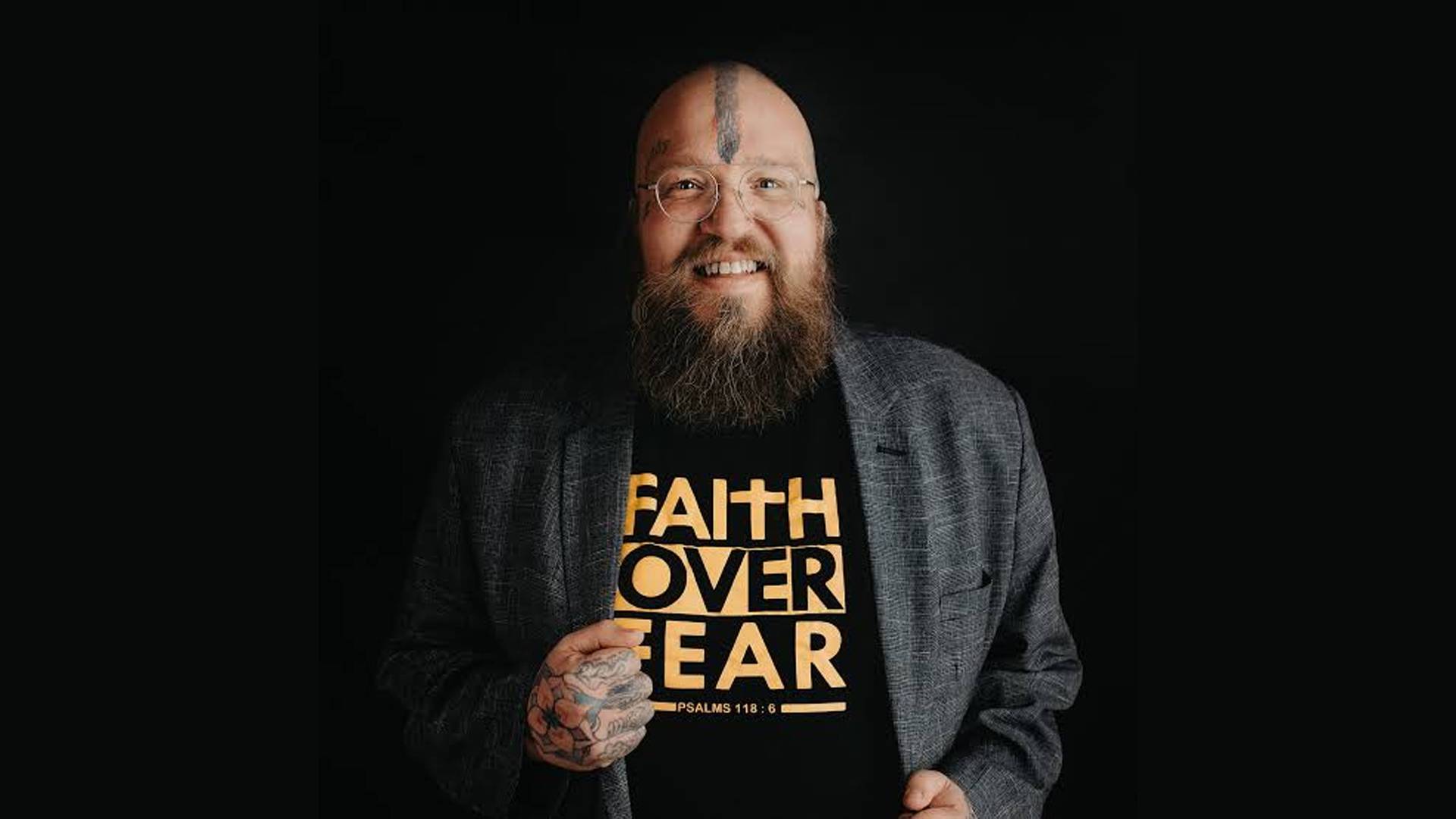
Former South African Satanic Church leader Riaan Swiegelaar is back on Maybe God. After his first conversation with Eric Huffman sparked an overwhelming response, Riaan returns to address some of the questions, criticisms, and controversy that followed—including comments about his sexuality and his conversion to Christianity. He also goes deeper into spiritual warfare, deliverance, the occult, and what he believes Christians misunderstand about the spiritual realm. Riaan shares why people wounded by the Church can become vulnerable to the occult, why followers of Jesus don’t need to live in fear of darkness, and why no one is beyond the reach of God’s grace.
Subscribe to Maybe God’s YouTube channel today!
Transcript
Riaan Swiegelaar: I've seen sacrifices. I've seen satanic wretchedness.
Woman: They would put me in cages, sacrifice animals.
Riaan Swiegelaar: No person that got involved in Satanism before they went through initiation really knew what they're getting involved in. There's this concept that the devil is going to look after satanists, but we have to understand that the devil hides people equally.
Eric Huffman: I think we have this image of occultists or satanists being this bloodthirsty band of ravenous spiritual wolves, and you're describing more of deceived victims.
Riaan Swiegelaar: Satanists do not know that Jesus is an option for them.
Eric Huffman: Why? Are they that deceived or...?
Riaan Swiegelaar: You do not know how many thousands of people came to join Satanism simply because they were hurt by the Christian church. The most evil thing that I've witnessed in my life is the religious spirit because it keeps people away from Jesus.
Eric Huffman: In our nonchalance and lack of discernment, what kinds of openings do you think Christians open up or fall prey to unwittingly or in our ignorance?
Riaan Swiegelaar: You do not have to be a satanist to worship the devil. All you have to do is...
[00:01:13] <music>
Eric Huffman: We don't often invite a guest back for a round two here on Maybe God, but our conversation with Riaan sparked a lot of curiosity and a ton of questions in the comment section from our community, as well as conversations here in our team here on Maybe God. And so we wanted to have Riaan back to talk more about his journey from a Satanic church leader to a fully sold-out follower of Jesus and an outspoken leader in the Christian movement now. So today we're picking up where we left off six months ago.
Riaan Swiegelaar, welcome back to Maybe God.
Riaan Swiegelaar: Thank you so much. What an honor to be here.
Eric Huffman: Thank you.
Riaan Swiegelaar: Absolutely. It is all about God's grace that I'm even here today. The more time I get to spend with God and the more I get involved with different ministries and their outreaches, it's just amazing to see how faithful He is and that we can think we are far away from God, but He never lets us out of His sight and that Jesus is constantly pursuing everybody. He is constantly knocking on the doors of people's hearts. So I can testify to that as well, even more so today. But again, thank you so much for having me back. This is an awesome platform. And yes, let's see where the conversation goes.
Eric Huffman: I'm excited about it. We left a lot of meat on the bone in our last conversation. I'm excited to go deeper with you. As I was saying before we started rolling, I'm grateful for you and your ministry, your steadfastness. I know you faced a ton of resistance from many sides since coming out as a Christian and speaking out on all things spiritual that the church needs to know about. For people that may not be as familiar with you, though, let's just briefly recap your former role and status within the Church of Satan in South Africa. What was your position there and what did you do?
Riaan Swiegelaar: Initially I was just a person, you know, I'm dabbling in the occult and eventually by 2015, 2016, I got deeply involved in Satanism, not really exactly knowing what it is. I honestly thought it's what I read in The Satanic Bible, that that's what Satanism is. But when I got officially initiated about two years later, it was something completely different and the devil and the demonic became very real.
And by 2019, I got involved with a group of people that was very organized in Satanism. And I think this is something that a lot of people from, let's call it an outside perspective, whether they've been Christian or anything else don't understand, is that Satanism is really a network of people. It is about a lot of things.
So when it was time to start and co-found a Satanic organization to represent Satanism in South Africa, I was then elected to be the face and the leader because people that have been involved in Satanism at the time, and some of them still are, they didn't want to be associated publicly, obviously, with Satanism because of their positions in corporations and in various sectors of society. The South African Satanic Church was officially registered on the 14th of February, 2020.
Eric Huffman: Valentine's Day.
Riaan Swiegelaar: And then for two years that was my position. On a paid way, it was also a job. So I was the spokesperson and leader for the South African Satanic Church until I had a radical encounter with Jesus Christ. This was in May, 2022, when I had that encounter. Since then, I've been absolutely following Christ. I do the best I can, you know. I still obviously make mistakes. I am a sinner in need of Christ every day.
I think what I want to say as well is that the more time I spend with God and the closer I get to God, the more I can't get enough of Jesus and of being with the Father. So I really try to spend as much time as possible. But also in ministry, and I've been very much involved in ministry for almost three years now, specifically deliverance ministry and helping people who want to get out of the occult and Satanism to get to know Jesus for who He really is. Even in doing that, I feel so close to God when I do that. I've had this conversation with other Christian leaders and with other Christians as well, it's like when we serve in the body of Christ is really when we experience... And it's almost like at that time, I hear the voice of the Holy Spirit more clearly when we're allowing God to use us.
Eric Huffman: Amen. Hey there, Eric Huffman here, host of Maybe God. I hope you're as fascinated as I am by Riaan's story. And if conversations like this one make you pause and rethink some of your assumptions about the spiritual realm, I hope you'll click subscribe so that you can keep exploring this topic with us. Here at Maybe God, we try to focus on real people and honest dialogue and the biggest questions of faith that a lot of people are afraid to ask and wrestle with. So get subscribed today. And while you're doing that, hit the notifications bell as well. We would love to have you as part of our Maybe God community. Now let me hear more of Riaan's story.
It's amazing, your story. And that's one reason we wanted to have you back just so as many people as possible hear how Jesus insisted on reaching you, even though you were serving in the capacity that you were in the satanic church.
Let's talk just a brief moment more about the satanic church. I think there's a lot of misunderstanding about how it works and what it's about, because a lot of entry-level satanists that I've just run across over the years led me to believe that it's really not about Satan or worshiping the devil. It's really a secular organization that's got a social utility to it. And it's also a rebellion or polemic against Christianity and organized religion but itself is not really about a spiritual darkness. At the simplest level or in the simplest terms, it's just people getting together and insisting on a better world as they see it. What was your experience in Satanism that counters that narrative?
Riaan Swiegelaar: That is a really good question. And that is what I believed initially as well. Like I said earlier, when I initially got involved in Satanism, I thought, okay, this is just the tyranny against religious movement and it's about the self and getting to know the self and all of that. It's just intellectual philosophy, etc., etc.
I can tell you from the thousands of satanists that I've met in my life during my time in Satanism, as well as in ministry today, because that is really ominous, you feel, no person that got involved in Satanism before they went through initiation really knew what they're getting involved in, you see? That is my personal issue with it as well, because we have to understand the devil is a liar. It's about steal, kill, destroy, but the devil is the master of the father of lies.
The other thing that I think a lot of people don't understand is there's this concept that the devil is gonna look after satanists. But we have to understand that the devil hates people equally because every person on this planet, whether they're a satanist, a Christian, whether they're atheists, whatever, they are God's creation. Every person, every life form on this planet, not even just humans, is created by God. And the devil absolutely hates God's creation and wants to destroy. So no person that I've met, and like I said, thousands of people, both in the occult and Satanism, ever had an idea, what is the thing that I'm getting involved in?
A lot of people speak about atheistic Satanism or theistic Satanism is the other, if you wanna call it, denomination, and you get Luciferianism and spiritual Satanism and, and, and. But the point being, so whatever that person might believe, if you were to go through an official initiation into Satanism where there's a ritual that takes a certain form, after that ritual, there will be no doubt in your mind whether the devil is a real entity or not. I can say that from experience as well.
So, for almost a year, I thought Satanism is just a philosophy to live by. I really believed that. The moment I went through the initiation process, and there's certain pacts that are made with the demonic, and there's a satanic invocation, and I'm not gonna give the detail on that because I don't want people to become better satanists. But the moment that you go through that, there will be no doubt in your mind whether the devil is real or not. What we have to understand as well, and this is something I see in ministry all the time, is that satanists do not know that Jesus is an option for them.
Eric Huffman: Satanists do not know that Jesus is an option for them. Why? Are they that deceived or... why?
Riaan Swiegelaar: Number one, yes, deception. Also, satanists believe they've sold their soul to the devil. And as we know, that is impossible. So we cannot sell our souls. Our souls belong to God. Whether we serve Him or not, our souls actually belong to God. Satanists actually believe they've sold their souls. I promise you, this is the biggest challenge. When people reach out to us in our ministry, they will say, "Oh, I don't know how I will get out. I want to get out." And this is the truth. Many of them want to get out, but they do not think and believe they can do it because they believe their soul now belongs to the devil.
So we have to then almost unprogram them in certain ways, but for them to actually get to know who Christ really is and that Jesus came, Jesus was sent to this earth to die for each and every person. And that was even decided by God before the foundations of this earth was laid. God knew in His infinite wisdom and His all-knowing, that the Son of Man came for each and every person. We just have to accept Him, you see. So we have a choice. Each person has a choice. And God gave us that free will as well. But we have to choose Jesus. We have to turn our hearts to God because God wants us to do that. God wants us to know Him because God knows us better than any person on this planet will ever know you. God knows you better than any person, but God wants us to know Him. The only way to God is through Jesus Christ.
Eric Huffman: Amen.
Riaan Swiegelaar: It's the only way to God and to have a relationship with Him and to get to know Him is through Jesus and because of the works of the cross and the works of the resurrection. Amen.
Eric Huffman: Yeah, amen. Brother, preach. That's great. And you said a lot there. And I think it's really interesting and important for Christians to keep in mind that... I think we have this image of occultists or satanists being this bloodthirsty band of ravenous spiritual wolves. And you're describing more of deceived victims.
Riaan Swiegelaar: Broken.
Eric Huffman: Yeah, just aren't aware of the reach of God's grace, that it can be for them too.
Riaan Swiegelaar: And I was there. I mean, let's say, just over four years ago, if I heard this conversation, I would have said, "This guy is on drugs," and it's not that simple. Why would God love everybody? That doesn't make sense because every person that... and I can tell you this today. I remember that the first two years of working in the church office of the satanic church, you do not know how many thousands of people came to join Satanism simply because they were hurt by the Christian church, not even knowing what Satanism was about. The moment we would ask them, "Why do you think you're a satanist or why do you want to join this African Satanic church?" They would say, "Because God hates me. Because the church rejected me. Because I got hurt in the church."
Eric Huffman: What were some of the specific ways, if you could help us understand more, the specific ways that church hurt manifested itself in these people's lives?
Riaan Swiegelaar: Sure. We had quite a few divorced people. So people who got divorced and then the spouse would stay behind and they were kind of pushed out of the church. People who were betrayed by other people in the church, people who were severely judged. There were quite a lot of younger LGBTQ people as well. So instead of embracing then that the Holy Spirit convicts them of what they needed to be convicted of, people will judge them. People with tattoos, as silly as that sounds. I think it's a bit different in our country because the majority of churchgoers in our country is very conservative. We are seeing a revival where more younger people and alternative crowds, you know, like biker churches. We even have a metal church now. So that's amazing. I mean, praise God. So more alternative people are embraced and it's more about the relationship with God and getting to know Scripture and things like that. Then it's about how you dress to church and things like that.
Eric Huffman: Tattoos, like you were saying.
Riaan Swiegelaar: Correct. But once upon a time, unfortunately, those were the only churches in our country. And it was very cookie-cutter, you know.
Eric Huffman: Yeah, sure. I can imagine. And so basically churches and Christians that are too high on religion and not high enough on grace were chasing people out the door of the church and into your doors at the Church of Satan, which should be a wake-up call for us as Christians to be very careful in stewarding the Church of Jesus Christ, not doing undue harm.
Riaan Swiegelaar: Yes. I also love to tell people the way we treat other people is a ministry in itself. You know, like the woman that you see behind the toe every day or wherever, just kindness, just showing love, showing Jesus to people, being His hands and feet. We recently started a soup kitchen outreach for our ministry, alongside our ministry. We've been doing that since end of January. And we go every week, we go to different areas in the community. And it is absolutely amazing because the moment that you give someone a blanket or some food, they're more open to hearing about Jesus.
Eric Huffman: Of course.
Riaan Swiegelaar: And I think I'm very, I want to say, fortunate in a way that people recognize me almost everywhere I go. So I can talk about Jesus to people everywhere. And I do every day. But I have so many Christians ask me, how do I talk to strangers about Jesus? And then I said, It starts with very simple things. It's like that lady behind the toe, buy her extra chocolate and give it to her when you find her and when she asks you, "But why?" you say "Because Jesus is awesome. Because Jesus paid it all." You know, things like that. It is so, so simple just to show kindness to people. And eventually there will be a conversation and you can testify because we need to understand that the world is in desperate need for Christ.
Eric Huffman: Amen. Were you as evangelical about Satanism as you are about Christ? Like, would you look for opportunities to share Satan or an invitation to the church with people back then?
Riaan Swiegelaar: No. I was a spokesperson. It means that whenever I was invited to go to an interview, obviously I will talk about it. And it was constantly doing PR for Satanism, you know? And saying that it's not about sacrifices. It's not about this, not about that, knowing very well what was happening at Retchells. But we were given scripts. Four of the co-founders, we were given scripts on "why do you say in certain things?" And then another big part of my job was to social media troll Christians and constantly start online bickering and fights and things like that. So that was really what my day was like.
Eric Huffman: Hmm, interesting. The social media troll thing is interesting. I've been very curious about that lately. Since your conversion and coming out as an outspoken Christian, I don't know how much you read the comment sections on various platforms, Riaan, but most of it is positive. Most of the comments on our prior conversation were positive, but there are a significant number of trolls, I would say, who want to get their punches in. And they often seem to be coming from a Christian or at least a church perspective in tearing you down. I've wondered if some of that is actually from the other side, posing as Christians to create dissension and doubt about your testimony.
Riaan Swiegelaar: No, absolutely. I think because I was there so many years ago, you know, like trolling people. So it's really not about the person that you were attacking. It's about you. It's about the person writing the comment. I think what a lot of people forget is that I've met Jesus. I've actually stood face to face with Christ. That has changed my life. And no comment or what anybody says is going to take that away from me. That is what I stand in today. I know I am in Christ. I am completely aware of my identity in Christ. I know what the Word says who I am.
I think that is so important for anybody. It's not just for me. I think any Christian, if you want to, let's call it, survive today with what's going on in the world, it's so important that you know who you are in Christ. It's so important that you know who Jesus is. I constantly encourage people, and especially if they come out of the occult and they've been through deliverance and they're busy with their reparation period, we so much move their focus to the whole of Romans 8, for instance.
But also to just show them who are you now that you've stepped onto this foundation that is the kingdom of God, because it's a very strong, unshakable kingdom. Let's be honest. And I'm saying this as a person that came from the other kingdom. By practicing the occult, I've seen, you know, very amazing, powerful things happen by practicing rituals. The moment I met Christ and I experienced that love and what I'm seeing in ministry and what I'm seeing in salvations with people and how God is using the most unlikely people for His kingdom and what powerful healings and things that I'm witnessing firsthand, that doesn't even compare. The works of the devil and the occult doesn't even compare closely to who Jesus is and the works of God and His power and His faithfulness. There's just no comparison.
Eric Huffman: There really isn't.
Riaan Swiegelaar: I've often said that the blood of Christ is the highest currency in the spirit world, because it is. It is the strongest thing. It's the strongest force, that the name of Jesus alone, alone. I've seen demons flee at the name, just at the name of Jesus. Yeah.
Eric Huffman: When you were still practicing and leading the church of Satan and Jesus found you, as you told us that story in our last interview, and that was by far the most talked about part of the interview and just how touching your testimony is, were you at that point, internally in your own mind, were you done already with Satanism and looking for a way out? Or were you still like all in and wanting to make that your life and future?
Riaan Swiegelaar: Yes. I think what a lot of people don't know is if you would have asked me back then, "Are you happy?" I would have said, "Absolutely. I'm happy. I've got all the money in the world, got cars, got homes, all the drugs that I wanted, everything." So I thought I was happy because of those things. I only realized how empty my life was and that I had this Christ-sized hole in my heart when I actually met Christ. So before that, I was a very happy, proud, outspoken Satanist. Even 10 days before that encounter, there was a radio interview that I did where I said that, you know, this is the ultimate carnal, earthly experience. It's the happiest that any person can be. It's the most powerful, all those things. And I believed it. I really, really did.
Eric Huffman: Wow.
Riaan Swiegelaar: I think after I met Christ and I had to go through almost a nine-month period of deliverance. So after that, I had my mind back. And I didn't realize how clogged and delusional I was until I came out on the other side of that. And looking back, I was just like, what happened? And even if I look at pictures of myself of that time, I don't recognize that person. I don't.
Eric Huffman: Several people in our community in comment section who saw you before and after commented about how your face looks different, there's a light in you, your voice sounds different, you're a new... It's almost like you're a new creation, Riaan. I've heard that somewhere before.
Riaan Swiegelaar: That's what the Word says. But I mean, besides that, I was severely possessed. And I didn't realize it at the time. I can today say, looking back at that, I was definitely severely possessed.
Eric Huffman: What were coming out of your conversion moment where Jesus met you, which you were preparing for that ritual that I want to talk more about in a second, by the way. But in that moment and in the aftermath, what were some of the first things you had to renounce or habits you had to say no to that had become commonplace? What were some of the first things?
Riaan Swiegelaar: So many things. I think what I wrote about extensively in my book that I'm also kind of just rereading before we do the final draft, but what I read there is that a thing that is so difficult to explain to people, but in that encounter and experiencing that love at the same time, you come up against all your sin. This is the part that I think people don't understand because many people seem to think, oh, this was such a beautiful, and it was definitely a beautiful, powerful experience, but it wasn't fluffy. I mean, Jesus isn't a little meek, gentle Jesus. Jesus is a man.
Eric Huffman: A righteous judge.
Riaan Swiegelaar: Jesus us authoritative, strong, powerful man. Trust me. So you experience His love, at the same time you come up against everything that you've done — things that I didn't even believe at the time was a sin. And you start seeing that you are really a wretch of a person and broken, etc. So there was a lot of occult practices. There was a lot of doing crystal healing work. There was the witchcraft. There was so much unforgiveness. There was immortal sexual connections and relationships. There was doing psychic work. There was being hateful on people, the slaughtering of animals. I never thank God for that, but I never partook in human sacrifice, but I certainly sacrificed animals during that period in time. So there were so many things.
I didn't even realize after the encounter that I'm still going to have to go through a deliverance process. That only really started about three, four... I want to say not even a month, let's say three weeks, because I kept diaries of all of it. So about three weeks after that encounter and starting to have conversations with God and learning how to actually pray, I was very much convicted that I needed to go for deliverance. That process was very intense.
I think even after meeting Christ, but before actually going for deliverance, if you would have asked me, "So do you think deliverance is so important and that a person have accepted Christ, but still need deliverance, I would probably say, no, I don't think that is that needed. I mean, that's probably another conversation altogether. But it's been such a learning experience. I didn't realize at the time that God was equipping me for ministry work. If you asked me three years ago, "After a year of following Jesus, Riaan, would you ever go into ministry?" I would have said no. I'm very happy, quiet in my home. I'm spending a lot of time with God, reading my Bible, writing. That's what I want to do. And that nudge and that call and the confirmation with Scripture and so many people coming to me and saying, "God is telling you to go into ministry." I was disobedient initially until it was so clear.
Eric Huffman: I appreciate all that. I do want to talk a little bit more about deliverance ministry before we wrap up later, but your story reminded me of the early days after my conversion. One of the things I had to learn willfully was how to love and appreciate Christians because I had gotten so accustomed to despising Christians, especially people I thought were conservative Christians. I had treated them and thought of them as the worst of society for so long that I had to unlearn that. Did you find anything in your old thought practice that you had to unlearn or, you know, were there challenges in the Bible that you resisted like, you know, love one another in the early days? I know you're a more mature believer now, but in the early days when it was still new, what did you struggle most with?
Riaan Swiegelaar: I think I struggled with understanding that not every Christian truly represents God and God's heart. I found it very challenging and difficult because for me, like I said, the more I got to spend time with God, I loved Him more and more and more. And it became easier because, you see, yes, the thing that I believe, and this was the struggle until God revealed to me what's going on. Because I talked to God about everything, like you have no idea. If I had a bad experience in traffic, I will have a conversation with God about everything. I'll overanalyze it.
Eric Huffman: I love it.
Riaan Swiegelaar: At that time, it was very intense, you know, like dealing with, let's call it religious questions, etc. And then God revealed this beautiful thing to me. He showed me that so many people say that they've given their hearts to God and they've given their hearts to Jesus, and what that actually should mean is that my heart then don't belong to me anymore. If you've given your heart to God, your heart should belong to God. And if that is the case, God will, with His Holy Spirit, work through your heart that now belongs to Him to pull other people into the kingdom. Right?
Eric Huffman: Right.
Riaan Swiegelaar: So when you have unforgiveness, jealousy and judgment, especially those three things in your heart, you are preventing the Holy Spirit from working through your heart to reach people. And when I got that, this was a game-changer for me. So I have to go and I still do it, I have to go to God at the end of every day, and I say, "God, Father, if there's anything in my heart that is preventing You from using me fully, reveal it to me." And I have to repent for that immediately, because the enemy will bank on it. The enemy will use that. And especially resentment, it gives the enemy a foothold in your life. So even if there's people judging me or throwing comments, like I said, I don't read it because I really don't have the time. I don't know where people find the time, to be honest.
Eric Huffman: Me either.
Riaan Swiegelaar: Even if I'm met with that, or people doubting my salvation. I mean, firstly, if you doubt my salvation, I'm going to doubt the spirit that lives in you, because the Word tells me that your spirit and my spirit will taste the fruit of God's spirit, that we are children of God. So I will doubt the spirit that lives in you if you doubt people's salvation. But besides that, every time since God revealed to me what it means for you to give your heart to Him, the moment I meet people like that, I don't go, "Oh, you know, you're a bad person." I go and I say, "Father, I want to thank You that my heart fully belongs to You, that I do not do that. And can You please reveal Yourself? And Jesus, can You please reveal Yourself fully to that person?" And you let it go. You let it go, because if you doubt, the enemy will bank on that.
Eric Huffman: Yeah, that's right. We try to win arguments instead of people, and we lose both, typically. We're in the people-winning business, and that's Jesus's work through us sometimes, but that's His work nonetheless. But I will say it's fair to say, as a Christian leader, an outspoken Christian, I think everybody's prepared to face criticism from the outside, but when it comes from within, when it's friendly fire from other Christians who don't often even know you, but, you know, will doubt your salvation publicly, or... you know, this is a raw question to ask, but we had a lot of people commenting, not even really asking, is this true, but commenting in a very declaratory manner that you're still an out and proud gay man, a practicing gay man, and in a same-sex marriage. I wanted to give you the opportunity to respond to that in your own words. We've had offline conversations through various channels on this, but I'd like to hear it from you. What's your response to that line of critique?
Riaan Swiegelaar: That is an exclusive interview that I'm actually giving with a channel connected to Charisma. I'm not going to go much into that. All I can say, though, is there's very much proof that that is not true, and I know why people are still hammering on it. But I'm very careful to speak against the gay community, if you want to call it that, because it's a very big part of our ministry field. I believe that we should embrace people, and we should pray for people, and we should allow the Holy Spirit to convict it.
Eric Huffman: I have to say, Riaan, I admire your restraint, because I believe you when you say you're holding back on that topic in particular because of missional reasons. You're trying to reach and have conversations with these people, and you know that it would be a non-starter for them if they searched up your name and LGBT and found you disparaging the whole movement or something. You are being pastoral, in a sense. You're keeping the line of communication open with them, and I admire that.
And I want to go on record admonishing and calling out our brothers and sisters in Christ who may be quick to judge, quick to anger, quick to dismiss you because of whatever they perceive you to have been in the past or they think you are today. May God have mercy on them, and on all of us when we jump to judgment instead of coming alongside a brother in Christ who's relatively new to the kingdom of God, sharing the gospel with people that most churches aren't reaching. I think that's why I get personally up in arms a little when I see people disparaging you publicly in ways that make it evident they don't really know you. They're just trying to prove a point in a destructive way, I think, for the kingdom of God.
Riaan Swiegelaar: But I mean, there's still Christians who say, I'm still a Satanist as well.
Eric Huffman: What do you mean?
Riaan Swiegelaar: No, I mean, as there's people who are saying, I'm still in a sexual marriage, there's also people saying, I'm still a Satanist.
Eric Huffman: Yeah, they're accusing you of being covert ops, infiltration.
Riaan Swiegelaar: Yeah. And you know...
Eric Huffman: You're doing a terrible job if you're still a Satanist, bringing all these people to Jesus.
Riaan Swiegelaar: No, what I can say about that, because unfortunately, we deal with a lot of, like I said, people coming out of the occult, right?
Eric Huffman: Yeah.
Riaan Swiegelaar: So now we want to connect them to churches, okay? So hear me out. We make sure that they go through deliverance. We make sure that there's reparation. But we don't disciple them. We connect them to churches closest to where they live. In the last almost three years, 82 people that came out of the occult, out of Satanism, we've connected with churches. Out of that 82 people, there's only 16 still attending church. Do you know why? Because the church tells them, "You are here, you are a Satanist still, infiltrating the church. Why don't you take it over?"
Now, my argument is, and this is my experience, if you have a church where the work and the presence of the Holy Spirit is, whatever person walks into that church, with whatever intent, whether they want to murder the pastor, like my ministry pastor did when she met Christ, when she was still a Satanist, so whatever that person's ill intent is, why will they not encounter the living God if you have a Holy Spirit-filled church? So why are you scared? Why are you scared of people infiltrating your church? Because do you not believe that God is all-powerful, or do we not believe that? That is a question we have to ask. The other question I want to ask is that, what is there to take over in churches today? Please tell me. I'm very curious.
Eric Huffman: I could probably give you a pretty cynical answer. It's power and institutional control. But I don't mean to get you off your train of thought. It's just a question that goes along to your train of thought, which is, don't you think it has something to do... I don't think it's a willful, anti-spiritual, anti-gospel. I think it's ignorance. In large part, I think we have a bell curve in the church where 10% of Christians are deeply involved in spiritual things, 10% are deeply against all things spiritual, and then most of us—I think I've heard you use the 80% number—have no discernment, no spiritual awareness, just really no desire to go deeper in the spirit world. For whatever reasons, they're just out of their depth. They feel like they are anyway when it comes to these spiritual realities. I'm just curious what you think that 80% is missing, what they are missing out on by playing ignorant or being willfully ignorant toward the spiritual realm.
Riaan Swiegelaar: They do not spend enough time with God, because if you do, you will get to know His voice. So, 80% of people who call themselves Christian would rather sit on TikTok or watch Netflix or do whatever, and then they'll go to church on a Sunday. But they're not having a living relationship. And it's very sad, and it's because they're not really aware that they should. Again, God wants a covenant with His children, with His followers.
So if you want to develop discernment or even have discernment, first get to know God, get to know God's voice, and you will have it. It's not something that is just meant for a certain type of person. Every person that has the Holy Spirit inside of them should have discernment. Also, there's these conversations about who's anointed and who isn't. If you have the Holy Spirit inside of you, you are the anointed of God. You are a son and a daughter. It is your right. It is your-
Eric Huffman: Inheritance.
Riaan Swiegelaar: It's part of authority, and we are in Christ to have discernment. But it's something that we have to work at as well. We can't just expect because God knows us, now He gives us discernment. No, brother and sister, it's about spending time with God. And I've said this many times. It's the same with if you think of a person that you know very well, that you've got to grow close to over years. If you and that person would be in a crowded room where there's a hundred other people, you will recognize their voice from the other side of the room, over hundreds of voices. Why? Because you've spent time with them, you've grown a relationship, you've communicated over years. It's the same with our relationship with God.
In the times we are in, it's very important for us to be able to discern God's voice over all the other hundreds of voices saying things at us, like, this is the truth, this is the truth. And I think it's also because deception is not the same as lies, right? Because a lie is easy to, "okay, this is a lie". Deception works this way. There's nine out of 10 truths, and that's when one lie in it. And if you have true discernment, if you actually hear the voice of the Holy Spirit, because you've spent time and you're working on that relationship, you will not have an issue, and you will not wonder or doubt or be in too much "who's really a Christian and who isn't".
Eric Huffman: Right.
Riaan Swiegelaar: Things like that. Also about what should your kids be watching and not, because you'll have discernment. The moment you see something, you will know, This is not. It might look very beautiful, and there's light, you know, and I don't want to say which cartoon network, but you know, there's a little spark-
Eric Huffman: Why not say it? Name names, Riaan.
Riaan Swiegelaar: Disney. "This looks so beautiful. How can it be used by the devil?" I mean, discernment. Look at content, look at things. The Holy Spirit will show you. But that is not something that happens overnight. You have to grow in your relationship. It is so important. And when I started this ministry with Adele, she was already a pastor at the deliverance ministry for 27 years before I joined with her. I remember saying to her, "You know what, we're going to see so many people from the occult and satanism coming to us for deliverance." And lo and behold, more than 70% of people who came to us for deliverance in the last two years were all Christian.
Eric Huffman: Wow, really?
Riaan Swiegelaar: Yes.
Eric Huffman: Interesting. Okay. We will dig into that at the very end of our conversation, because I think there's a lot of curiosity, including my own, about deliverance ministries. I want to not ignore what you have been saying, which is the importance of discernment. Back to that bell curve analogy with 80% of Christians or so being completely or willfully, maybe unaware of the spiritual reality, and then 10% on either extreme. I wonder, and you can help me with this, you've been closer to him than I have maybe serving in a church, I wonder if our enemy is happier with that 80% than he even is with that 10% that, you know, wants to shut all spiritual things down because those folks, you know, the uber cessationist crowd, they're really not a force to be reckoned with from his vantage point anyway. But if he can keep this 80% in the dark and with no discernment, then yeah.
Things like openings to the demonic or, you know, you talked about suggestive cartoons we show our kids. I've heard you talk about Halloween and things like yoga and things like crystals or new age practices. That's an easier sell for people that just basically operate day to day on vibes and feelings. This feels good. How can it be bad? And if you have no discernment, I can imagine.
Riaan Swiegelaar: Absolutely. Why not? I can see it.
Eric Huffman: I wonder if parents especially are slow to discern because we just don't want to raise weird kids and we want our kids to be normal and fit in. So do Halloween, do Disney, do whatever, because we don't want our kids to be the outliers. How concerned are you about parents being or lacking discernment in raising their children in this world today?
Riaan Swiegelaar: I want to start with another statement and then we can go into that. A lot of parents contact us, and then my question always is, is that how much do your children see you worshipping Jesus? And why I'm asking the question, right? Do you think if you take your child to church and whatever church is for you, if it's a small group of gathering of fellow believers or a big church, but if you take your child to church on a Sunday and they see the power of God with healing, if they see deliverance, if they witness sermons, etc., do you think the devil will be able to mislead your child on a Monday?
Eric Huffman: Yeah, that's good, man.
Riaan Swiegelaar: Think about this. And then when I ask these questions, the parents are very quickly to, you know, but time and but this and but that and no. So teach your children about Jesus in whichever way you're going to do it, but do it. If you are a Christian, don't just pray for your children — and prayer certainly helps. I promise you it does. But teach your children about Jesus. And teach children about our identity in Christ from a very little age and show or tell them who God set them to be and who God created them to be.
Eric Huffman: Why is identity so important to you? I keep hearing you circle back to that and and knowing our identity, declaring our identity when we're under spiritual attack. I've heard you say that's the most important thing you can say is I know who I am in Jesus Christ. And I've thought about that a lot since we last talked. Why is identity so foundational in this conversation?
Riaan Swiegelaar: Because that the opposite of identity in Christ, we need to maybe think about what that looks like. And the moment a Christian contacts me, and I mean, I don't even want to show you what my inbox looks like. So I constantly have Christians contacting me saying the devil is attacking me or the devil is attacking my children, or I've been cursed, or this or this or that. So everything comes back to identity. Because if you know who you are in Christ, because of what Jesus did for us, and that we are free, there is no way that you're going to believe the lies that demons and the devil wants to feed you because it all starts with thoughts. The very first area of attack is our mind. And the devil can't read our mind, but he can put thoughts in there.
Eric Huffman: It's the difference, again, between a lie and deception. The deception about identity can be so slippery in that I run into a lot of Christians whose identity is basically I'm a pretty good person relative to other people. I'm a pretty good person and God loves me because I'm a pretty good person. That identity, I guess, can be justified in ways, but it is so antithetical to the gospel. And if that's your identity going into a spiritual war where you're up against an enemy who... he's going to have his way with you if that's where you're starting from, rather than I am an undeserving sinner redeemed by the grace of Jesus Christ and saved by His mercy and filled with a spirit, that's who I am and child of God now because of His grace. That's a very different identity, even though I think sometimes people who lack discernment, there we are again, don't see the difference.
Riaan Swiegelaar: Exactly.
Eric Huffman: Identity is so key. And raising our kids to know who they are in Christ as well. You said, "Teach your kids about Jesus." I think you also mentioned the importance of letting them see and witness you actively worshiping Jesus. And if you're a parent, you know, if you're a father, let's say, and you take your parents, your kids to church with you, that's great. That's a good first step. You sit with them and worship God together. But, you know, maybe let them see you raise your hands in worship. I talk to guys that are like, I don't feel what other people seem to feel when they raise their hands. And I'm like, you think I always feel like raising my hands and like it's an emotional decision. It's an act of the will to say I'm surrendered. And when your child, who's never seen their dad surrendered to anybody or anything, sees you surrender to Jesus, it'll get their attention. And that will be a memory for a lifetime that they constantly go back to long after you're dead.
Riaan Swiegelaar: And I find it interesting that, again, and this is not me criticizing, it's just saying things like we need to think about these things, right? So then I speak to people whose children is under attack, either, you know, at school or, you know, because of things that's on social media. But their sense of self and their identity in Christ is being attacked. Then I tell, okay, you need to pray. You need to tell the devil that you will not have my child. And then I get things like, yeah, but I'm actually an introvert. So, but you're not an introvert when you're screaming at the dog, or when you're fighting with your husband, or when your husband is watching a football match, screaming for his team, then you're not an introvert.
So we really need to think about these things. Because, again, the devil doesn't read our mind or our hearts or the devil observes us in what we do, what we say. And like I said, planting thoughts, but we are supposed to capture our thoughts. We are supposed to speak our identity in Christ over it. The devil will flee.
Eric Huffman: Amen. In our nonchalance and lack of discernment, what kinds of openings do you think Christians open up or fall prey to unwittingly or in our ignorance, would you say? In today's modern world, like day-to-day, what are we at risk of opening ourselves up to?
Riaan Swiegelaar: I can only speak from people who have been, you know, like I said, from deliverance type of experiences. But pornography seems to be a massive thing at the moment. Massive. And people seem to think, but I'm just watching it. I'm not doing it. So it's not that bad. Where the truth is, that is a massive doorway.
Pornography is a weapon that the devil is using to destroy marriages, to destroying people's sense of self and guilt. Because a lot of times guilt is what's stopping people from having open conversations with God and repenting for things. People will rather think, "Oh, one day I will speak about this. Let's just put it on the shelf. When I have time, I will make an effort." You know what I'm saying? So over time, that becomes a massive open door. So that for instance.
Things that seem innocent, you know, like the horoscope or going into a live video where a psychic sits, just putting your name down just to see if this is really real. The moment you dabble with those type of things, you are opening doors. And those have been the massive type of things that Christians have been not possessed, but oppressed by the demonic. I've seen. And then I've also seen a lot of people who almost got addicted to playing the lottery online with demonic influence. Not from the word go, but over time because of the gambling aspect and things like that, and not trusting God.
And here's the thing. When we look at faith, when we look at the word, there's always facts and there's faith. For instance, I can say the fact is I have three dollars in my bank account. The truth is God provides for all my needs. You understand the difference?
Eric Huffman: Sure. Yeah, absolutely.
Riaan Swiegelaar: So people struggle. People seem to struggle with what social media society says your life needs to look like, as opposed to what God says and how He will provide for us. And it's about believing God's word, believing His faithfulness, declaring it over your life.
Eric Huffman: Amen. I don't think anything riles people up as much as when we have criticized or warned against the practice of yoga on this channel. I've never done yoga, so I can't quite relate. But people that do yoga are dogmatic about it and will defend it to the death as just an exercise, healthy thing to do. You've been an outspoken critic of Christians who do yoga. Can you explain not just that it's dangerous, but why?
Riaan Swiegelaar: I think the reason people struggle with this is they don't seem to understand where it originated from. Right?
Eric Huffman: Yeah.
Riaan Swiegelaar: I'll explain it in this way. Let's say I go to a liquor store and I buy 10 cases of beer. And I put a sticker on it that says, "This is Christian beer," and I get drunk. Can I then say, No, but I didn't see, or my intent wasn't to open doors with that, because I put a Christian label on it. Does it not still... do you understand what I'm saying?
Eric Huffman: Yeah, sure.
Riaan Swiegelaar: What a lot of people do is they look at yoga and they say, no, but I'm doing it for the exercise. The fact is you are taking on positions that is specifically started, you know, with the yantras and certain of the chanting and things, and even if you're not doing the chanting, the positions, the mudras that you are taking on, those come from a Hindu religion and you are taking on the position of different deities, of demons, of Hindu demons. Here's the other thing. And this is what I think a lot of people also don't understand. You do not have to be a Satanist to worship the devil. All you have to do is to not worship Jesus. Think about it.
Eric Huffman: Sure. I think that's what the devil wants most is not to necessarily be worshiped by us. I think he wants us to hate and not worship God because he hates God. And he's perfectly fine with us just being neutral in the spiritual battle, because the truth is there is no neutral. Neutral is darkness. And that's the choice we get to make every day. Super, super helpful there on yoga. I just wanted to be sure and get a word in about that because there were so many questions about it after our last interview.
Would you say that there are certain communities today, even Christian people that are in certain communities, that are more susceptible to demonic oppression or attack? Would you say, for example, church leaders are more susceptible? Or you mentioned the LGBTQ community. Is there a certain susceptibility in that community to demonic influence? Are you concerned at all about Roman Catholic friends who might be holding on to ancient traditions and practices or relics that could be potentially openings for some dark influences? Where do you see concern there?
Riaan Swiegelaar: I want to say everywhere. But I can't say that, you know, because I'm not an expert on, if you want to call it, who the devil targets more, etc., etc., etc. But we have to understand any compromise, any compromise on our covenant with God, that's a problem. That is where you are under attack. And you are more susceptible the moment there's compromise. And here's the other thing that I know. The moment we start getting involved in things or doing something that is outside the will of God, the Holy Spirit tells us, but many people choose to ignore it.
Eric Huffman: I have a friend... Go ahead.
Riaan Swiegelaar: Yeah, sorry. I want to say that I think the most evil thing that I've witnessed in my life is the religious spirit. Like I said, I've seen sacrifices. I've seen satanic ritual of ****. The most evil thing that I've witnessed in my life is the religious spirit, because it keeps people away from Jesus. And it gives God such a bad rep. And the hurt it created. The amount of people I've seen commit suicide because of that, you know, because of things like that. It's extremely sad. And it's not God's heart, I'm sorry. It's not God's heart.
Again, we have to come back to the Gospels, the Gospel in itself, the Bible. We need to start understanding who Jesus really is. And we see it in the Word. If we read something in the Bible that we don't understand, we have the right to go to God and say, Father, I do not understand this. Why do You want me to read this? Is this something I'm not seeing? I will wait on You patiently to reveal it to me. God will do that. And the thing is, when I used to be a Christian church-going person, when I was, you know, high school, 19, 20, 21 is when I turned away from the Christian church, I didn't know this. I didn't actually know that we can speak to God like that because of Jesus. But the moment we have that relationship, anything that, like I said, might be an issue or that we say we are concerned about certain people or certain communities, pray for that, instead of putting it down. If you want to put people down, put them down on your prayer list.
Eric Huffman: Amen. You've talked a lot about the power of prayer. I mean, your mom basically prayed you out of the Church of Satan. Unbeknownst to you, she was praying the whole time, making the way for you to come to Jesus. Prayer is powerful and obviously efficacious when we are in Christ. And so if you're a parent, pray for your child now. Pray with them, but pray for them when they're not around. And know that those prayers actually are substantive and powerful in the spiritual realm.
Not to self-aggrandize or self whatever but as a pastor, I do wonder if, I think we have a lot of pastors that watch and people that love their pastors that watch, would you say church leaders and outspoken Christians in the public sphere might be in the crosshairs of the enemy in a way that the average Christian might not be? I just say that because maybe it's a self-interested question. I've got a-
Riaan Swiegelaar: My personal opinion is whenever you are reading the Word, whenever you are worshiping, whenever you are actively following Christ, you are in a spiritual battle, whether you like that or not. And that's what the Word teaches us as well. So it doesn't matter if you're a church leader or not, or if you are a home self-study leader, or if you... the moment you read the Word, you watch the blood of God, you worship, you are stepping into spiritual warfare.
Again, it's going to come back to what is our authority? We do not have to fear the enemy. I don't want to end with this, but there's still this perception that the devil and God is fighting each other on equal level. It is absurd. If I read my Bible, I see that God created the devil. The devil fell, Satan fell further to the earth. Satan, the devil is actually under our feet. That is how low he is because of who we are in Christ. That comes back to identity, you see.
Eric Huffman: Amen.
Riaan Swiegelaar: So, this absurd idea that some of God and the devil is... I mean, not even God and Archangel Michael is on the same level. Jesus has conquered the enemy on the cross. We are experiencing what the aftermath of that is, where the devil is trying to get back at God because Jesus is the one who conquered him on the cross. Not the other... you know, I don't want to name each and every God of every other religion. They didn't call devil, Jesus didn't on the cross.
Something awesome that the Holy Spirit revealed to me like six months ago was that a lot of times we read the Word or we read, for instance, when Jesus was taken in the desert by the devil, for instance, and things like that. That is not the same devil we are dealing with today. The devil in the Bible in that time was not even conquered by Jesus yet. We forget this. So he has been neutered by the works of the cross. And if we are serving the all-powerful God, and if we are in close relationship with Jesus because of what He did and who He is to us, why should we fear? He gave us the authority to tremble over the words of the enemy, right? That's what we talk about when we speak about identity. And I find it so sad that people who claim to have been Christians for 20, 30 years don't get it.
Eric Huffman: Or they're just so afraid when something happens and the enemy presents himself in some way we get intimidated or silenced somehow. We have nothing to fear. We have all the power of God with us, within us, through the Holy Spirit, and so there's no need for intimidation or cowering in a corner. He is already defeated, and whatever attacks He's levying against us or just after the battle, after the war, skirmishes that have no power over us in Jesus Christ.
I know we've kept you over time, but I've also promised our audience and everybody that we would talk a brief moment about deliverance. So I'll just ask you one last question about deliverance and the need for deliverance. Could you just demystify it for us, for those that are not as familiar with this? What is exactly the ministry of deliverance, and why is it something Christians should know about and engage in to some degree?
Riaan Swiegelaar: I can say so much about this. We can definitely do another episode or-
Eric Huffman: Three. All right.
Riaan Swiegelaar: In a nutshell, and this is really what the book is about that's coming out later. But it's part of the Great Commission. Firstly, you have to know that. The second thing is, no person does deliverance. It's Jesus who does it. Jesus is the one who sets people free when deliverance happens. It's not a person. You can't claim to be a deliverance pastor or deliverance minister. You can be in the calling of deliverance ministry.
But in deliverance, what I've personally experienced when I needed to go through it and what I've seen with every deliverance session, is that all you have to do is get that person that's being oppressed to repent for the open door they had to call upon Jesus to come into the room. And He does. Beautiful. Every time that you come and surrender, and you cry out to God and you call upon Jesus to come in, He comes in, because that's who He is. That is who He is. Why will He not? If we repent and we call, He will come in and demons will flee. It's not a ritual. It's not an exorcism. Do you understand? It's not a move.
And sometimes yes, demons speak through people and sometimes yes, people get thrown around in the room and things like that. And it's really just to intimidate you and keep you busy. But you have to get to the point where you get the person that's being oppressed or possessed to call upon the name of Christ after they've repented for the reason that this is happening to them. It is really that simple. It really is. We make it so complicated.
Eric Huffman: We do, man. Sort of in a peripheral way, I've witnessed a lot of deliverance ministries and it often it's just so... it's almost like a spellbinding kind of formulaic. You have to know which words to say, which incantation. It's almost like witchcraft. And I know it's not, I know it's not, but it's just over complicated. And I love your simple approach to it. And I look forward to a day when in the kingdom of God and churches across the world, we are systematic about introducing people to deliverance, to the power they have in Christ when they invite Him in the room and into their hearts, nothing to fear. Again, just let Him do what He does and surrender to Him, and let Him have His way with you. And that's really all there is to it. And we shouldn't get distracted or dismayed by, you know, some of the forces that work against us. They are nothing compared to the force of Jesus Christ and our risen Savior.
Riaan, I could talk to you for days, brother, and I know you'd got other things to get to. I'm just so grateful for your ministry. We pray for you. I feel like I know you, and as I was telling you before we started rolling, you're a kindred spirit in a way. I think it's through Christ and our identity in Him. But I just want to know we're going to continue to hold you in prayer. When that book is done and ready, be sure to share it with us so we can put it in the show notes or the description of this episode. And we'll also put your other social media channels on there as well. Anything else, any other ways the people watching or listening can support you in your ministry?
Riaan Swiegelaar: I can also just mention that we offer online courses and training in deliverance. We also do other things on spiritual warfare and stuff. It is available on our website, so people are very welcome to have a look.
Eric Huffman: What's the website again?
Riaan Swiegelaar: It is deliverance4me.com. The 4 is a number. So it's deliverancefor4me.org.
Eric Huffman: Okay. I hope people will check that out. I have a high level of trust with you and what the Holy Spirit's doing in you. I'm grateful, brother. Thank you again for the time and God bless you.
Riaan Swiegelaar: God bless.