
Ex-Satanist Reveals Dark Secrets Behind Occult Rituals
Inside This Episode
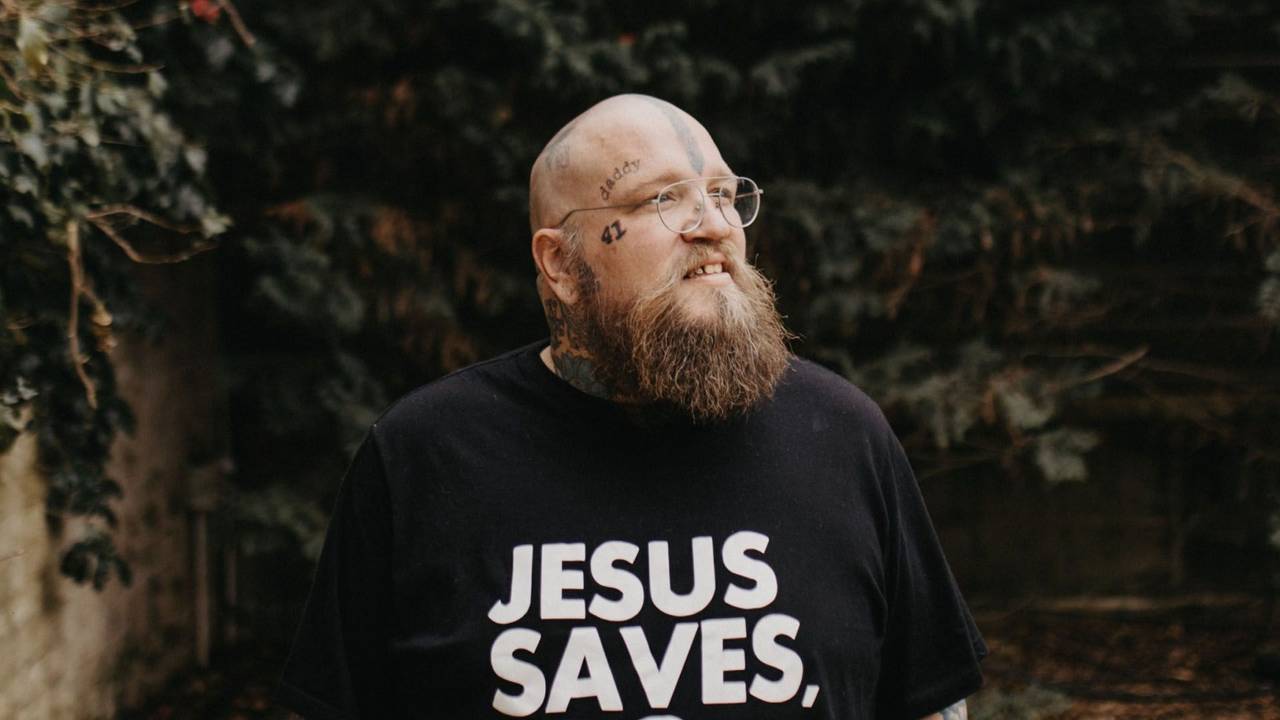
In this episode, Riaan Swiegelaar, a former leader within the Satanic Church, offers a rare inside look into a world few ever see up close. He shares how he became involved, what life inside that movement was actually like, and why it held such power over identity, belief, and purpose.
Riaan also recounts the moment that changed everything — an encounter with Jesus in the middle of an occult ritual that shattered his understanding of the spiritual realm and altered the course of his life forever.
Please subscribe to Maybe God’s YouTube channel today!
Support future episodes ➜ www.maybegodpod.com/donate
Transcript
Eric Huffman: Why did this man-
Riaan Swiegelaar: Hello, Satan.
Eric Huffman: ...leave the Satanic Church behind to follow Jesus?
Riaan Swiegelaar: So many people believe this lie that they have sold their soul to the devil. I mean, it is one of the biggest lies that Satan tells people because your soul belongs to God.
Eric Huffman: You have said you spent 20 years working for the devil. What does that actually mean?
Riaan Swiegelaar: For the most of that 20 years, I was not even aware that I was working for the devil. I thought I was actually helping people. This is the thing that I think a lot of people do not understand.
Eric Huffman: Wow. Is Satanism just a misunderstood belief system or something far more dangerous?
Riaan Swiegelaar: We are being observed by the enemy and by demons constantly. What we have to understand is when you are negotiating with demons, you have to bring a currency to do that. Blood has a currency in the spirit world. The blood of animals, the blood of humans, obviously. The more pure the soul is, the higher the currency of that blood.
Eric Huffman: Today, former Satanic Church leader, Riaan Swiegelaar, gives us a rare look inside his former world and how, in the middle of an occult ritual, everything changed.
Riaan Swiegelaar: I was down on the floor, and I lit the second candle and the next moment, this whole room filled up with light. I stood up and I turned around and there was this man standing there and He said to me, "I am Yeshua of Nazareth." In that moment, there is going to be no choice for me but to follow Jesus.
Eric Huffman: Riaan Swiegelaar, brother, welcome to Maybe God.
Riaan Swiegelaar: Thank you, such an honor to be here. Thank you for the invite.
Eric Huffman: Well, thank you for making the time all the way from South Africa. Been wanting to talk with you for some time. Your story is incredible. We are going to get into it. First I just want to name the reality that we were discussing before we even started rolling, which is the inherent risk involved in talking about the topics we are going to be talking about today.
For everybody watching and listening, we are going to get into some pretty deep and dark spiritual topics today that is just part of your story. Whenever we have broached these topics in the past, me and my team just consistently seemed to find ourselves in the enemy's crosshairs in the time leading up to it and the time following it. We thought it was coincidence at first because we were naive, and it is just beyond coincidence.
Before we started rolling, you led us in a prayer for everybody involved and for everybody listening and watching our conversation, because you know as well as we do the inherent implied risks involved in this sort of topic. So tell us why, specifically why prayer is important when getting into something like we are getting into today.
Riaan Swiegelaar: Absolutely. I think people, and especially Christians, underestimate the power of prayer completely because, firstly, it is so available, and people take it for granted. What we have to understand is that the spirit world is not really something or a place that is far removed from where we are. The spirit world is actually around us and we are being observed by the enemy and by demons constantly, each and every person actually on this planet.
Again, that does not mean we have to be fearful; it is just to be vigilant and aware of these things, and then to know our authority in Christ, but to declare God's reign, the fact that Jesus has actually conquered the enemy. And many times praying, and especially out loud, is taking our authority in Christ, the authority that Jesus gave us, each and every follower, and for the enemy to be reminded that we actually know what our authority is. Because we have to understand that the war and warfare and spiritual warfare is a reality and that warfare gets intensified.
Certainly, if we look at the world and the current set of things, massively intensified, especially over the last five years. And it is very biblical. If people read the Bible, they will understand why things are happening and going around, if we look at the times we are in. So most certainly we need to be aware of it.
But again, it is not about being fearful. It is taking authority up. It is putting our armor on. It is standing in our identity and our authority. It is proclaiming God's Word, because God's Word is the final authority on earth over hell. It is also, and this is something beautiful that the Holy Spirit revealed to me just over six months ago, is the Word of God is also a contract that the enemy is also bonded to.
So they do not necessarily want us to know that, meaning Satan and demons do not necessarily want us to know that they are very aware that they are also bound by that contract. The more we know about the Word of God and the more we incorporate that in prayer when it comes to things like deliverance and spiritual warfare, the more effective we are. Because we are just standing on our authority once again and on our rights. And when we remind the enemy of what his destiny is and the fact that Jesus actually conquered him on the cross, we are victorious in Jesus.
Eric Huffman: Man, I love how you put it. I mean, prayer is many things, and one thing it is, is putting the enemy on notice. Like you are making him aware that you are aware that you hold the authority of God when you have the Holy Spirit in your heart. You speak from that authority.
You also speak from your experience. Your past is fascinating. The way you came to Christ is fascinating. We will get into the details about what you did before Christ. But just generally, for people that do not know you, you have said you spent 20 years working for the devil. What does that mean? Just briefly, just the 30,000-foot view, what does that actually mean?
Hey, Maybe God family, Eric Huffman here. I hope you are as fascinated as I am by Riaan's story. If conversations like this make you pause and rethink your assumptions and look beyond what you have experienced in this physical world, be sure to subscribe so you can keep exploring these topics with us. We focus on real people, honest dialogue, and big faith questions that many people are afraid to ask. So, please subscribe to Maybe God and turn on that notification bell. We would love you to stay a part of this conversation. Now let's hear more of Riaan's story.
Riaan Swiegelaar: For 15 years before I got involved in Satanism, I was already working in the holistic industry full-time as a psychic medium, as a shaman. And eventually that led me deeper into the occult and eventually Satanism. That time was a total of 20 years. So, for the most of that 20 years, I was not even aware that I was working for the devil. I thought I was actually helping people and giving people answers and things like that.
Eric Huffman: Yeah, interesting. That is a common theme here with people that we have had on the show and folks that I have gotten to know. It starts out seemingly innocuous, like you are trying to do the right thing and helping people. Then before you know it, you are serving the devil, which is amazing and fascinating to think about how that works. But we will get more into details later, but it did not start for you there. It started for you, actually, as far as I can tell, in the church. Were you not raised Christian?
Riaan Swiegelaar: Absolutely. Both my parents, and especially my mother, but also my father until he passed last year, were always very devout Christians. So I grew up in a Christian home. I went to Sunday school literally every Sunday. I did that until the end of high school, and then I actually went over to a more apostolic church. You know, because I thought at the time already there is something missing that I do not actually... I am not experiencing God. So I think I started looking for God in other churches.
Eric Huffman: What kind of church were you raised in, though?
Riaan Swiegelaar: So I was raised in the Dutch Reform Church.
Eric Huffman: Got it.
Riaan Swiegelaar: I went over to an apostolic church, like I said, just after I finished school for about another two years. And I certainly knew Scripture very well. And I knew church very well. I did not know God. I thought I did, but today, looking back at that time, I certainly did not know God and I did not know Jesus. Like I said, I have this deception, "I must know God because I know the Bible so well."
Eric Huffman: You knew about God, I guess.
Riaan Swiegelaar: Yes.
Eric Huffman: But you did not know Him personally like a relationship, I suppose?
Riaan Swiegelaar: No.
Eric Huffman: Yeah. I would say that is a fairly common status for a lot of churchgoing people. Would you agree? Like to know about God without intimately knowing Him?
Riaan Swiegelaar: Absolutely. And that is what religion does. We sometimes look at things quite often as religion versus relationship. So I could definitely agree with that.
Eric Huffman: What age were you when you started sort of cooling on the church and walking away maybe from that religion?
Riaan Swiegelaar: I was 20 years old. This was in 2001 when I left the Christian church and when I turned my back onto religion.
Eric Huffman: What were the reasons? I have heard hints in your other interviews about some church hurt or some heartbreak there. Can you go into that at all?
Riaan Swiegelaar: Sure. There was a lot of hypocrisy that I noticed. I witnessed a lot of fake and staged miracles. I noticed a lot of, you know, the hunt for money more than actually doing work for the Kingdom. I had many close friends at that time who were of other races and they were very much, I would say, discriminated against because of the color of their skin. So it was all sorts of things like that. I was very deeply hurt by that. At the time, I thought, "Well, if this is who God is and how God is being represented, then I do not want any part of that."
Eric Huffman: I mean, it is hard to argue with that when you are an idealistic young man, and you think, you know, this church, this religion, whatever, has all the answers and has the truth, but is not acting like it. You know, you're saying one thing and doing another and excluding some people because of how they look. People walk away from churches for very good reasons sometimes, you know. And we Christians should recognize that and not... sometimes we get in the habit of disparaging people that deconstruct and sometimes we are giving them the tools to deconstruct with and the reason to do it. We have to always be sensitive. I say that as a church leader. You know, it is heartbreaking, but makes sense in retrospect.
I would guess also because you have this sort of creative, spiritual, mystical side of you that is so important to you, that at least in your early church experience at the Dutch Reform religion, I would guess, but even just church generally, sometimes we do not encourage people to ask questions about spiritual things and pursue the kinds of deeper, mystical, beautiful, mysterious, wonderful things about our faith. Did you ever find that about Christianity, like it was kind of a boring disconnect rather than an encouragement spiritually?
Riaan Swiegelaar: Yes, absolutely. Recently, especially in the last three years in my walk with God, God has revealed so many things to me. I think it is important that we understand that God created everything, even what some people might label as the supernatural. The enemy corrupts that, though, so badly.
I can speak from experience and also from people that I am ministering to at the moment is that in the holistic industry and in the, if you want to call it the occult communities, there are people with absolutely beautiful hearts, but they have been so corrupted and deceived by the enemy. The enemy does not want people with certain... if you want to all them gifts and abilities, not that I want to call one person more special than the next. But if you look at certain people's callings, that can be very effective for the Kingdom. The enemy does not want people like that to actually be in the Kingdom. So the enemy will deceive and corrupt that as much as possible.
What we also have to understand is that the devil does not always come to us with obvious lies. That is not how deception works. Deception is something that we really, really have to understand and use discernment with. Unfortunately, and especially in this country, many churches will say anything that is too spiritual or too supernatural is not from God. And it completely discourages people. And many people then venture out and they start delving into things like the New Age and like the occult and like Satanism, where that is not God's heart for us. That is actually not what God wants for His children.
God actually wants a very, very close relationship with us. God wants a covenant with His children. God knows us so well as individuals, better than we will ever know ourselves. But God also wants us to turn our hearts to Him and onto Him to have that relationship.
Eric Huffman: I admit, as a pastor, sometimes the pressure to build an institution that is dogmatic and controlled is great. So great, in fact, that creativity and spirituality and mystery become a threat of sorts to that. There is a tendency in churches that are growth-minded to sideline and marginalize people that have that thin membrane spiritually, you know, that have openness to spiritual things or are highly creative. I just think we have to be very careful about that because those people are high impact for the Kingdom once they are in the family, in the fold. And we should not be threatened by the questions or mystery that they are raising up in the church. Sometimes we just sideline them. I am saying that from my own experience and I repented of that because it is such a high-impact thing for the church to welcome and embrace people. And it can be a high impact thing for darkness when they go out and serve him instead.
And that kind of brings us to the next part of your journey. You got involved in the occult. It sounds like it was inadvertent, well-intentioned. Tell us a little bit about how that happened initially. When did you first start dabbling in what we would call the occult?
Riaan Swiegelaar: Sure. About three years after I left the Christian church, I was already doing psychic readings for people and I was doing healing sessions and all sorts of things. Eventually that led to me doing what is known as work or rituals for clients. So you get so many different forms and aspects of that. But it basically started with me during these readings, which were really getting information from familiar spirits, although I thought at the time I am seeing people's ancestors so accurately, not realizing that these were demons imitating.
Eric Huffman: At that point, you thought it was God or something?
Riaan Swiegelaar: No, I actually thought, and I was deceived into thinking these are like angels and spirit guides and people's loved ones who have crossed over. But God actually only revealed to me about three years ago what that actually was. I had this illegal connection to the spirit world for, like I said, 20 years of my life. What I mean by that is when we enter the spirit world without God's permission or not in accordance with God's will, we are entering into the spirit world illegally. There are so many various ways in which people do that. But because of that, that is how I got involved into doing witchcraft for people to solve their problems or whatever they really paid me to do at the time.
If you start delving into the occult, a lot of people do not know this, but the word occult is originally a Latin word, which means hidden knowledge or hidden wisdom. So you can read as many books as you want on the occult or read things on the internet, it still does not give you the information. It might tell you how to do certain rituals. But the moment you start doing those things, that is when you get the information and it is complete demonic doctrine. So that was my life. I mean, literally from when I woke up in the morning till when I went to bed, that was my life almost 15 years. It was my career. And that is just before I even got involved in Satanism.
Eric Huffman: But the transmissions, the information you were getting was somewhat true, at least, I guess, because it was effective.
Riaan Swiegelaar: Of course. Yeah. So I think for clarification, and it is maybe something we can talk about in a minute. When we are born, we automatically, if you want to say automatically, but there is a familiar spirit that is assigned to us. So that familiar spirit observes us the whole time, and hears what we say with our mouth and sees our actions, etc.
So now let's say somewhere in your life, you end up going to the psychic medium. And why that information is so accurate is they will tell the medium that when she or he, it does not matter, was 5 years old, then he walked with his grandmother on the beach and they had ice cream that day. So that is where you start and that information certainly is accurate. The person sitting in front of you will agree to that.
It becomes more dangerous when you start actually speaking into that person's life and you start speaking about the future and you make... you are literally speaking to their life according to what these demons are telling you. And you as the medium or the person with the heart to help people, you are deceived as well. So you really think you're helping people, but this is how deception works.
I have seen so many beautiful testimonies of people who are coming out of the occult and out of the holistic industry. And we see a lot more of that in the times we are, because God is raising the most unlikely people for His Kingdom. I think Christians should realize that God has His sons and daughters, but He also has His future sons and daughters. And we are being called and raised up for a time such as this that we are in at the moment.
Eric Huffman: So at what point, Riaan, did you go from sort of this vague occult practice to being outwardly satanic and a Satanist, let's say?
Riaan Swiegelaar: Sure. In 2016, through one of my clients that I was seeing at my practice as a psychic medium. So this client came to me one day, and his wife and his girlfriend had been to me by then, and he heard about how accurate the reading is, etc. So he came to me for a session, and at the end of that session, he asked me, "Have you ever read the Satanic Bible?" So I said, "No."
And I think it is important to mention here as well, if you would have asked me in 2001 or 2002 after I just left the church whether I would be interested to read this or that Bible, I would have said absolutely not. But you see, as time goes on and as you are led down a path and deeper and deeper into bondage, you start believing things like there is no light and dark, there is no good and evil, it is all one thing, it is the universe, all those things.
So, by 2016, when he asked me, I said, "No, but I would be interested, especially if this is going to take me to another level in the occult and certain ritual practices etc." So he dropped off the Satanic Bible soon after that. And about three months later, he came to see me again, and then he asked me, "So what did you think about the Satanic Bible?" And I said to him, "Well, I am definitely a Satanist and I did not even realize it."
Because you see, the Satanic Bible is written in such a way that any person who feels that they are an outcast or they do not belong in the status quo, there is very much a reason for it, and you are actually a Satanist and you are supposed to embrace those parts of yourself, and that will guarantee certain success in the world, etc. That is how it is written.
So after I said that, he invited me to a social event for Satanists, and I went to that. And that is when I actually met other Satanists the first time. This was towards the end of 2016. I still remember till this day that I had this idea, perception in my mind that Satanists, you know, all look a certain way, they dress up black and they have tattoos and things like that. To my surprise, the day I walked into that event, I saw people that as a child watching television, these people were on television, these people were very successful frontiers in various forms of industry and business. These were people in parliament, these were people who were well-known sports stars in this country, etc. So it was quite a shock to me then to see who Satanists actually were.
Eric Huffman: You saw celebrities and well-known figures at this gathering you went to?
Riaan Swiegelaar: Yes. Wow. That was really a pull for me, because I thought at the time, if these are going to be my new friends, this is something I am going to do. It was only almost nine months after that when I was initiated into Satanism.
Now, something I want to say, and I think it is important for people to know this, is that nobody knows—and I have met thousands of Satanists in my life, and I am still meeting a lot of people who want to get out of the occult and Satanism in this ministry, we work with a lot of people like that—no person who ever got involved in Satanism knew what they were actually getting involved in until they got initiated.
Because if you read the Satanic Bible, it is going to tell you something, and it is going to tell you about the dogma and the beliefs of Satanism.
Eric Huffman: About the what? Oh, the dogma, you said.
Riaan Swiegelaar: The dogma, yeah. So it does not actually tell you what you are going to have to do after you get initiated. That is when things really start becoming very real after initiation. So many people that are involved in that world actually believe that they can never get out because they believe this lie that they have sold their soul to the devil. I mean, it is one of the biggest lies that Satan tells people because you cannot sell your soul to begin with. Your soul belongs to God. Whether you are a Christian or a non-Christian, whether you... it does not matter. Your soul belongs to God who created us all.
Eric Huffman: That is such a common trope, though, the idea that you can sell your soul to the devil.
Riaan Swiegelaar: Correct. The devil has used that lie to keep people in bondage for so long. Many people involved in the occult of Satanism do not even know that Jesus is an option for them.
Eric Huffman: Yeah. Wow, that is a mouthful. So the initiation ritual, can you talk about what it was like? I do not know what the rules are or what you are able to say or whatever, but can you tell us what was involved in the initiation?
Riaan Swiegelaar: Sure, I can talk about it. I just do not want to teach people how to become better Satanists.
Eric Huffman: I appreciate that.
Riaan Swiegelaar: I am very careful about that. The basics of it is that you are initiated in front of other people. So you can decide whether you want to be initiated into a coven or a grotto, which are two completely different things, but they each function in Satanism in terms of the network. There is the cutting of yourself to draw your own blood to sign a type of a contract in front of witnesses. There is this sharing of blood where you pass a chalice or a cup around that everybody puts some of their blood in, and you drink each other's blood in that initiation.
Eric Huffman: Wow.
Riaan Swiegelaar: There are a lot of soul ties and soul contracts that are formed, if you understand what I am saying, with that. And then I think the part that is also important to mention that you do not know before the time is a demon, a control demon—that is the term used for it—is assigned to you personally.
Eric Huffman: By name or just generally?
Riaan Swiegelaar: No, by name.
Eric Huffman: The demon has a name?
Riaan Swiegelaar: No, no.
Eric Huffman: By your name. Got it.
Riaan Swiegelaar: Yes.
Eric Huffman: Did you know all this going into your ritual?
Riaan Swiegelaar: No. That is why I say many people do not know this. This is the thing that I think a lot of people do not understand, and especially when I talk at churches, one of the questions that is often asked is: why are there blood sacrifices in the occult and Satanism? Why does that happen? And what we have to understand is when you are negotiating with demons, you have to bring a currency to do that. So blood has a currency in the spirit world. The blood of animals, the blood of humans, obviously.
The more pure the soul is, the higher the currency of that blood. So if you want to appease these demons, and if you want to negotiate with them to have certain outcomes in the physical world, you have to bring a sacrifice. The blood of Jesus is the highest currency in the spirit world. The moment that you have been through that, the moment that you have been in the occult and you have been in Satanism, and you have practiced rituals, you see obviously real... things become very real, and things happen. And you can create a lot of things.
Some people are obviously very impressed with this. And then you get to meet Jesus. And then you get to know Jesus. So not just the name of Jesus, but the blood of Jesus. It is the most powerful. It is the most, like I said, the highest currency in the spirit world.
Eric Huffman: I see what you mean.
Riaan Swiegelaar: And nothing on this earth... and I think for us, for people who have been in those circles and have been in that type of practices, if you know what you can do and what is possible and then you get to meet Jesus one day and have the authority that Christ gives us after we give our hearts to Him, it does not compare even.
Eric Huffman: Wow.
Riaan Swiegelaar: So the occult and Satanism and witchcraft, it does not even compare. Something that I often tell survivors, people who are being helped to get out of the occult and Satanism, and I have seen this even in Colossians 1, it is about verse 26, 27, about the glory of Christ that actually lives in us when we surrender our lives to God. So what the Holy Spirit revealed to me, even if you are a believer or a follower of Christ for a day, even if you come to Christ now, you have more authority in the spirit world than a witch, a warlock, or a satanic priest that has been doing it for 30 years. You have more authority because of who we are in Christ.
Eric Huffman: Yeah, and whose blood you are under.
Riaan Swiegelaar: Exactly, because of that blood, that name.
Eric Huffman: Man, that is such an eye-opener. And it makes me think about the Christian practice of communion or Eucharist and what it must mean to someone like you, someone who has been through these other rituals. Somebody white-bread like me, never really been a Satanist—at least not overtly, although I acted like it for a while, I never ingested someone else's blood, never shed my own for a negotiation with the demons. And then I just take the blood of Christ sort of haphazardly, like it is "of course I..." but in your case, it has got to take on so much more meaning.
Riaan Swiegelaar: Like I said, nothing. I have seen and I have witnessed so many miracles in the last three years in this ministry, all because of the name of Jesus, the blood of Jesus, the authority that we have because we are Christ's. Like I said, there is no comparison. It does not...
And so many people think of the devil and Jesus like they are fighting on the same level. I am like, no. Do you know who Jesus is? Do you know what Jesus has done? I mean, Archangel Michael and Satan are mainly on the same level. Jesus is way above that. Jesus already conquered the enemy on the cross. I mean, hello. And so many people still think of this as, you know, God and the devil are fighting on the same level. No, God has won. Spoiler alert.
There are certain things that are playing out in the world in terms of where the enemy is very active and we have to be vigilant of these things, and we have to fight. And that is why we equip people with spiritual warfare. But at the very foundation, at the end of the day, God already won. Jesus has conquered the enemy on the cross.
Eric Huffman: That is right. We often think that Jesus conquered just our sins on the cross. And He did do that. But John says, the main thing Jesus came to do was to destroy the devil and his works in the world. That has been finished too, just like our sin has been finished and all of that. Before we move on to what happened after your time as a Satanist, I just want to sort of flesh out, so to speak, this idea of blood and your experience in this world. Beyond the initiation ritual, there were other rituals involving blood?
Riaan Swiegelaar: Absolutely. Yes.
Eric Huffman: Well, there is a hierarchy of blood or different kinds of blood, I guess. You mentioned Jesus's blood being the most valuable currency in the demonic realm, but is there a hierarchy beyond that? Animal sacrifices, you know, they are worth something, there is human blood that may be worth more. I am imagining this being kind of a hierarchy. Is that accurate?
Riaan Swiegelaar: Correct. So if you look at a baby, if you look at a child that is innocent, that is obviously in terms of human form, if you bring a type of sacrifice like that, that would be considered the most precious blood that you can negotiate with the demonic-
Eric Huffman: Because it's innocent.
Riaan Swiegelaar: Correct.
Eric Huffman: Interesting. So all that stuff is real? Like, you know, you have a lot of Western thoughts that are like, "Well, that satanic panic stuff is just mythological kind of made up." You saw this stuff?
Riaan Swiegelaar: Yes. And I thank God for that because I was never on the level of being a high priest in Satanism because that really takes years to get there. But I have never did human sacrifice personally. But I have witnessed it in my time. I have heard a lot about what other people were doing. Because we have to also understand that even in Satanism, there is a hierarchy.
So as years go by, you can climb that hierarchy. And if you are thinking of becoming a priest or a high priest of a coven, you have to do those type of sacrifices in front of people who have done that as well as witnesses. And like I said, I thank God for that. I never got to that level in Satanism. I did animal sacrifices, most certainly. I practiced SRA. I do not know if I can say those words, because they might cancel your episode.
Eric Huffman: We will bleep them out if you need to say them, it is fine.
Riaan Swiegelaar: No, so satanic ritual [bleep] where you torture people. So that I did. I was a perpetrator in that, where people willfully take part in that, but also where people get punished, they are subjected to satanic ritual [bleep]. So I did that, but I never sacrificed a human.
On that topic, and this is, again, what God revealed to me, in our current ministry, when we are assisting people to get out of Satanism, right? So the people who were baptized or dedicated as babies in a church only get to a certain level in Satanism, and they cannot go higher. They also get out easier. When I spoke to God about it, it is because, as I said earlier, the physical world is observed by the spiritual the whole time. So if it is observed that people are dedicating a child, a baby, to the Throne of God, that child has a certain level or seal over their life because they have been dedicated to the Kingdom.
Eric Huffman: Wow.
Riaan Swiegelaar: Whatever choices that child still makes, even if they get involved, they will only get to a certain level. I have seen this with so many people that we are assisting to get out. It is a completely different situation with generational Satanists, meaning people who were born into Satanism as children. But certainly, people who chose to get involved in Satanism in their adult life, and the ones who were actually raised in Christian homes and the ones who had praying parents, that only gets you to a certain level, and they cannot go higher than that.
Eric Huffman: Wow!
Riaan Swiegelaar: That definitely tells you something.
Eric Huffman: Oh, it really does. At my church, we baptize children, we baptize babies. Some Christians disagree with that, and this is not really an episode about that, but I never thought about that being another reason to baptize the little ones, or at least dedicate them.
Riaan Swiegelaar: So if I can share this, my parents, when they found out I was involved in Satanism, my parents did not go into a panic. They stood on those promises that they made when they dedicated me as a baby. And my mother said to the devil, "Sorry, you're not going to have my son because I already dedicated him to the kingdom. I'm just going to pray him back into it."
Eric Huffman: Oh my gosh. That is amazing. How did your mom and dad even find out about it? Was it a sit-down conversation?
Riaan Swiegelaar: Oh, in a newspaper. That was Satan.
Eric Huffman: Oh, you made a headline?
Riaan Swiegelaar: Yes.
Eric Huffman: Oh. And the next conversation, what was that like with mom?
Riaan Swiegelaar: I remember at the time, and you see, I was already so possessed at that time, but what I do remember about that is my parents and myself at that time, we already didn't have a good relationship and that was because of me. At that time, we were speaking about once a month maybe on the phone. And then the newspaper was literally delivered to the front door one Sunday and they saw me on the cover and there's their son being the head and the leader of the South African Satanic Church.
So my mother made an appointment to come and see me, and I even invited her to the Satanic Church to come to the church office. And both my father and her came that day. And my mother said to me that she only wants to ask me one question. And I said, "Okay." And she asked me this whole thing, if this is real or am I involved in some publicity stunt or whatever. And I remember asking her, "What difference does it make?" And she said to me, "Because we want to know how to pray for you."
For four years, we didn't speak. Because I chose that, it wasn't them. And in those four years, like I said, both of them, they stood on their authority, they prayed. My mother wrote my name in her Bible and so many different scriptures that the Lord gave her that time. After I came to Christ, it was one of the first relationships that was repaired. Now we speak every day, obviously. Especially my mother, she's a very on fire Christian.
Eric Huffman: Yeah, man, it's powerful to think about what her prayers might have kept you from or led you to, you know, as the man you are today. But at this point in your life, you became the leader of the South African Satanic Church. Is that accurate? Did I say that right?
Riaan Swiegelaar: Yes, you did.
Eric Huffman: How did that happen?
Riaan Swiegelaar: It was co-founder and leader. How that came about, so in 2018, I found myself in an office with six other people, and we very much spoke about a lot of things about Satanism that was coming out in the media where Satanism was linked to certain crimes, etc. So two of the people that were also co-founders, they said that their concern is that some people in their corporation and family is already suspecting that they are Satanists and they can't have this publicity. So why not register organization that speaks on behalf of Satanism? That was the one thing.
The other thing was that we realized that around South Africa, around the country, there were so many Satanists scattered in smaller towns, and they didn't know how to connect to other Satanists because they didn't also want to be exposed. So we thought it a good idea that there's one organization where people can connect to and then we connect them to other people so that they can meet Satanists in the area for the practice of grotto rituals, satanic high days, which is something that happens twice a year. That was the idea.
And the reason why I was nominated was my background, firstly, in Christianity, everybody knew I knew the Christian Bible so well, as well as my experience in the occult. So there were certainly people from the beginning that were way more involved in Satanism and for longer than me, but because I didn't have anything to lose at the time, they thought it good for me to be the spokesperson and the leader.
So we put it through the Department of Social Development, firstly, to be registered as a religious organization. That went through very easy. A building was obtained. We got church offices. So it was in full swing. This was just before COVID actually hit. So then when it was publicized and it spread quite fast because there was also a lot of media contacts that were involved in Satanism, and certainly until today they are still involved, like journalists and people, they could get the marketing going quite easily. And it went international quite fast.
My name and my face was literally everywhere. What I didn't realize at that time is that so many Christians were praying for my salvation already.
Eric Huffman: Even people that didn't know you personally, they just saw your name and lifted you up. Of course.
Riaan Swiegelaar: Of course. God revealed this to me only after I actually met Christ, because there was a six-month period where I didn't understand why me and why did God manifest in the way He did and make me in the way He did. And God showed me the prayers of the righteous, thousands of people around the world were praying for me by my name. So because COVID hit, a lot of the membership moved online. So people could join online, and rituals were broadcast. In the first year of the Satanic Church being registered, we got it to 12,000 people.
Eric Huffman: Goodness.
Riaan Swiegelaar: Yeah.
Eric Huffman: That's a mega church. You were the leader of a mega church, and you were seeing real, you know, bad fruit, but fruit nonetheless. You were being productive. You were, I assume, accessing real spiritual power. I mean, that's what the blood rituals are about in that world, right? In Christianity, we think about blood being a covering for forgiveness of sins. In that world, it was about receiving spiritual power. And you were seeing that.
Riaan Swiegelaar: Yes, and monetary rewards. Because one of the statements in Satanism is about indulgence and having everything that your fleshly desires need to celebrate that and to achieve that at any cost. I mean, besides a very hefty salary that I was earning, I also accumulated a lot of things. I can honestly say today that at the time that I met Jesus, I wasn't looking for Christ. I actually thought I was a happy person.
Eric Huffman: Really?
Riaan Swiegelaar: Yeah. I thought because I had all these things I had at that time that I'm supposed to be happy because I had properties, I had two Harley-Davidsons, I had vehicles, I had all the drugs in the world. I mean, I thought I was happy, so I wasn't looking for anything or thought I was unhappy. That wasn't the experience at that time.
Eric Huffman: That's interesting because you hear a lot of testimonies, and usually that's the trope, that somebody is just rock bottom. They are at the end of themselves and they need something different. You were just fine. It sounds like you thought you were just fine.
Riaan Swiegelaar: I didn't realize there was a Christ-sized hole in my heart at all. [00:47:12] I didn't actually meet Jesus.
Eric Huffman: So how did He pull you out of that? Let's move into that, because that's a much more hopeful part of your story. How did Jesus rescue you from something you thought you didn't need rescuing from?
Riaan Swiegelaar: Correct. I think important to mention about two weeks before I met Christ, I was doing an interview at a radio station. This was a live interview. And I remember during this interview, and I was doing it on behalf of the Satanic Church. And I did a lot of interviews, obviously. But I remember there was someone who called in during the show. And this person asked me, "Do you believe in Jesus or that Jesus ever existed?" And I remember this. I mean, I actually was seeing a copy of this interview the other day. And I said, "No, Jesus is like the Easter Bunny or Santa Claus. It's something that people believe in because they were told."
After this interview, there was a woman at the radio station who came to me and out of nowhere walked into the studio, and she put her arms around me and hugged me. And I remember this being one of the most amazing embraces that I experienced. At that time of my life, I didn't allow people to come close to me at all. So she literally snuck in. And I remember the warmth of that hug.
So this was the lady who organized the interview, and I only communicated with her on email. About three days later, she contacted me through WhatsApp Messenger. And then I saw on her WhatsApp status this woman is a Christian. You know how that hit me. Because here's the thing, despite what I said about Jesus in this interview, she still did that. The other thing is, I've never experienced that type of love from a Christian ever. But it left an impression with me, you see.
Forward about 13 days after that, I was supposed to do a specific ritual for the Satanic Church, and around the world, every satanic organization also appointed somebody in their organization to do the same ritual, to look at something specifically. So I booked out a part of the Satanic Church, a very dark space where smaller rituals were being performed. This space was... there was no artificial light there. So you always had to light it up with candles or some torches or whatever.
So I booked that out. It was the evening of the 24th of May, 2022. And I was by myself in this room and I was busy preparing for this ritual. And because in Satanism, there is so much preparation for rituals. It's not as simple as you light a candle and there you are. There's literally so much you have to put out and light out. There's five candles that you have to light on the floor that's usually at the point of a five-point star.
I was down on the floor and I lit the second candle, and the next moment this whole room filled up with light. And I got up from the floor, I stood up, and I turned around and there was this man standing. My initial thoughts were this is some type of homeless man that came in off the street. So I was very confrontational. I said, "Who are you and what are you doing here?" And He said to me, "I am Yeshua of Nazareth." And I said, "I'm sorry, I don't believe you, and I don't believe in you, you'll have to prove it."
The next moment, He flooded me with so much love. And I recognized it, you see, from that woman at the radio station because she had Jesus inside of her. And here's the thing, when that happens, you come up against all your sin, number one. I didn't even know I had sin at that time, because I didn't believe in the concept. But I came up against all that sin and at the same time experience that unconditional love.
Suddenly, in that moment, and this wasn't even for two minutes, this whole experience, but I fell to my knees, and it says in the Word, every knee shall bow. I knew that this is what I've been looking for all along my whole life. I also knew in that moment, there's going to be no choice for me but to follow this Jesus.
Eric Huffman: Geez.
Riaan Swiegelaar: Obviously, the ritual never happened. I remember I walked out to my car, I thought I was going insane. The sound of the world was gone. Like I couldn't hear. I remember driving home, I was playing with the radio and I couldn't hear anything. When I got home, I was exhausted. I stayed in bed for four days. And my phone was ringing because the Satanic Church wanted to know what happened at the ritual.
One morning around 3 a.m. I woke up, there was a voice and it said to me, "Go to the beach." And I thought, "Well, I'm already going insane, so I can just take the scenic route anyway." And when I got to the beach, I started having real conversations with God for the first time. I didn't still know at that time what was going to happen. And especially the first year after that, how intense that was going to be and going through deliverance and resigning from the Satanic Church and having to finish all sorts of legal things until they got to be deregistered, the organization.
So for that first year, it was really intense but I got to get to know God so much and I'm still getting to know God every day more and more and more. I mean, for the last three and a half years, with the exception of 12 days, I speak to God four hours in the morning. That's every day for me. I read the Word, I write down what I don't understand about the scripture I get. I have conversations with God. I let the Holy Spirit show me things. I worship. So it is really about getting to know God's voice and getting that relationship.
Eric Huffman: Yeah, man. People who haven't experienced it, people think Christians are so zealous because of fear or obligation, and it's just the opposite of that. When you experience that embrace of love, the exuberance is just a... you feel like, how can I not love back? How can I not respond to such?
Riaan Swiegelaar: How can I not tell other people?
Eric Huffman: Oh man. And that's the part I wish more people would talk about.
Riaan Swiegelaar: Thank you.
Eric Huffman: Because I experienced...
Riaan Swiegelaar: Because you know what?
Eric Huffman: Go ahead.
Riaan Swiegelaar: I am the least deserving of what happened. I am the least deserving of God's love and grace. Yet, He came down like water to where I was and He met me there. And you know what? Testimonies are so important, and none of our testimonies is more important than the next person. And we all need to share our testimonies because it's how we show the world that Jesus is alive right now at this moment. That's how the works of the cross and the works of the resurrection will manifest in people's lives. And that is how God will use us to reach people for His kingdom.
And it says in Revelation 12:11 that by the blood of the Lamb and the power of your testimony, you shall overcome the enemy. And it's so true.
Eric Huffman: Amen.
Riaan Swiegelaar: That's why I tell people, none of this is me. I'm not worthy. This is God. I'm just telling the story.
Eric Huffman: Yeah, that's right. I hear what you're saying, but I bet I'm less worthy than you, brother, because that's how I feel. Part of my story is that for 13 or 14 years, I pretended to be a pastor. I was a Christian pastor in the Methodist Church ordained and preaching, but just preaching heresy, and not convinced at all about... I didn't believe in the resurrection. I didn't believe in supernatural things. I just believed in my politics, and that's what my quote-unquote ministry was all about.
And I preached lies and I misled people and I was decrepit inside. I was using pornography and other things on a daily basis and just gross and pretending to be righteous. At least you were honest about being satanic. I just acted satanic and put a cross around my neck, you know? It was so gross. And yet, God came to rescue me. And it was also on a... you said on a beach is where you had your moment. He likes to have conversations like that on beaches, apparently. He had one with Peter once. He had one with you, He had one with me and on the shoreline of the Sea of Galilee, actually. He called me home.
But I had the same exact experience of being embraced by absolute perfect love and confronted with my filth at the same time. And it's horrifying and wonderful at the same time because you realize the extent to which you've offended this perfect loving Father and for how long and yet He's still hugging you and not tearing you to pieces like He should, or like He deserves to, and yet He's embracing me.
It's the most inspiring thing in the world because you talk about life change. Like, how can I go back to doing what I was doing, the way I was doing it and saying what I was saying? If this God loves me this much to know everything I've done and more, how can I not love Him back to the best of my ability and honor Him?
So everything changed. You know, it took a while though for me after—I don't know if it was like that for you—after I converted in my heart to fully convert in my life. I dealt with a lot of pushback and rejection from people I thought were my friends. Did you have any of that going on? I'm sure leaving the Satanic Church wasn't easy, but what about from Christians?
Riaan Swiegelaar: I lost everything, materially everything. But today it really doesn't matter. If I can choose, I'll choose Jesus every day because physical things fade. I had no, I want to say, real friends at the time standing, because literally everybody turned their back on me. There was a lot of pushback from Christians, obviously from Satanists.
But I remember that first year especially, because I also feared for my life at that time, because I knew what these people were capable of. So, for a year I lived in fear and I looked over my shoulder, I carried a firearm until God actually showed me just over two years ago, "Riaan, if you are obedient, you are safe." That was the day I stopped being scared.
But that first year was really intense. I'm so actually glad that in that time I didn't really engage on things like social media, and I certainly wasn't doing interviews like this because Jesus very specifically told me, "Do that, focus on me, just spend time with me." And I did. I was very isolated for that first year. I'm so glad. I mean, I delved back into the Word. And for the first time also, I read Scripture after 21 years where the Holy Spirit broke it open for me as a person just reading. So I'm actually very grateful for that year.
Eric Huffman: Did you have to officially... sorry to interrupt you, did you have to officially leave the Satanic Church?
Riaan Swiegelaar: Yes. I had to resign. I had to give a month's notice. I also had to keep the whole resigning thing quiet until they could prepare certain things, because for them it was a massive thing. I remember even at a meeting that one person came up to me and said to me, one of the co-founders, and he was on the church council of the Satanic Church. He actually came to me and said, "I will give you a million Rand if you never speak about this." And I said, "Well, sorry, no, not after what I've experienced. My soul is not for sale, sorry." But yo, it was intense.
I remember at the time a lot of media, a lot of journalists started contacting me because they heard a rumor that I left, and they wanted to know why. So I couldn't say anything until that month was over. Then I remember, this was quite interesting, I made a little video on my cell phone that I put out on social media just to say, "Listen, this is why I left. This is what happened. Leave me a note, you'll have your answers."
[video starts]
Hello everyone that's watching this video, Hi.
[video ends]
And that video became a massive testimony that was shared. It went viral within a week.
[video starts]
This was my opportunity and I took it. I made the choice. I chose light. I am living for light.
[video ends]
And the beautiful thing that happened there is the name of Jesus was on the cover of newspapers. Newspapers around the world. But I mean, I didn't know how to handle that type of exposure or attention. It's the same today. I mean, I'm quite well known, but I always tell people it's Jesus. Jesus is the star of the show. I'm just telling the story.
I love to use my platforms to firstly empower the body of Christ, to actually show them this is who Christ is and this is why we trust in Him. But then also to give people who are in bondage hope that if I can get out and if I can be saved, anybody can be saved. If the leader of the South African Church of Satan can be saved and speak for Jesus, who's beyond hope?
Riaan Swiegelaar: Thank you. Because God can do anything.
Eric Huffman: He can do anything.
Riaan Swiegelaar: He loves working behind the scenes.
Eric Huffman: Yeah, man, that is beautiful. That is awesome. I know everything has changed, but if you could sum it up in terms of the change Jesus has wrought in your heart and life, how would you put it?
Riaan Swiegelaar: Sure. I am literally a new creation. I had a conversation with somebody the other day, like if I look back at that time of my life, even if I look at pictures of myself, I don't recognize myself. And like being able to be used for the kingdom... because you know what? If we give our hearts to God, when we give our hearts to Jesus, our hearts don't actually belong to us anymore, it belongs to God, God will use His Holy Spirit to work through our hearts to pull people into the kingdom. I still cry every time there's a salvation. I mean, I see thousands of salvations. I see people being free from bondage every day. That is the meaning for me of my life, to be in service.
Eric Huffman: That's right. And I'm a little further out from my conversion than you are, but I have found it important to keep telling my story. Not just for other people, but to remind myself. Because sometimes being a Christian can become normal in a way that it shouldn't and because the stuff He saved me from, I need to remember. Not to have shame about it, but just to claim that victory again and again and remember where I was. But for Jesus. And where I would still be, you know.
You've talked at length about the importance of deliverance in your life post-conversion. What is deliverance for people that may not know, and why has that been so important to you?
Riaan Swiegelaar: Okay. Firstly, I want to say that it's part of the Great Commission. I also want to mention that a lot of Christians don't realize that, but a third of Jesus' ministry on earth was deliverance. At the end of the day, it's not us who really does the deliverance, it's Jesus.
So what happens in deliverance ministry is when a person is being afflicted or oppressed by the demonic, by the enemy, they come into a situation or experience where they can see firstly why, because the Holy Spirit reveals to both the person that's facilitating and the person that's being oppressed, why is this happening, where did this start? So that they can repent for that, that they can close any open doors. And then Jesus comes in and frees people and demons leave. And it's amazing to witness that and what it does for people and their relationship with God who has been through that.
I mean, I'm going to be honest with you today. Some of the most holiest sanctified Christians I know today have been oppressed by demons in the past and have been through deliverance, where they've had to surrender everything to God and where they experienced that freedom that only Christ can bring. So I'm very careful when people claim that they are doing deliverance or they're casting out demons because it's Jesus and God saves people. God heals people. Jesus is the one who frees us.
Also interestingly, two years ago, when I went into a full-time ministry with my current ministry partner, Adele, I remember saying to her, "You know, we're going to have so many people from the occult and Satanism contacting us for deliverance." And lo and behold, almost two and a half years later, more than 80% of people who come for deliverance are Christian.
It is because Christians, unfortunately, engage in things that the Holy Spirit warns them not to, but they do it. And it gives the enemy a foothold when people open doors. It certainly doesn't give the enemy legal rights because as it says in the Word, all legal rights have been nailed to the cross. But it does give the enemy a certain foothold, to the point of being oppressed.
I've never seen a Christian being possessed, though. Never seen that. But I've seen hatred, oppression, and demonic interference, especially when Christians have held onto unrepented sin, where they harbor anger and resentment in their heart for years, where they've engaged in occult activities. Meaning, you know, going for astrology readings or psychic readings or partaking in certain rituals that, again, they shouldn't. And especially also Christians that have been walking around with unrepented sin, sometimes for years because they feel guilty. So instead of talking to God openly about these things, the enemy bangs on that, you see.
Eric Huffman: And what kind of... I'm sorry, what kind of oppression does that, how does that manifest in the life of a Christian? I mean, there's a strain of thought that Christians aren't in any danger from this sort of thing that we're free and clear, but it sounds like I would agree with you that Christians can still be under attack.
Riaan Swiegelaar: Of course.
Eric Huffman: What do you see that manifesting like in someone's daily life?
Riaan Swiegelaar: The first signs is like suddenly overnight there is a struggle to read the Bibles, to pray as effectively as they used to, being pushed against the wall, being pushed down on their bed. I've seen Christians with oppression being choked. Then you get infestation in the house where these physical things start happening in a person's house. But the beautiful thing is that once you see this for what it is and you address it and you take authority and you stand against the enemy and you stand again in that authority, it loses its hold completely. It's just that the enemy doesn't want us to actually have 20-20 vision and see things for what they are. And they will keep people busy, sure, with a lot of things.
Eric Huffman: Yeah. I mean, my opinion, you can push back on this, my opinion is that deliverance ministries wouldn't be required if the church was doing its job. It's a little bit to me-
Riaan Swiegelaar: I agree. 100%. Amen.
Eric Huffman: I just feel like the reason these para-church ministries exist to help people with deliverance is because churches aren't integrating deliverance and dealing with the spiritual world into discipleship, which is where I think it belongs. It's just in the discipleship process we should be teaching people and equipping them for battle.
Riaan Swiegelaar: I agree 100%.
Eric Huffman: And churches seem to be punting on that. Pastors punt on that and try to outsource it. We've all seen the deliverance ministry has gone wrong. And I think you've talked about that some too, where, you know, deliverance ministries themselves aren't under any kind of guidance or accountability. You can go all kinds of wrong in that direction as well.
My concern is filling people with such anxiety. It's almost like, not to throw our Catholic friends under the bus, but sometimes Catholics are in this cycle of guilt and shame and fear, like "Have I done enough to still be saved?" I feel that sometimes with deliverance conversations that Christians that get delivered think they need more deliverance and more deliverance and more, and it becomes a cycle of anxiety. How do you avoid that kind of thing in your work?
Riaan Swiegelaar: You start with identity. In all our courses, in all our teachings, even in our deliverance sessions, we start with identity in Christ. We remind people on why they are saved in the first place, although this and this is going on. And also to give authority back to them and say, "This is what you can do even before you go through a process of deliverance." Of course it just makes it so much easier when that person realizes that.
Again, it shouldn't be about glorifying the devil or giving the devil a time or anything. It's about: this is our authority. You know what's beautiful as well? Again, this is not my wisdom, this is God's wisdom. I remember one day I was reading, it was in Luke 4 or 5, more or less, and I wrote notes about it. And it's specifically about the temptation of Christ in the desert by the devil, by the enemy, right? And the next minute this drops.
It said, do you know how many Christians focus on the image of the devil as per the Christian Bible? But what they forget is that version of Satan was muted by the cross. We are actually dealing with a muted version of the devil because of the cross. And the same spirit that rose Christ from the dead lives inside of us.
Eric Huffman: Amen.
Riaan Swiegelaar: So you see, this is where we start when we facilitate deliverance for people. We don't start with "the devil this, the devil that." No, who are you in Jesus? What does it mean when it says in Romans 8 that Jesus is our advocate at the right hand of God right now? What does that mean? So that's where we start. Because again, this is the stuff the devil doesn't want people to know. The enemy doesn't want us to know our authority. The devil doesn't want us to know our Bibles because if we did, we will know.
This is where oppression can begin and start. We shouldn't even give it fear. Do you know how many times it says in the Word not to fear? God doesn't call us for a spirit of fear. So these are all tactics that the enemy uses to keep people busy: the fear, the shame, the guilt, doubting who they are in Christ, not knowing who Jesus is, not feeling worthy. You know what I'm saying?
Eric Huffman: Oh, yeah. And the anxiety. That's right.
Riaan Swiegelaar: That is where we start. We partner with the Holy Spirit in what we do. And we are led by the Holy Spirit in our teachings, in our deliverance, in our courses, in our workshops, in everything. It's so important.
Eric Huffman: Do you still find yourself dealing with spiritual attacks even now?
Riaan Swiegelaar: I think I don't get any more spiritual attacks than any Christian.
Eric Huffman: If someone's watching or listening right now, I know we need to kind of wrap up, I've kept you longer than I said, but if somebody's watching or listening and they're concerned about something going on in their heart or mind or in their home, family, what's your first word of advice to them? Not having access to a one-on-one with them, what would you say to them right now as far as next steps they could take?
Riaan Swiegelaar: I think the first thing is to realize that what Jesus did for us, the cross, as you said earlier, wasn't just about God forgiving our sins because of what Jesus did. What happened in that event around the crucifixion, the veil was torn for a reason. So that we could have direct access to God. So that we can speak to our Father directly because of Jesus and through what Jesus did.
I encourage people when they are dealing with those things, go and read Romans 8. Go and read about the fact that nothing can separate us from the love of God. Nothing in the sky, nothing on earth, no angels, even no structure, no nothing can separate us from the love of God when we are in Christ Jesus. And that Jesus sits at the right hand of the Father right now, advocating for us. He is interested. And when God looks at you and me, He sees His Son because of that. So I want anybody to know that.
Eric Huffman: Yeah, amen.
Riaan Swiegelaar: And from there, you can tackle it and you will be a conqueror.
Eric Huffman: That's right. And if they have somebody else that they're worried about, a son or a daughter or a husband, wife, whatever, it's just a good reminder, as you told your story, the power of prayer to cover someone else in the blood of Christ. You were covered by your parents' prayers even when you were serving the devil outwardly. That's what kept you tethered and protected in some ways. Prayer is underappreciated in the church these days, and the power of it is undervalued. And so keep praying, get on your knees and pray for that person by name.
Riaan Swiegelaar: And if you are a parent, I want you to think of how much you love your child. And I want you to know that Jesus loves your child even more than what you do. And that Jesus is constantly pursuing your child.
Eric Huffman: Yeah, that's right. Don't be fearful. Be faithful. Trust Him. I gotta ask before we close, that ritual you mentioned, you were about to do a ritual when Jesus showed up, when you were lighting the pentagram candles and all of that. What was that? I just have to know, what was that ritual supposed to be?
Riaan Swiegelaar: At the time, like I said earlier, there's a satanic network around the world, meaning leaders of each satanic organization around the world have bi-yearly online meetings where they discuss certain things on the satanic agenda, etc. But that ritual specifically was to see whether the Antichrist has been born yet or not.
Eric Huffman: Okay, let me get this straight. Satanists are looking for the Antichrist as well? They believe that that's happening?
Riaan Swiegelaar: Yes. Satanists believe that the Antichrist will usher the world into the Neo-Satanic age, the Neo-Satanic century, and that they will end up leading the physical world.
Eric Huffman: So their hope is in the Antichrist?
Riaan Swiegelaar: Yes.
Eric Huffman: Fascinating. You don't hear that every day, that Satanists are also looking forward to what we would call the end times. It sounds like Satanists might call it the new beginning or something.
Riaan Swiegelaar: Yes, correct.
Eric Huffman: Wow.
Riaan Swiegelaar: Like I said, the ushering in of the Satanic age. So the start really of the rulership of Satan, that is really what they believe.
Eric Huffman: What do they think will happen to people of faith, Christians in particular, in that age?
Riaan Swiegelaar: I think what is already starting to happen is severe prosecution, the killing of Christians, wiping Christianity out of the world completely. Because we also have to understand that Satanism is a direct attack on the work of Jesus. So even though Satanists don't believe in Christ, they don't believe in the existence of Christ or God because they are under demonic deception. Our war is not against people. It says it in the Word. Paul writes beautifully that our war is not against flesh and blood.
So our war is actually not against Satanists, it is against the demons that are controlling them and deceiving them. I was there. I was completely deceived. It is very difficult for Christians to look at Satanism through Christian lenses because they will never understand, how can people believe in the devil but not in Jesus? Satanists don't see it that way. They really don't. They believe Christianity to be manmade, it's hypocrisy to control people, etc. I believe that Satan is sometimes just an archetype. But again, after that initiation ritual, the devil becomes very real, and demons become very real, but then it is almost too late for them to turn around.
Eric Huffman: Wow. You would know, brother. You walked that journey and God saved you. Man, His grace is so powerful. He can save anyone, and you are a testament to that. I praise God for you, and I just thank you as well for your courage. I know it is all Jesus. I just pray you will keep going. I can't close the interview without asking you about the tattoos. I have to know when you got those and what they mean to you now.
Riaan Swiegelaar: I love that question. My tattoos I actually got before my salvation. After I met Christ, and right about the time when I started with deliverance, I was on this mission to have all my tattoos removed. I went for about three appointments over a two-month period, and I didn't notice any difference, but yet there was all this blood coming out of my skin. I found out that the woman doing this removal process was actually taking my blood to the Satanic Church.
Eric Huffman: Oh my. What?
Riaan Swiegelaar: Yo, I was extremely upset about it. I went to God and I cried and I said, "God, I'm doing this for You. Why are You allowing this to happen?" And the very first thing God said to me is, "Riaan, did I ask you to remove your tattoos?" Like, "No. I should have probably discussed this with you." I just assumed it was religious. Christians were telling me I had to have them removed. God told me that if I allow Him to use them, He will. And I remember at that time... so this was like over three years ago, I was still like, "No, I don't know if I can trust this word that I'm getting."
And two weeks after, I went to a youth camp to go and speak as a public speaker. And on my way there, I was actually like... And I had to phone the lady organizing the youth camp to ask her if she could swap me with somebody that was already there." She said no problem, but I would have to give her some scriptures so she could prepare the presentation, by the time I got there, we could just start.
So I pulled over at this petrol garage and I went in, and I stood in front of a pie stand. I still love pies, by the way. I stood in front of these pies, and I took the call and I spoke to her and I gave the scripture and I explained again about identity, da da da. The next minute I turned around and and this massive, like twice my size angel biker stands there, obviously waiting for the pies as well and I was blocking his way.
So I'm very apologetic. I'm like, "Look, I'm so sorry." And he said to me, "You know what? You sound just like any other Christian, but you don't look like one. Would you help me?"
Eric Huffman: There you go.
Riaan Swiegelaar: And we went outside into the parking lot and he gave his life to Jesus. This was the first salvation I witnessed with my eyes of so many. And I got in my car and I repented, you have no idea, that I didn't trust God. You have no idea how many people in the last three years start conversations with me about my tattoos. And I get to minister to them and say, "Yes, I have this tattoo, that tattoo because I was a Satanist and Jesus saved me. Can I tell you how He did it?" And I'm seeing beautiful things in how God is using it.
Eric Huffman: Gosh.
Riaan Swiegelaar: So that is what my tattoos mean for me today is they're ministry tools. And God is not intimidated by tattoos, trust me.
Eric Huffman: Nope, not at all. Some things He'll remove from our past and some things He'll just redeem. And He redeemed those for His purposes.
Riaan Swiegelaar: Amen.
Eric Huffman: Wow!
Riaan Swiegelaar: Yes!
Eric Huffman: Praise God in so many ways. Riaan, thank you for your testimony. Thanks for spending this time with us. I hope everybody watching will look you up online. We'll put some links in the description of the episode so people can find you. I just pray God's blessings and protection upon you, brother, and I hope to talk to you again soon. God bless you.
Riaan Swiegelaar: God bless. Thank you.
Eric Huffman: Thanks.