
Why This Agnostic Professor Confronts Students on DEI, Politics, and God
Inside This Episode
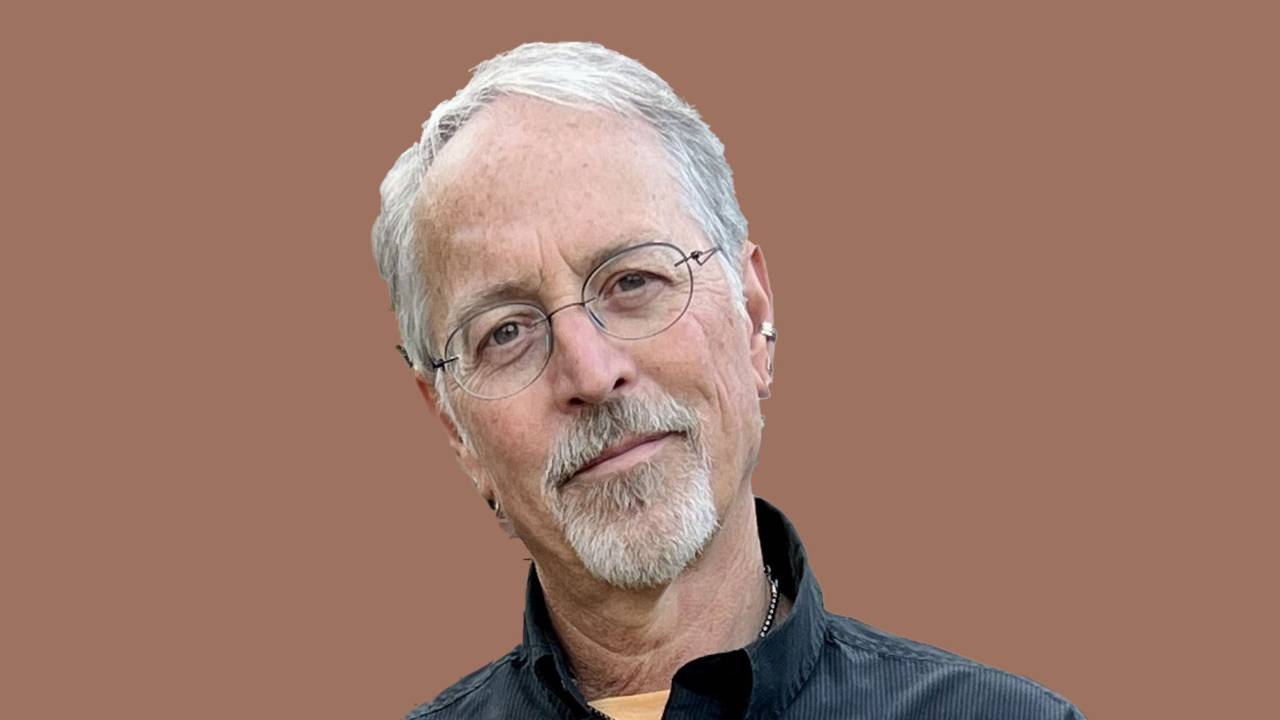
Penn State professor Dr. Sam Richards teaches the largest race and cultural relations course in America (SOC119), and millions have watched his lessons challenge students to think deeper, listen better, and face uncomfortable truths. In this rare Maybe God interview, Sam opens up about Gen Z, DEI, politics, empathy, and why he believes stepping into someone else’s shoes is the only way forward. He also shares his surprising thoughts on faith and God—despite calling himself an atheist. This conversation will push you, stretch you, and might just change the way you see people who think differently.
Download the free ebook mentioned in this episode: https://worldinconversation.psu.edu/our-book/
Please subscribe to Maybe God’s YouTube channel today!
Support future episodes ➜ www.maybegodpod.com/donate
Transcript
Eric Huffman: Dr. Sam Richards is the legendary sociologist behind the largest race and cultural relations course in America.
Dr. Sam Richards: In my classroom, I'm talking about the most controversial issues of the day. There's nothing I shy away from.
How is it problematic for you to be a DE&I hire?
Woman: You could be underqualified.
Dr. Sam Richards: No one knows if you're qualified. I'm always going to look at you as suspicion. You would look at you as suspicion. This is the problem with diversity. Like, I'm shoving it down your throat.
Eric Huffman: Millions have watched him push students to think critically about the toughest issues of our time, earning both admiration and backlash along the way.
Dr. Sam Richards: I was getting hate mail every 15 seconds. I couldn't take it, you know, the meanness of human beings.
Eric Huffman: Today on Maybe God, a surprising, unfiltered conversation that will challenge everyone watching to think more critically about our core beliefs.
Woman: I'm Christian and when you said that it was kind of shocking.
Dr. Sam Richards: You know, Muslims, I want them to be better Muslims, and Christians, I want them to have a better, a more thoughtful relationship with Christ. But there's two billion Christians in the world and a huge swath of Christians don't believe that.
Eric Huffman: We're talking to Penn State's Dr. Sam Richards about Gen Z, politics, DEI, and his rare personal reflections on God.
Dr. Sam Richards: You know, the one thing I see when working with young people is If you have a really strong and thoughtful belief system, it's just easier to live in the world. And as you age, when you get to my age, it's harder and harder. My argument with God is just like...
Eric Huffman: Dr. Sam Richards, welcome to the Maybe God podcast.
Dr. Sam Richards: Yeah, thanks for having me. I'm honored and very happy to be here.
Eric Huffman: Are you confused at all about why you're here?
Dr. Sam Richards: You know, I'm not. I think people watch the work that I'm doing here at Penn State in my class, and I think lots of folks from many different perspectives have questions for me. So I assume you've got a lot of questions.
Eric Huffman: I do. I do. That's right. Dr. Richards, you're not our typical guest here on Maybe God. We usually have a lot of conversations about faith with other Christians or people of other faiths. But I find your work particularly fascinating. There's something specific I really am dying to ask you at the end of this conversation. But first, I just want to set the table. You spent 40 years plus in the college classroom getting students to think critically about cultural moments that we're in. The first question I have is just why is critical thinking so important in this particular cultural moment?
Dr. Sam Richards: Oh, wow. Oh. Well, first off, it's just important in general because I think that's what we want young people... we want students to be doing, you know? But first off, let me just say, critical thinking is often seen as a word that liberals use as a way to promote a liberal way of thinking. Critical thinking means critiquing the right or critiquing conservative ideas. And I don't use it that way at all. I'm actually careful about saying that I'm promoting critical thinking because I know that many people see that as a buzzword on the left.
For me, critical thinking is simply reflecting, continually asking why and how did I come about a certain set of ideas or a certain set of thoughts. That's what I mean by that. I think right now it's just really important because there's too much information out there for people to be able to sort through and they need some way to do that.
Eric Huffman: What are the particular issues that make critical thinking so vital now? You mentioned the steady stream of information, but what are the moments that we're in now and the issues that are shaping, in particular, Gen Z?
Dr. Sam Richards: For me, I'm always going to have to go back a little bit. There's going to be a tendency to want me to directly answer a question, but I'm always going to have to go back. It's often going to seem like I'm dodging a question when in fact I just have to back up in order to approach it.
Eric Huffman: Trump is the weave.
Dr. Sam Richards: Yeah, yeah, yeah, yeah, yeah. It's so complicated. It's so simple and complicated at the same time. We're in pretty difficult times, but you for thousands of years, people have the idea that, oh, these times are the most difficult. I always forget who it was, but Socrates or somebody said like, the youth of today will be the downfall of civilization. And well, that wasn't the case. So I'm hesitant to make big proclamations like that. But we're now in this space where the web and being online and being bombarded with so much information and the ability that people have and platforms have, like AI and so on, to manipulate ideas and information that... man, we've really got to teach people. And because we live in a global world and we're not going back. And in spite of these governments trying to curtail immigration for lots of reasons that make a lot of sense, we're not going back.
We live in a multicultural, multi-global world and ideas are being shared from every angle we could possibly imagine. I think it's important for people to be able to have some ability, young people in particular, Gen Z, to have the ability to sort of siphon through some of this and come to some kind of understanding of some truth or something that doesn't just make sense to them, but actually has some grounding foundation in reality.
Eric Huffman: I appreciate your sort of wisdom around young generations. I think there is a tendency in every generation to look at the youngest one and go, "Well, they're the problem." We did it with millennials not long ago and Gen X and the Boomers and everybody before that.
Is there something uniquely challenging about being a member of Gen Z, given the realities, the globalization, the technology, all of it that makes critical thinking more difficult? For example, do you find students in this generation more hesitant to speak freely for fear of being ostracized or canceled?
Dr. Sam Richards: Well, first off, let me just say that as much as there's a good deal of sound and thoughtful criticism about these things here and what they're doing to young people and so on, I find my students to be as good or better communicators than they were in the past.
Eric Huffman: Wow.
Dr. Sam Richards: You know, I put them up in front of my room, as you see in the videos, and I give them a microphone and I ask them to speak and they're as thoughtful or more thoughtful actually than they would have been 30 years ago. So that's important to say. And mind you, it's also really important that... you know, let's say I have 800 students in my class and I ask for people have to fill out a volunteer form to come up in front of the room and speak in front of the cameras and 200 students every semester in the class volunteer. These are not just the people who are unafraid and so on. A lot of more students want to volunteer, but they just assume they're never going to get chosen so they don't bother to fill out the form, that kind of thing.
I find that people aren't that afraid of being canceled. People have a kind of a sense of who they are and what they are and what they believe. And if they say it, they'll be fine. And that people will censor themselves in the sense that they won't say something really angry or aggressive that they might put in a chat on some platform somewhere on Facebook or Instagram or whatever. That they know, like, "Hey, you know what? I can't say that here. I have to be kind of thoughtful." And so they are thoughtful.
Eric Huffman: That's helpful, yeah, because I think sometimes I watch your videos and it seems like you have to pull certain answers out of the students. But what you're saying is it seems like, to you, that that's them being thoughtful and appropriately self-censoring or filtering out the things that they don't really want to say or need to say in a public setting. They're being careful, not fearful.
Dr. Sam Richards: Yeah. That's correct, I would say. And also, I'm asking them questions that they've not been asked before.
Do you ever kind hide a little bit the fact that you're Chinese at all? Has that ever come up for you? Right now. We have all of this anti-immigration sentiment. ICE is growing. People are being deported. What do you think people need to know?
So I'm asking so many questions they've never been asked before, so they have to stop and think. Like, "Huh, let me think about that."
Eric Huffman: Hey, friends. Eric Huffman here. I'm so glad that you're joining us today. If you're someone who wrestles with big questions about God or faith or truth, I want to invite you to subscribe to Maybe God. This channel is a place where honest doubts are welcome and real answers are explored. And by subscribing, you'll get conversations that help you think deeply and question boldly and gain clarity on the things that matter most. So go ahead and hit subscribe.
Now let's dive back into my fascinating conversation with Dr. Sam Richards.
I mean, the narrative around college campuses these days is that they are just hotbeds of woke-ism or cultural Marxism or whatever term you want to label it. If that were the case, you being a professor at a large university, Penn State University, it seems like that would make you a highly unpopular person. But you have the largest classroom in the world, I think, Sociology 119. Why do you think that is?
Dr. Sam Richards: Well, I think it's because I'm asking people authentic questions. I'm asking them to think about things that are really interesting to them, that they care about. And then students get to watch other students. And then people tune in because they want to hear what young people are saying.
For students, these are not hotbeds of protest, right? When some speaker that's, I don't know, highly volatile comes to campus and then you read like, "Oh, there's a protest," it's like, "Well, yeah, sure, we had a protest at Penn State for one of these speakers, but we have 40,000 students at University Park and 30 students showed up to protest. 30, right? And then 60 community members showed up to protest. But 30. Where's the other 39,000? It's really not.
The other side is we've got thousands and thousands of classes. In the vast majority of classes, nothing political happening in them whatsoever. So this idea of hotbeds of... and when I ask my students, you know, like, if I reference Karl Marx, let's say, which I don't know that I have in many years, but if I did, I'd have to explain who he was. I people have no idea.
Eric Huffman: That's interesting. Because I think, especially in conservative circles, there's certainly a narrative that, you know, every college student knows who. Marx was, because they're being inundated with it, and that there is a perceptible imbalance of left versus right on college campuses among faculty. I've seen statistics about faculty leaning way left. Do you think that's true, or is that overblown to an extent in the cultural conversation we're having about campuses?
Dr. Sam Richards: Well, in some fields like mine, we certainly lean left. I mean, that's not a question. And understand that the social sciences for the humanity, social sciences in particular were born out of the industrial revolution in an attempt to fix some of the problems that we saw emerging in society. You sort of bring people together living in cities and working in very complicated jobs, new jobs, new areas. There a lot of social problems that emerge regarding inequality and poverty and hunger and all of the-
Eric Huffman: Exploitation.
Dr. Sam Richards: Yeah, exploitation, well, the field emerges around that. So, naturally, you look at every sociology major, you're going to take two courses for sure. Four, actually. You're going to take your intro class, you're going to take a theory class, a research methods class, and then you're going to take this social problems class.
In the social problems class, it's just going to be one social problem after another. Now, first off, you're assuming that all of these things are social problems, you know? Like let's say there's a chapter on homelessness. So the assumption is, well, of course it's a social problem, right? But you could make an argument. It's like, well, I don't know, is it really a social problem? Well, for sociologists, it is because the whole field was born of that. So that's just how we see it.
In that sense, there's certain areas that lean more left, so to speak. But if you look at the college campus across the board, you have business, you have engineering, you have architecture, you have all the sciences, they're not leaning left.
Eric Huffman: Interesting. I sense in watching your clips and videos online that you seem to feel a responsibility to balance the playing field a little in the way you carry out your conversations. It's not really clear to me or anyone who watches your videos objectively that your positions are ever a part of the conversation. What you're trying to do is get students to think about other perspectives. And so sometimes you'll offer the conservative perspective to get people thinking. First of all, I hope that's the case. I don't want to mischaracterize your-
Dr. Sam Richards: No, that's very much the case.
Eric Huffman: I'm wondering if that has put you in the crosshairs of the conversations on your campus or with fellow faculty or with students. Are you sort of probably going to be number one in any way? Do you face backlash?
Dr. Sam Richards: Well, it's funny. First off, I'm a nice person. When you meet me, when students meet me, like what you see here is really how I am in the world, the way I am with my neighbors, with checking out at the supermarket, yucking it up with the person. I'm really a nice person. Well, I carry myself that way. So it's hard to... you can put me in the crosshairs, but once you know me, it becomes a little bit more difficult. And when you watch me day after day in the classroom, you start to realize, wait, he really is kind of a nice guy and he's just trying to push.
Yes, I've been in the crosshairs, right, because people take clips from my classes and then they use those clips. They use them for whatever purposes. They have. So I've been in the cross-sitters on the left, I get I'm racist. You know, I do this stuff on the police.
22 out of 233 Black people who police killed in 2016 were unarmed. 22 out of 233. Okay? So that means you have a 0.6 chance in a million, 0.6 chance, about half of 1 % in a million of being unarmed, Black skinned, and killed by the police.
Well, then it's like, well, if you have the idea that, you know, the policing in the United States is grounded in racism and discrimination and power, unequal power and so on, well, then, you're going to be able to take a clip out of what I say and use that in some way, right?
Tucker Carlson did two hit pieces on me at eight o'clock, man. Man, I was getting hate mail like every 15 seconds. I had to step away from my email because I couldn't take it, you know, the meanness of human beings. So they did that and they did it. Other people took clips. And the strange thing was each clip that people took on the right, so this was the right attacking me, right? I was persona non grata, public enemy number one.
First off, I'm an easy target, because I have seven cameras in the room with high def audio and video. So it isn't just like someone holding their phone up.
Eric Huffman: Yeah, thousands of hours of it.
Dr. Sam Richards: Yeah, yeah. So you can find anything you want. But what they did, each clip that they took and that they got used and shared pretty widely was one that if they just showed the whole clip, they could have just watched all five minutes of that and said, Wow, this is actually perfect for, let's say, Fox, right? This is really critique of the left and so on and so forth. Because that's what I was doing. But they didn't, they took 15 seconds out and they lied. They really lied, man.
So maybe by the time it got to Tucker, he didn't know of the whole clip. He just only knew of the little one. And so he didn't know like, "Wait, hang on a second, this was based on a lie." In that particular case, someone did one of these anti-racism workshops and they say, you know, White people need to stop being so arrogant and mean and racist and da da da da da, right? That was like how they ended the workshop. And I'm like, "Oh my God, this is unbelievable. That's what you're teaching? This is it? This is your conclusion?"
So I read this thing and they said... This was Dinesh D'Souza guy. He's the first one who did it. He said, "They were my words." And I'm like, "These are my words."
Eric Huffman: Oh my.
Dr. Sam Richards: "These are so clearly..." you know? He's like, "Here's this Penn State sociology professor telling White people that all of these things." That's just so blatantly mean. Then there was another one when I said that, you know, street people need to watch more gay porn or whatever. I was doing this joke and it was this whole thing. If you just watch that clip, you're like, "Oh my God-
Eric Huffman: What kind of deviant is this?
Dr. Sam Richards: Who is this lunatic? I'm like, 'No, no, no. You got to go back and see the whole thing." Because I used to do standup comedy when I was young.
Eric Huffman: Did you?
Dr. Sam Richards: Yeah. Listen, so my boss, the people above me are just like, "Don't tell jokes. It's your jokes that get you into trouble." So I try not to. Anyway. So yes. So I have been in the crosshairs, not from... you know, the administration has been very supportive of me because I've not been in the crosshairs very much. And each time it's been something that when you look at the larger clip, you could see like, wait, hang on, that's not what was going on here.
Eric Huffman: I always believed that, at least from as a pastor, and I tell other pastors that I'm mentoring or training that if you're not taking heat from both the people on the far right, far left, you're not doing your job right. And if you're just taking heat from one side, you're probably in the tank for the other. It's a good metric, you know, to know if you're on the right path, if you're getting pushback from both extremes.
Dr. Sam Richards: Well, you know what? Yesterday, yeah, and if you're talking, doing Christian theology, if Christians in the room, if you're parishioners or your church members aren't push... if some of them are pushing back on your theology, whatever that is, then you're not going to grow because you're never going to satisfy everybody. But you want to grow as a pastor, you want to be more intellectually thoughtful, you want to get closer to God. Well, the only way to do that is to get some kind of pushback and move you in a slightly different direction. So that's also important.
Eric Huffman: Yeah. And if Jesus is our model, which hopefully He is, you know, He took just as much hatred and heat from the Pharisees as the Sadducees. Pharisees were kind of I guess the far right fundamentalist types and Sadducees were more of the elitist kind of, you know, left-leaning people of His day. And they hated Him equally.
One thing I'm concerned about in this cultural moment are the silos. And I think what's happening is churches and ideologies are just being siloed and we're not hearing each other. We're all getting very different news sources and information streams and we're just living in different worlds.
One thing I think your classroom does is brings those worlds together and has everybody look at things from all sides. Is that sort of what you see happening?
Dr. Sam Richards: Yeah. No, that's very much what I want to do. Then, sometimes I want to move people closer to what I consider is probably their organic home. For example, you know, Muslims, I want them to be better Muslims, whatever that means to them, but I want them to be more thoughtful. And Christians, I want them to have a more thoughtful relationship with Christ. I want that. I want to upend people's thinking, whatever they think.
First off, when you walk in the room, I want to change something about what you've thought. So when you leave, I want you to say, wow, I've never thought about that before, something, or a series of things. And now I'm going to have to think about that on my own. That's what teachers are supposed to do. And that's what we want our students to do. So that's my job to confuse people, right? But in the end, I want them to be better humans.
And so, you know, what I realized is that most people who enter my classroom as a Christian or Muslim or Jewish or Hindu, whatever it is, atheist, agnostic, they're going to leave in the same way. They're not going to make a switch. That's not what that's about. And it doesn't happen mostly in college either. But I want them to be better at it, at their thinking. That's my job.
Eric Huffman: That's a difficult thing. It's hard to thread that needle because I think when I was in college, I came under the influence of... and I wasn't ready. I wasn't a good critical thinker to push back on my own convictions. But I was sort of led astray by very adamant professors in Philosophy and Religion departments that really came out and basically said they want to shake Christians loose of their Christianity and wanted to sort of free us from our backward thinking that we were raised with.
I think there's some value in that just being challenged on your assumptions, but the haphazard way in which the truth claims of Christianity in this case were considered just garbage to be thrown out. The goal was clearly to, you know, have us leave the class in a different worldview than we came, rather than, as you're saying, valuing that worldview, but understanding how other people see the world too.
So I guess how do you balance the challenging aspect of getting people to see other people's perspectives and value them without telling people that they're... because the issue is Christianity, Islam, every worldview has exclusive truth claims in it. Right? As a Christian, I believe we're right and I believe other people are wrong. So how do you balance that reality with what you're trying to do to students?
Dr. Sam Richards: Man, this is such a good question. The part of me thinks like, well, you should think you're right. You know what mean? That's going to make you better. I mean, it's going to make you continually try to improve and actually be a really thoughtful Christian, right?
Then the other side of me is the side who... but also to be a thoughtful Christian, you have to be really thoughtful about so many other perspectives. And so now you're going to balance these things. For me, it's really difficult.
Look, it happened in the class yesterday. Yesterday's class was called Empathy is Cool. And it was based on this idea that Elon Musk said something about how, you know, empathy is a downfall of Western civilization, whatever it is. It's like, oh my God, this guy doesn't understand empathy. I understand the critique of empathy that people have. They think empathy is sympathy and they think that people who support empathy are telling us like, Hey, you have to agree with and accept other people. Common criminals or whatever it is, right? ISIS and the Taliban and whatever. Yeah, that's not what it is, man.
Eric Huffman: Trans people.
Dr. Sam Richards: You being able to kind of put yourself in their space to understand them and to be able to refine that, your ability to see somebody and refine what it is. You as a Christian pastor, if you're talking to young people, if you don't have empathy for them, if you don't understand this young generation, what it's like to grow up on these platforms and with smartphones, you're not going to make any inroads into them.
Empathy is just your ability to go into their lives and have an understanding of them. The better you are at that... in fact, you will see certainly the people in your world, just like the people in my world, the more empathic we are, the better we are at our jobs. I mean, that's just the nature of it.
So yesterday I had this woman who grew up in the Hare Krishnas. We have a farm south of State College and her family came from Ghana to be part of the farm here, the group here. And I'm like, "Oh my God, how awesome is that," you know, for me, right? Of course, nobody in the class knew who the Hare Christians were, right? Because this is not a thing. For your generation, my generation, we kind of have an understanding.
But anyway, she was talking about her father and about how so many people in their community, they support the very supportive of religions all over. And her father teaches and preaches theology of Islam and Judaism and Christianity and Hinduism. And I'm like, "Wow, it's just mind-blowing to get this," right?
So this young woman raises her hand and she said, "Well, can you explain that with your father? Because I'm a Christian and we have the belief that... Christians believe that our way is the right way. And there's only one way. And so how could your father possibly teach these other perspectives, you know?"
And I said, "Wait, hang on a second. Christians don't believe that. Some Christians believe that. Maybe most Christians believe that, but I know plenty of Christians who are very ecumenical in their theological approach. So you can't make the statement that Christians believe that. And she said, "Well, yeah, but my belief is... I know that that's your belief, your Christian belief. That's not all Christian beliefs and that's really important. So you can hold on to your beliefs, that's fine, but be careful about making the statement."
You're asking how difficult it is to... I'm threading the needle all the time, you know, because I want to support her, but I need to support other, say, Christians in the classroom who are saying like, "I don't think that I'm actually kind of a Quaker in my orientation or whatever.
It's only my ability to see the world from so many different perspectives that allows me to do that and allows me to do it with the understanding that my job isn't to be right and my job isn't to push my views out. My job is to support each student in the classroom in some way.
Eric Huffman: That's the difficulty of it is I think getting people to see other perspectives without presenting it like your perspective is the best one, the sort of above the fray, seeing the value in everyone. That can kind of become, I think, a little pedantic in a way. It's like, well, the assumption is, you need to let go of those exclusive truth claims and come see the world like I do. And I don't think that's where you are, but I can see how easy it is to get there. That's kind of what I experienced in my college.
Dr. Sam Richards: Now I could see that. I took philosophy classes as an undergrad and I'm like, yeah, there are a lot of folks that aren't going to be very open to that. They're going to want to break you down. I have students sometimes who will come to me, and I'm like, "Okay, listen, I need to break this student. I need to break into their thinking. I need to break their thought system for whatever reason," but then I'll do it, and then I'll kind of build it back up, you know?
So in this particular case with that young woman... and by the way, there are limits to that. I mean, there are certain ideas out there that I just like... I gave the example yesterday of... you know, I did this TED talk on empathy in Iraq, and I tried to get people in the shoes of ISIS who are trying to kill American soldiers in Iraq. So I'm like, well, you got to be in their shoes. Can you imagine what you would feel if you were in my shoes? Can you imagine walking out of this building and seeing a tank sitting out there or a truck full of soldiers? Just imagine what you would feel because you know why they're here and you know what they're doing here. You just feel the anger and you feel the fear. Okay. If you can, that's empathy. That's empathy.
You've left your shoes and you've stood in mine. You want to understand who they are. So this kid says like, "Well, why should I understand who they are and what they're thinking? Because they want to kill me." And I'm like, "Well, let me just tell you what the commanding officer said who reached out to me after I did that talk." I have people all over the military, higher ups in the military saying, "Man, thanks for that talk. I've been trying to teach my troops that forever. Like you can't go in here and see the enemy and just want to kill them. It's like you've got to understand who they are and why they think and feel the things that they think and feel. That's the only way we're going to do our job."
And this one guy who probably took out a lot of people, if you know, I don't want to use the kill word, but he was pretty tough guy, man. And he said, "You know, every time you fire your gun in war, you've already lost. It's a problem."
Eric Huffman: Interesting. That's unexpected.
Dr. Sam Richards: No, I know. This is the thing. I worked with a lot of special forces people and they're the most empathic people around. That's how they stay safe. That's how they protect themselves.
Eric Huffman: Yeah. For anyone, but in particular for Christians, like part of being a Christian is to be persuasive. You want to win hearts and minds. If you're not able to muster any empathy for people who are from a different place and perspective, you're not likely to break through to them in any meaningful way with your own ideas and worldview.
I don't understand the decidedly anti-empathy movement.
Dr. Sam Richards: Yeah, I don't get it.
Eric Huffman: I've seen it more on the right, and in Christian circles even. There's been books written, toxic empathy and all that. And I think anything can be toxic, right? Just like masculinity was, you know, talked about a few years ago, toxic masculinity. But that doesn't make masculinity toxic necessarily.
Dr. Sam Richards: That's right.
Eric Huffman: And not all empathy is toxic. In fact, I think we're just misunderstanding that word. And I appreciate your perspective because the Bible has a word that is like empathy, but it's not sympathy, it's compassion. Jesus had compassion, which literally means to suffer with someone. So, it is the acknowledgement that if you were in their shoes, living their life, getting their perspective from day one, you would feel and think differently than you do now.
Dr. Sam Richards: That's right. That's just basic sociology.
Eric Huffman: And that doesn't mean you have to agree with their world. I think that's the scary part for people is that, if I acknowledge it, have to agree with it and affirm it. And that's not what empathy asks of us.
Dr. Sam Richards: Yeah, that's right. And you as a pastor, think about empathy is your whole life. And think about trying to be a pastor and not being able to be empathic or empathetic. You would be a complete miserable failure.
Eric Huffman: I would. And I would be bitter and judgmental and dismissive of the messes people get themselves in. And I would get nowhere with them. I wouldn't be helpful at all.
Dr. Sam Richards: Going back to that, you mentioned... I appreciate when people witness to me, whether they're Muslims or Buddhists or Christians or anything. I really appreciate when they come to me and say, "Hey, listen, I want to share my perspective with you." To me, that's like, oh my gosh, if you have some perspective, if you think you've landed on the truth, you owe it to me, to come to me and tell me what that is.
Eric Huffman: Especially if you're going to burn in hell if we're right, we better be telling you.
Dr. Sam Richards: I am always just so thankful when people do that. And sometimes they're not very skilled at it and I'm like, "Okay, hang on. I got you're a rookie and-
Eric Huffman: You're making their arguments for them.
Dr. Sam Richards: Yeah. You know what? I had some Jehovah's Witnesses come by a few years ago. And they came and I invited them in and they sat down and I said, "Okay, so tell me what are y'all, what's going on?" They were young. So they started making their pitch and I said, "Hang on a second. That's not your pitch, you got it." I studied the Jehovah's Witnesses and then I had Mormons, it's the same thing. They come in and like, this is not the core of the Mormons, this is not how you want to present something to me. So then I reframed it for her. I'd be much more open to it this way.
Eric Huffman: You said something years ago that I remember and it stuck with me. You said something about how you personally have been in an argument with God for years. Like you've been arguing with God. What does that mean? I don't know what your particular faith is or lack thereof, but I found that interesting.
Dr. Sam Richards: Well, you know, for me, I think I came... first off, I was born into a Christian family, United Methodist. I was baptized and christened, became a member of the church. And then when I was an undergrad, I had a falling away. I think I just started seeing... I opened my eyes to all the... just the problems in the world. Oh my gosh, the war and the suffering and the poverty. And I just really turned away from the great spirit, right, from God.
I often don't use the word God because everyone has their own understanding of what God is to them. That's just not what it is for me. So I often call myself an atheist, even though I'm not an atheist. I don't anthropomorphize God. So I don't ever talk about God as God thinks, God feels, God wants. Those are human characteristics. That's not what God's about. For me, anyway. But that's the only way we can talk about God. So I try not to do that. If I do use the pronoun, I use she instead of he, and people say, "Why do you use she?" And I'm like, "Well, why do you use he?" I'm always kind of doing that.
But my argument, I think, as I came of age and I started seeing the problems in the world, and I just said, "I can't have this. I can't be in this belief system. It just doesn't make sense that there's a God who allows this and wants this." And I know that all the theological arguments for how and why and so on. Well, I didn't at the time, but now I really do.
But then you know what happened to me? So this is an interesting thing. I don't know if your listeners will find it that way, but when I was 26, I was in Mexico and I went down on the mountains of Mexico where they use hallucinogenic mushrooms as part of spiritual, their spiritual work, the shamans and so on. So I took mushrooms. I was in this cabin with a friend of mine all by myself and I took mushrooms.
I always say I encountered God, like I saw God. I left the next morning and I woke up and I said, "Okay, all this atheism stuff is like... just set that aside because God's here. Like this is not."
Eric Huffman: Wow.
Dr. Sam Richards: And I didn't have to ever really do mushrooms again. I mean, it wasn't like that, but I... And people could say like, "Well, it was the mushrooms." No, no, no, as the mushrooms lowered, they gave me a window into it.
Anyway, my argument with God, so it goes back to when I was 20 years old, it's like, "Why do you let all this... what's going on here?" And why can't I get to the place where I can find a singular belief system or a singular way of communicating with you, the great spirit? Open a doorway, let me see, let me have something." But it doesn't happen, so I just keep arguing. But for me, the most important... but I pray all day long.
Eric Huffman: Do you?
Dr. Sam Richards: And the most important relationship in my life is the one with God or the great spirit.
Eric Huffman: To this day, still?
Dr. Sam Richards: To this day. Oh yeah. I have prayer beads that I-
Eric Huffman: I was going to ask about that.
Dr. Sam Richards: I happened to get these in Cairo. I was there during Ramadan. If you ever have a chance to be in a Muslim country during Ramadan, I'll tell you, there's nothing like it.
Eric Huffman: Really?
Dr. Sam Richards: Because people are awake all night long. I got a haircut at two in the morning, because you got to sleep during the day, right? Anyway, I'm always praying. That's the most essential thing for me.
Eric Huffman: But you've struggled to sort of pin God or the great spirit down to any one worldview. You've experienced Him personally in some ways, or her in your case, whatever one of them is. You were raised and... I was also raised United Methodist, by the way. I was raised UMC and I was a Methodist pastor for a bunch of years until 2021 when we were deemed too conservative for the new United Methodist church. They're all calling God she now. So you might be find a home again.
Dr. Sam Richards: Well, you know, the problem is when we anthropomorphize, we give God these human characteristics, I feel like it takes us away from God. Because God's just like a smarter version of ourselves. And I'm like, well, that's not what God... for me anyway, God's way more than that. It's too easy to come to the conclusion that God is like us. I can't get there.
Eric Huffman: It's the whole making God in your own image kind of thing. That's something we should be sensitive about. You talk a lot about truth in your classroom in various ways. And in a world that seems more and more post-truth, you can push back on that idea if you want to, but it seems like there is a push to say, well, truth is relative. It's mine, it's yours, whatever your experience is. Part of your approach is to get students to see that there is some capital T truth that we're all aspiring toward. Does your understanding of God or some kind of God at the center of the universe, does that inform your understanding of truth as a concept?
Dr. Sam Richards: Yeah, for sure. I get a lot of this from my wife also, by the way, who's a much better thinker than me. But yeah, the truth is that there are things in the world that we humans label as evil, but they're not necessarily. We have one group of insects swarm, another group of insects and kill them all, we don't say like, oh my God, that's evil. But it is from the perspective of the insects. We make these aspersions about these kinds of things about the world and sin, and... you know, but it's not necessarily that. It's just what the world is. That's how life operates. Therefore, truth becomes very, very complicated when I'm not interpreting it according to some particular perspective, you know?
Now, for me, what I want for my students is I want to push them against the wall. Sometimes, I'm grabbing them by the neck and I'm holding them against the wall and I'm saying, "Look at this. You have to think differently. I don't care how you think differently. You can be more..." let's just stick with Christianity here. You can be more of a Christian at the end of this conversation or less of a Christian. It doesn't matter. I prefer that you be more of a Christian, but it doesn't really matter to me, I mean, if that's what your destiny is. But I'm going to demand that you think about this and look at it.
And what I know is that the vast majority of people... well, first off, I rarely have the experience of a student who gives up their belief system because of my class. I don't think it's ever happened. They just become stronger in it, and they feel like they become better and more thoughtful. And that's my goal.
Eric Huffman: That's the ideal outcome. One of my favorite parts of the Bible is the conversation between Pontius Pilate and Jesus when Jesus declares Himself to be the truth of God. And Pontius Pilate's response is a question. And he doesn't say, well, what is the truth? He says, "What is truth?" He is questioning the concept itself. And I see that happening in culture. Maybe you see it with the students. But is there a danger in doubting truth itself, you know, the moral relativism, that to each their own kind of thing? Do you see that as a dangerous thing happening in this cultural moment?
Dr. Sam Richards: Well, I do. Listen, but here's the other side of that that I would say is. You know, we have moments when it's like, well, you know, your truth, my truth, or, know, well, yeah, that's the way those people are, whatever. Most people don't last very long with that. And they only employ that moral relativism in very narrow aspects of their lives.
Most people, they have a... yeah, the relative... it doesn't hold. But there might be one or two areas where it does. You know, like let's take the trans debate, right? I mean, part of that debate, what happened was it just happened too fast for us to have a way to integrate it into our lives.
I mean, think about this. Women wear pants today. I tell my students, 60 years ago at Penn State, well, 70 years ago, if you were a woman studying here, you weren't allowed to wear pants. So now we're just going to keep playing with these ideas a little bit. There's nothing wrong with that. That's fine. But it happened too fast, and so we weren't able to kind of catch up in all these ways.
You know, it's like your truth, my truth. Like, okay, well, that's all right. But I can think like, well, if somebody decides, if I decide that I'm a woman and just like that, and nothing changes, but I decide I'm a woman and I want you to use, you know, female pronouns and treat me as a woman, okay, that's fine, it's not a problem, but it's not going to go very far. And it's only going to be this one aspect of my life. So the answer to your question is, it is an issue, but it's not nearly as big of an issue as we imagine it would be.
Eric Huffman: Pretty easily dispelled. And you do that a lot with different issues. One that comes to mind is the conversation you had in the classroom about the January 6th riot versus BLM riots. You have some sectors in our society that are like, well, Gen 6 was justified for these reasons and BLM was evil. And you have others, BLM totally justified and Gen 6 was evil.
You sort of have a way of laying those limited arguments and perspectives bare and helping people to see the greater truth. Again, that word is the capital T truth behind these situations. The same with Charlie Kirk and his murder, assassination on everybody's phones and screens. We all saw it. Everybody immediately had their own truth about it and some people erred one way or the other. But you have a way of just laying out the facts.
Let's talk about Charlie a little bit. What was your particular angle or take on that in the immediate aftermath? I think you had a class meet like the day after.
Dr. Sam Richards: The next day.
Eric Huffman: How did you approach that conversation?
Dr. Sam Richards: Well, first off, I need to say my wife said, "Listen, you're not going to talk about Charlie Kirk." I said, "No, no, no. I have to. It's 9-11, I'm going to talk about 9-11 and I'm going to talk about Charlie Kirk." And she said, "Listen, don't say his name. You can talk about him, but you don't have to say his name. You don't know where things are going to fall right here. And you don't want to... just don't. You're just going to say something and someone's going to take it they're going to run with it." And I said, "Okay." She was tuning in to the live stream and we did two minutes, she's like, "Dude, you can't. Oh my God."
Eric Huffman: You couldn't help yourself.
Dr. Sam Richards: Yeah, I couldn't help myself. But you know what? What happened was I got into the room and I felt the energy. And I said, "Okay, let me just follow my heart and my mind here. Let me go with it."
Woman: Another fear is maybe someone taking it upon themselves to handle his unfinished business. Other people may feel the need to echo him or carry on the rhetoric he was pushing. And I don't think that's beneficial at all.
Dr. Sam Richards: There are many things that Charlie said that you would agree with.
Woman: That I would agree with?
Dr. Sam Richards: For sure.
Woman: No. He could say and have, you know, some clear points that are factually true or statistically true or morally true in rare cases, but that doesn't mean I agree with him and everything that he did.
Dr. Sam Richards: And, you know, I had met Charlie. I had mentioned it in that classroom. He had spoken in my classroom a few years before. I kind of had an understanding of what he's doing, what he was doing. We have a preacher on our campus, Gary Cattell. He's been there for 35 years. And he shows up at the steps of this one building every single day and people pay for him to do that. And he's there and he's arguing with students. And I'm like, "Man, he's the best thing on campus." And if you want to get good at thinking and logic and critical thinking, you go have an argument with Gary. First off, you're going to lose, because he's going to be way better than you are, but have an argument with him.
He will sometimes make these extreme statements. I'm going to get back to Charlie.
Eric Huffman: Please.
Dr. Sam Richards: He'll make these extreme statements. Like some woman wearing a shirt, so, you're dressing like a whore, you know, kind of thing. He does that to grab attention. But if you talk to him, he's so thoughtful and such an interesting guy. He converted from sort of a general Christian evangelical perspective to Greek Orthodoxy. He's now a Greek Orthodox. I'm like, "How'd you do that?" He said, well, someone convinced him, right?
But anyway, I'm always sending students to him because of what he's doing. In a way, Charlie was doing that. I can pick out things that Charlie said that... You can find different things. I'm like, "Oh dude, that was just mean or that was dumb. Why would you say that? Oh my God." It's just a jerk. So I can see all of that, but people can do that with me.
Eric Huffman: Actually, taking out a context your clips.
Dr. Sam Richards: Yeah. Yeah. Yeah. So it's like, okay. You know, for me, the danger... so what the class was really about was, where are we going to go from here? You know, my student volunteers, it's like, we're going to start assassinating people. Where do you want this thing to go? How far do you want to take it? And I want you as students to think about this. This could spiral out of control. So where do you want it to go? What are you willing to do? What are you willing to live and die for? And it was a very sobering conversation with them in that sense.
Eric Huffman: It was. How much did it concern you what you heard from them that day? I mean, was it eye-opening?
Dr. Sam Richards: No, they all very concerned. Like, yeah, this is not a good thing. We don't want this and we want to dial it back. And so the question is like, well, you want to dial it back, and you always do when I give you the microphone, you're always very thoughtful, but are you this thoughtful when you're in the chat on some platform somewhere? What kinds of things do you say there? That's what you need to be thinking about. For me, it was a pivotal moment.
And I was also concerned that that very night, you know, one of the hosts on Fox News is coming on, it's like, you know, "We're at war, the other side, they're killing." And I'm like, "Dude, dial it down, man. We have too many guns in this society. You don't want to do that."
Eric Huffman: It did feel pretty touch-and-go for a few days there. Some of the comments and commentary online, anti-Charlie stuff was just vicious and vitriolic. And I think the one side was feeding the other. I'm like you about Charlie. I'm probably more pro-Charlie generally than you might've been. Although I don't sense any animosity from you at all about Charlie's approach, other than the instances you mentioned. Charlie was young.
Dr. Sam Richards: Oh, he's very young. He was evolving in a lot of his approaches and views. And Charlie was always quick to push back against the farthest elements of the right. He was always one to defend against anti-LGBT people on the right and the neo-Nazi types that wanted to infiltrate the right. He was the first to kick them out. I don't think people appreciated that side of Charlie either, how principled he was in that way.
Eric Huffman: Well, you the other side, you say, that he was young. First off, to be able to do what he did and to do it time and time again and to always be on video and to imagine you're going to say things that aren't a little bit skewed or little, whatever it is, right, like, come on, that's insanity, right? So it's really difficult to do that and to be provocative, to be a provocateur of sorts. I mean, you have to be because that's your job is to get people to think. That's my job. So I have to be a little bit of a provocateur.
And he was young. Listen, 10 years from now, he would have been a very... 20 years from now, a very different thinker.
Eric Huffman: For sure.
Dr. Sam Richards: We all look back at our young cells and we think, oh man, there were a lot of things that I said that were pretty not very thoughtful.
Eric Huffman: I'm so glad TikTok wasn't a thing when I was 20.
Dr. Sam Richards: I'm glad I didn't have cameras in my classroom when I was in my 40s. God, that would be terrible.
Eric Huffman: It's interesting to hear you describe yourself as a provocateur of sorts. And that's just, again, just to get people thinking. Another issue that you've talked about a lot in your classroom is DEI and getting kids to think differently about that. What's your approach with a topic as sensitive as that one? What do you want your students to understand?
Dr. Sam Richards: Well, you know, for me, I want to see the value. There's some value of... first off, we live in a multicultural society. We are the most multicultural country on the planet as a large country. So that's diversity. We are a nation that's struggling with equity. Look, I mean, we have, in the Western world, the largest, most extensive, longest lasting genocide on earth against native peoples. Okay, we have so chattel slavery. We're struggling with equity. We have been struggling with equity. We continue to be struggling with it.
Diversity, equity and inclusion. Well, in any multicultural nation, inclusion is a big part of what's happening. You're trying to figure out like, Do we? Do I? But I'm like Italian and I like my Italian family and my Italian culture and my Italian... What's wrong with me celebrating my being Italian? Why do I have to bring in or accept the Dominicans and the Puerto Ricans and the Chinese and so on? What's wrong with just being Italian?
So we're always trying to figure those things out. Well, that's what DEI is. So that's the cool side of it... it's people like me who are doing DEI work. Well, the problem comes when somebody decides, hey, we're going to lay out some policy for everybody. It's like, "Oh my God, no, that's not going to go very well."
Well, that's kind of what happened. We had several decades of us just pushing and pushing and pushing. And it's just one thing opens to the next and it opens to the next. It's like, for example, how you go from a pretty good-sized church to a mega church. Well, the way you go to a mega church, it doesn't happen all at once. It happens, well, now we're going to have this ministry and then, oh, well that opens up for this ministry. And before you know it, you had 2,000 members and now you get 10,000 members. And it's like, whoa, now you got all these problems associated with having 10,000 members, you know? Now you've got to have all these policies in place to address all the issues. It's like, wait, we didn't have that when we had 2,000 or even 500 members. It was free-flowing, but now we have these rules. That's what happened with DEI.
Eric Huffman: Got out of hand. You can't put the router back in the hat, right?
Dr. Sam Richards: No, you can't put it back. That's the side of Trump sort of coming along and saying, "You know what, I'm just going to lay down the call right here and say like, no." So now we have to do a reset. And that's good. That's a good thing. Y
Eric Huffman: From a Christian perspective, I mean, diversity and inclusion are obviously wonderful things when they happen. I could make a case that Christianity was like the first global multicultural movement and from its earliest days was very diverse.
Dr. Sam Richards: I can make that case also.
Eric Huffman: And inclusive in a lot of ways, especially of women, I mean, women were empowered in the early church in ways they weren't in larger society. It's the equity thing that I struggle with the most, Dr. Richards. You know, equality for sure. Equity seems to be a different... It seems to be smuggled into the conversation as though it's an inherent good. I'm not sure that it is. You know equality of outcome versus equality of opportunity kind of thing.
Dr. Sam Richards: Well, I mean, here's the thing. As a sociologist who's been studying these things, everywhere we turn we see some kinds of forms of mistreatment or we see people not being treated equally on the basis of one thing or another. Now you can't get away from that. Everywhere. It's everywhere. It's all over the world. It's always been true. It always will be true. So we have to start there. Like you can't really get away from that.
But when you see the results of it and you realize, wow, what are we going to do now? The fact that we have this historical discrimination it leads us to where we are. We can't go back and change history, but we need to kind of account for some things. So what are we going to do? How do we make these tiny little inroads into giving people an equitable opportunity? More equitable. It's never going to be equitable, but more equitable. How do we do that in small ways that doesn't really harm the opportunities for other people? It's one of the great challenges of life.
Eric Huffman: I wish we could just all agree that there are problems and that the problems are bad. If we could do that, again, back to empathy, it's a problem that the world is the way that it is. It's the solutions we disagree on, but at least agreeing that it's not right. And that again, I feel like as Christians should be more vocal about that because we have a God who is a God of justice and wants right versus wrong and right to prevail. And we should do. We should be upset about evil and wrongdoing and inequality and all of that in the world and doing something about it rather than just... I feel like sometimes we get back into a corner and we're arguing against equality.
Dr. Sam Richards: Yeah, that's right.
Eric Huffman: It's not where we want to be. Well, listen, mean, it's hard to... People are different. Some people want to work really, really hard and other people don't and some people want to study a lot and other people don't. We all have different things, and we want different things.
You only really understand that when you have more than one child, because you realize both your children are different. There's a lot of stuff that we're just born with. So, now as a society, we have to manage that. And it's very difficult thing to manage.
Eric Huffman: Especially when legislation's involved, like you said.
Dr. Sam Richards: This is the problem, know? So now we're arguing over these kinds of things. And far be it from me to be the person that's going to come in with some kind of solution. I never have a solution. Luckily that's not my job as a professor. My job is just get the people think, to orient themselves towards some kind of solution, and then think about it.
Eric Huffman: Well, I'm sure some of our viewers are like, because this is a very different conversation than we usually have on the show, I'm grateful for it, but I want our viewers to understand the number one reason I wanted you on the show, other than my just sheer respect for you and your work, is that I want more churches and Christians to have better conversations. It's one of our core principles here at my church and in this podcast, just how to have deeper conversations.
And you've mastered it in your classroom. And I would love, as we sort of get ready to close here, I just would love for you to give us some sense of the recipe. My sense is part of it is your trustworthiness. These students trust you. How do you accomplish that? How do you establish that level of trust with the diverse, broad range of students? What else can you tell us about having better conversations with people who disagree with our assumptions?
Dr. Sam Richards: Well, first off I'll give you a link to a short free online book that my wife wrote about facilitators and facilitation and having difficult conversations. And you could put it in the information.
Eric Huffman: Yeah, for sure. We'll put it in the description of-
Dr. Sam Richards: People can read it. it takes about an hour to read. It's 700 pages, but it takes about an hour to read. Lots of images. It's very cool. I will say this. First of all, in my classroom, it's race, ethnicity, and culture. And I'm talking about the most controversial issues of the day. There's nothing I shy away from. If it's really controversy, I'm going to go into it. It's fine. People trust me.
I start with the idea that I'm kind of a knucklehead. Okay, that's word is always in my mind. I'm never the smartest, the sharpest pencil in the box ever. Never have been, never will be. I'm not competing at that level and I kind of can see myself in my mind's eye as a knucklehead, right?
Well, that comes out because people see that I'm having a certain level of humility or level of-
Eric Huffman: Self-deprecation.
Dr. Sam Richards: Self-deprecation. Can't go too far because then it feels like it's not real. And I'm curious. I'm so curious. I've traveled the world, I've been to probably 50 countries. I've been to many countries, five, six, eight, nine times. Any opportunity I have to have an experience that is outside my purview.
I'll give you an example. I was in Qatar one time and I had a conversation with a woman who's wearing in the Cobb. And then the Cobb is where you only see her. I only saw her eyes. And we talked about feminism and I listened to her. I learned about feminism from her. I left that conversation going, "Oh my, who am I to think that she can't be a feminist?" So-called feminist in the best of ways, right? To see herself from the perspective of God as being...
So I have those kinds of conversations. Well, I bring that into the classroom. I bring those things. I bring that authentic curiosity with my students. I invite them up. I ask them to tell their stories. They see that. I see that. I just want to know about them.
And I feel like the more people speak their truth and the more they talk meaningfully and thoughtfully, the more we are always operating in the presence of the Holy Spirit. Really. No, you don't think that. It's a secular class, right? But for me, it's all part of the Holy Spirit. Like it's in there because God is everywhere. God is life around us. And so I want to be in the presence of God at every moment.
And this is why it's really cool to be on the Maybe God podcast, because this is what I'm doing in the classroom, even though I don't talk about it. But that's what I want and that's what I feel. I think students feel that they feel like, okay, this is cool. I can be a better person. And this actually is valuable for my life.
Eric Huffman: It's almost like a Holy ground phenomenon, like in the Bible.
Dr. Sam Richards: Exactly. Yeah. And so they don't have to know what I think. They don't have to... Well, they kind of know what I think, really. What I think is the questions I ask. Those are real questions. I'm not making them up. And I don't give a lot of answers to things because I don't have answers. That's why I'm asking questions to 20-year-olds.
Eric Huffman: That's the challenge for Christians, is that we believe we do have some of the answers, not all, but some of the answers. And so how do we stay humble, stay curious, questions without them being just leading questions to trap people, you know, and still be who we are and proclaim the truth that we believe in. You know, I think that's a delicate thing. But I think there is so much that Christians can learn from your approach.
I don't want to assume, but I think part of setting that temperature in the room or that holy ground feeling is... You already said you pray every day. And prayer is... Different things, different people. Prayer, I think it elevates our perspective.
Dr. Sam Richards: Yeah, that's right. For sure.
Eric Huffman: It's the airplane effect looking down on the world or the mountain top.
Dr. Sam Richards: If you're not trying to connect to the great spirit, like you can believe there's nothing in me. Okay, we just die and there's nothing there. But I'm like, well, if you've studied physics at all, I mean, I don't know, I don't know how I get to that, how you can get to that. The world's magic. There's magic. Right now there are blue jays outside my window waiting for me to open the window and give them peanuts. They're my friends. So we have a magical connection between them.
One time, if I could tell this story really fast, it's probably a good ending story, I was in Istanbul and I wanted to meet some whirling dervishes. And whirling dervishes are the Sufis are... it's one of the esoteric wings of Islam. And they spin, they dance and they spin and they go into a trance state. And one hand goes up to the heavens to God and one hand is down in the earth. And then they wear this cap that's like a tombstone because what they're trying to do is destroy the ego, which is what Christ is saying, you know, follow me.
Eric Huffman: Deny yourself, man.
Dr. Sam Richards: Deny yourself. You're not going to get to God if you have an ego. And so this is the Sufis. That's the same thing. So I said, I talked to this guy, I said, "I'm going to meet some Sufis." He said, "Hey, come meet me here tonight at five o'clock and I'll pick you up." So he pulls up at five o'clock and I go with him and we go on wind through the streets of Istanbul, you know, and like, oh, this is this guy, like, I don't know where I'm going, but we get to this house, we go up these stairs and I walk out the door and here's a guy sitting on his prayer rugs, just sitting, waiting for me. And I'm like, "Okay."
So I sit down in front of him, he doesn't speak English. I don't speak Turkish or Arabic. And we just are connecting and we're laughing and we're engaging and our eyes are connecting. And right outside the window is one of the great mosques of Istanbul. Then it's the call to prayer. And if you've ever been in a Muslim nation during the call to prayer, like Istanbul, where there's so many, it's absolutely magical. It's like being in a city in Europe when the church bells start ringing and there's not just one church, it's church bells everywhere.
We connected. So at some point he says... I could tell he wanted me to repeat after him. So I repeated something. It was in Turkish. It was in Arabic actually. But it started in Turkish, but we switched to Arabic. And basically, it was the words to become a Muslim, similar to in Christianity. I said Jesus is my personal Lord and savior. So this is the same thing in Islam. And I got done and he said, "Okay, well... He gave me the name of Suleiman. He gave me a prayer rug and a cap and a copy of the Quran. And I had many copies of the Quran at that point in time. And I thought... it was one of these moments.
For you as a Christian, this is a different story. But for me, it was one of these moments when it was mind-bending, life-changing because I went into this space. But what happened was, because of that, I can have a very different understanding of Christianity. I feel like if I had been a Christian at the time, I'd be a better Christian because of that, you see, because I had that experience.
So what you're saying is you just want Christians to be better at communicating who they are. Well, one way is to be open to all these other experiences, because what happens in the end, and I see this in my classroom day after day, is it solidifies your belief system and who you are. It doesn't waken it, it solidifies it. It gives you more perspectives from which to speak and talk.
Eric Huffman: You know, I think Christians need to remember and acknowledge God's bigger than us. He's bigger than our perspective. The Bible is pretty clear about that. It's not anti-Bible to validate these kinds of experiences. There are people who are far from Christ who still can know God even through creation, through your Blue Jays.
Dr. Sam Richards: Totally.
Eric Huffman: These experiences are valid in so many ways because our God's grace is bigger and wider-reaching than we think. That doesn't necessarily cancel out the idea that Christ is the way to heaven or the way to the Father.
Dr. Sam Richards: Not at all.
Eric Huffman: I think that's a good example of the kind of humility that leads to better conversations.
Dr. Sam Richards: That's right. And it may perfectly be that the Christian... The way to God is through Christ, and if you don't go through Christ, you don't get to God. Okay, I don't have that belief, but it might well be true.
Eric Huffman: And the reason we believe that is that Christ said it, but it's not spelled out entirely what that means and what that formula has to look like.
Dr. Sam Richards: That's right.
Eric Huffman: I think we have to keep a very curious and open posture about that sort of thing, because whatever we think about God is bigger and better than us.
Dr. Sam Richards: Or she.
Eric Huffman: Yeah, yeah.
Dr. Sam Richards: The one thing I see when working with young people is, if you have a really strong and thoughtful belief system, whether it's Christian, Muslim, whatever, it doesn't really matter, it's just easier to live in the world. And as you age, when you get to my age, it's harder and harder to just adjust to all of the things that happen. So it's really nice when you have a really strong and thoughtful belief system.
And so that's why it's perfectly fine to be, okay, I'm a Christian and I think that my approach is the correct way. That's fine. There's nothing wrong with that. Good for you.
Eric Huffman: And I don't know where you are exactly with Christ or anything, I just know I see and hear Christ all over you. I think that's my interpretation of it. There's a light shining in you. There's a commitment to truth. There's a valuing of every human being as holy and sacrosanct, and maybe you could say in the image of God. All these are so biblically truthful ideas that I hope... I don't know. I don't want to say this all... I want to say this, I've been condescending. I just hope you'll keep that open-minded heart toward whatever God has for you.
Dr. Sam Richards: No, thanks for that. I appreciate it. I feel like that. I've been in this lifelong or 40-year argument with God. It's a conversation, really, more than an argument. And I feel like God, He, she, God will understand. God understands me. And so whatever happens, it's just be okay. When I leave my body and I go, I move on, I'm fine.
Eric Huffman: At peace.
Dr. Sam Richards: Yeah, I'm at peace because... I wish I could believe one thing. I really wish I could have a certain belief system. I absolutely do. I can't. I don't have anything other than what I have. And that's okay. I've come to accept that.
Eric Huffman: And you're still a work in progress too, as we all are.
Dr. Sam Richards: Yeah. O
Eric Huffman: I've got to put a word "yet" at the end of every sentence. One thing I can say is that you're doing the Lord's work in a lot of ways in your classroom. I've witnessed it and I'm grateful for it. And I hope that our viewers will check out your channel, your work, SOC 119. Is that right?
Dr. Sam Richards: Yeah, SOC 119. That's our YouTube channel. You can just pop through and look at lots of videos.
Eric Huffman: It's really enlightening. It's at Penn State University, which brings me to my final question. The whole world is dying to know, Dr. Richards, what exactly is a Nittany lion?
Dr. Sam Richards: Listen, I think we have one stuffed in the library. It's some kind of mountain lion that lived... We have a very small mountain here next to campus called Mount Nittany. Nittany, I think it's a word, the local Lenape, I think it is, had for the name for mountain or hill. Anyway, it was just a lion that lived on there. I suppose there were more than one, but maybe that's the one. Now it's stuffed in the library.
Eric Huffman: Got it. It's not as exotic an answer as I'd hoped for, but I'll take it.
Dr. Sam Richards: Yeah, it's pretty mundane. There's just so many things in life.
Eric Huffman: That's right. Well, Dr. Sam Richards, thank you so much for your time today, and I wish you well. And I just hope you keep going in this pursuit.
Dr. Sam Richards: Yeah, thank you. really appreciate it. And to your viewers or your listeners, yeah, just enjoy this really cool podcast. I listened to quite a number. And leading up to this, I went through different episodes and quite a number of them, actually. I really appreciate the conversations that you were having.
Eric Huffman: Thank you.
Dr. Sam Richards: Thanks for having me on. It's an honor.
Eric Huffman: It means a lot to me and the team. Thank you. Appreciate it, and we'll talk to you soon.
Dr. Sam Richards: Okay, very good. Take care.